Jack and I sat down at a sidewalk cafe in Istanbul. They didn’t show us prices beforehand, and immediately wanted our order from the pictorial menu. Prices were listed in the back by Turkish names; matching the dish from the picture to the list was confusing. The waiter made suggestions, hovering at my shoulder. We felt guilty about taking so long.
After he told us what to order, and I said twice we wanted the small portion, suspicion began that we were in a ripoff joint, intended to confuse. Small portions would be billed as large, extra sauces added. But we’d ordered. It seemed indecent to walk out.
Next to us, a couple who’d had a plate of salad each were charged 140 lira—about $80. We watched them argue with the head waiter. Ugly British, the man projected, stiffing us poor working Turks.
Jack and I asked for our bill: 105 lira ($65). We’d been had. But we’d eaten; it seemed indecent to walk out. We paid, taking the extra food with us to feed the neighborhood cats, as we’d been doing with leftovers each day.
Caveat emptor. I’ve spent more than $65 on stupidity before. What makes my blood boil is that the men running the Borak Sarayi have correctly assumed that most people in the world want to behave honorably, and are banking—literally—on that decency.
That is a horrible thing. William Butler Yeats wrote a poem called “Second Coming,” which says “Things fall apart; the center cannot hold; Mere anarchy is loosed upon the world.” What if there is no center – no point at which people say, “I will treat you as I want to be treated” (a rule taught by all eight of the world’s largest religions). What if decent people are bilked precisely because they are decent?
Lighten up, Wendy, you say; not everyone wants to take everyone all the time.
Therein lies the problem: Jack and I are trusting people. The more we find places like Borak Serayi, the more we ask pointed questions, request certificates, eschew generosity of spirit in favor of self-protection. Cheerful “hi ho” innocents made cynics, we become what we fear: sharp, mistrustful, get before being gotten types. I don’t want to walk through life believing everyone who tries to hug me will have a knife ready to plunge into my back.
A heartbreaking question, don’t you think: When does suspicion become responsibility?
It’s not just the tourist thing. We once bought a truck from an internal listserve at the college where I adjunct. The vehicle required $3000 in repairs a week after purchase, so I asked on the listserve if anyone else had had troubles with the seller. Several people emailed privately about their poor reputation—yet when the truck ad appeared, no one had said anything. At first I wondered why, but within an hour of asking my question, a woman chastised me to “remain positive” because so many people saw the listserve; she worked for the seller’s relative. And the seller told us his lawyer would sue unless we apologized. When Jack and I spoke to two lawyers—both trusted friends—they advised us that tangling with people known to be corrupt was more dangerous than pointless, that the seller would use expensive legal procedures to overwhelm us.
How does one stop darkness? Turn on lights; exposure plus hope. It is better to light a single candle than to sit and curse the darkness.
Sure, people in Turkey sometimes take the Golden Rule off the table for non-Turks. Americans don’t always apply it to those from other churches. Iraqis (among others) dropped it for the Kurds. Once, not so very long ago, people in Germany took the Golden Rule off the table for people who weren’t blond; we all know how that turned out.
Things fall apart, brick by decent, honest, human brick. The center cannot hold. By myself, I cannot stop human predators; I can only swear as someone who honors God never to join them in treating anyone like cattle to be milked and butchered.
Is this strong enough to keep Yeats “Second Coming” from being prophecy, to stop the thing slouching toward Bethlehem from being born? Perhaps not, but those who light candles can at least keep the darkness from cursing our own hearts.

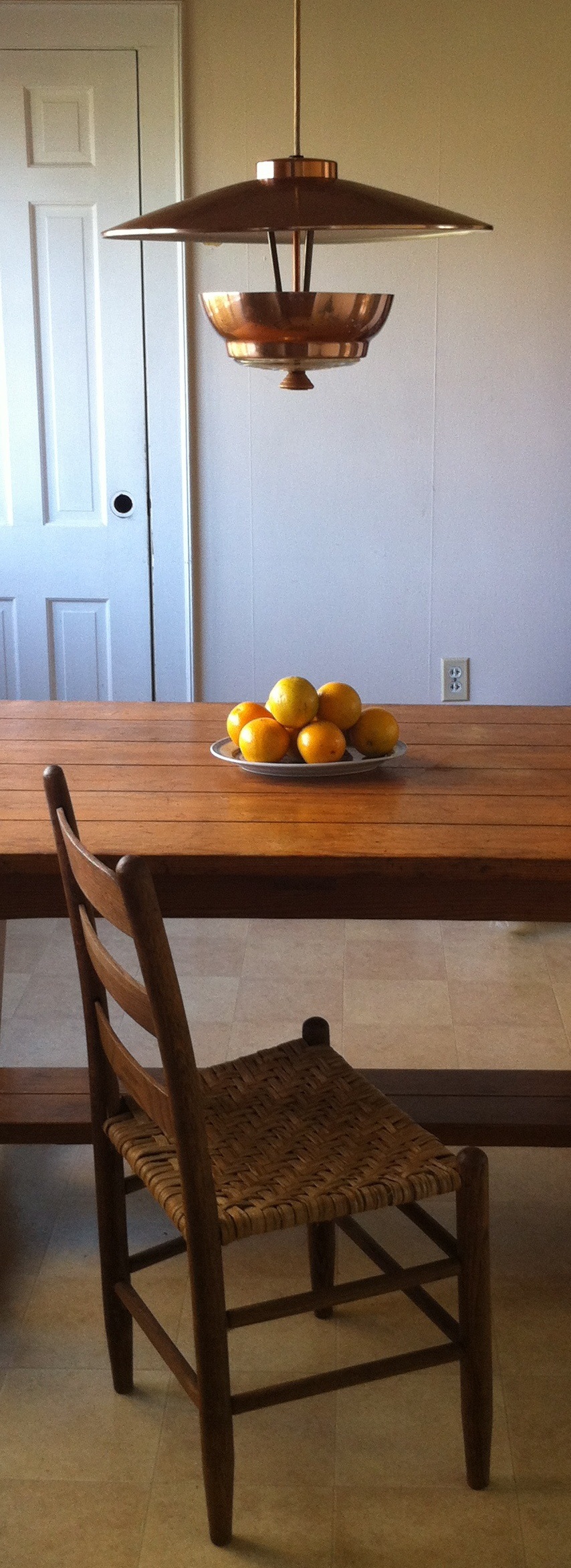 When we moved into this house, the woman who built it had just died and her children were selling it. Some things had been redecorated, but mostly not. It still had the original drapes in the living room, the original flocked wallpaper in the entry hall. It has a white bath, a pink bath and a green half-bath. It has steel cabinets in the kitchen. It has a ceiling light in the breakfast area that looks to me like something Jane Jetson would wear on her head!


 Wendy Welch: Books, Yarn, Cats, Opioids