
Making Writing Time
So many people have said to me since starting this writing residency, “What discipline! How do you do that?” Well, for one, this is my full-time job right now. A lot of people have inconvenienced themselves to give me these three months: my board at work, saying “Go and we’ll give you a three month leave of absence; the cat rescue team saying “Go, we got this!” and my husband saying “Of course I can run the bookstore by myself; where do we keep the bleach wipes?” Amy and Shawn have opened their lovely apartment (AND endowed me with bathtub privileges!) It’s not to be taken lightly.
But say you’re not tucked up in a cozy flat with your fingerless gloves and your month-long supply of sparkling water typing away. Say you have a day job and kids and responsibilities… how do you make writing time?
Here are some tips—with a caveat. You’re the one who knows your personality. Tweak, test, reject what doesn’t work and embrace what does.
- Whether writing is your hobby or not doesn’t matter. Don’t call it a hobby. Make time for it because you need to, not because it’s “fun.” Your need is justification.
- Some people can write in the little empty spaces between stuff they have to do; others need a good clear run. When I’m drafting, I need three days or so to get some outlines down and start chugging, or it’s no good. But I have a friend who drafted the book on Monday, Wednesday, Friday, 6-8 pm over the course of a month. Whichever one you are, find the recurring time in your week, or block out a three-day weekend, and WRITE IN YOUR CALENDAR THAT YOU ARE BUSY. This is not “if I can” time. This is “nobody else gets in” time. Drafting is harder for most people than editing. Most people find editing easier to do in the between spaces. It is also easier to use the between spaces once we prove we need them because we have a first draft. Whichever kind of writer you are, block it off in your calendar and lock yourself away.
- Where to write is harder for women with children than anyone else. You have to get out of the house. If you like white noise, go find a diner that will let you buy one cup of coffee. I drafted my second book in a Chinese buffet restaurant by going in after 2 and staying to 5, nursing a diet coke. The waitresses were sweeter than anything, and I stayed away from their rush times. A friend wrote her novel at Starbuck’s. JK Rowling wrote her first draft in an Edinburgh tea shop, one pot at a time, her little daughter sleeping by her side in a stroller. Get out of the house if you are a mom, OR if you work from a home office. Don’t try to use your office/living room/kitchen table to write unless you can guarantee its privacy and lack of distractions.
- If you can’t get out of the house, but are a night owl or morning person, here’s an alternative: after the kids are in bed or before they get up, stay in your pjs and go in your (hopefully empty) spare room or to the kitchen table. But be in your pjs, seriously. It keeps you from doing other “needed” things with your time; psychology or something. Do not get dressed until you’re done writing. Set a time, get up early, stay up late, cut a deal with your spouse or oldest child.
- Set a word count. I require 5,000 words per day when writing is all I have to do, minimum. That’s not a lot. I also type very quickly (background in journalism) and usually have ideas in my head before I sit down. Some people are planners, others discoverers. Whichever kind of writer you are, set a realistic word minimum for each time you have blocked out in your calendar. If you don’t know what would be realistic, take an hour, sit down, and write as you would like to write. Then count your words and add half again. (If you wrote 800 words in an hour, your average speed will be 1200 when you’re up to speed.) Starting is harder than going on. You will get faster, so add half to get a realistic speed.
- DO NOT EDIT TO EXCESS. Draft your essay, novel, memoir, speech. Draft it, THEN go back and edit it. Worried you changed the main suspect’s hometown half-way through? Leave it for now. As Nora Roberts says, “You can fix anything but a blank page.”
- Do not show your first draft to anyone. You may be tempted to show people parts of all of it as you go. You’ll think ‘if I wait until he gets back to me, it will go much faster with his feedback.’ IT’S A TRAP. NO. Part of the reward of finishing is to get to share. But also, first drafts are not for public viewing. They’re for finishing so you can build your story in this shaky foundation. It’s fine that it’s shaky.
- Don’t let word count drive your words. The point is to be in front of the keyboard (or writing on your legal pad, whichever kind of drafter you are). You have to make space for it, and then it happens. No one stands in front of a stove saying, “Dinner, dinner. Sometime.” They make time to make it. Same with writing. Put fingers to keys and let the movie in your head unfold.
- You are not allowed to give up on an idea that has less than 10,000 words in it. You know who you are: you start a novel, decide it would be better to work on a memoir, no crime fiction is where it’s at, you’ve always fancied writing a Western… Finish one of them. Even if it’s to get it out of the way so you can start the next, you may not stop one project mid-paragraph to begin another. Because I said so, if your inner gremlins ask why. Tell them I said you weren’t allowed.
- Do not get up to get a drink. Seriously. Like the pajamas, this is psychology. If you don’t take it with you to the keyboard, you’re not allowed to fetch one until you’ve written at least an hour. Again, refer any gremlins threatening to die of thirst to me. Got your back on this one.
- This goes doubly for straightening pictures, closing the blinds so the furniture won’t fade, taking care of that online bill, or anything else that doesn’t involve an immediate need to go to the hospital. It will wait. This is writing time.
- Turn off the Internet. Disable it on your computer with that wireless button nobody uses any more. Or close it down. Anything you have to do. Do not go into a private room with a set time limit and open the Web. If you hit a research point in your story, write XX, highlight it in yellow or turn the XXs red, and keep writing. You can find it later. NO INTERNET during the initial writing phase.
- Set rewards. Carrots work better than sticks; “don’t have tos” can be both! Enlist family members. “If I make 3,000 words by Friday, my husband is taking me to dinner.” “If I get to 10,000 words by my mother’s birthday, she says I don’t have to help her clean the garage this Spring.” Rewards can be simple and cheap: when I get 4K I can call my best friend, do my favorite craft activity, garden. Whatever truly is a reward to you. Don’t use “have tos” for rewards. Use “want tos” or “escape froms.” And you will find, as you write, that writing becomes more and more its own reward. Like any activity, it becomes more fun as it gets easier.
That’s it. Those are the the ways you get a draft done. Any questions?
Wendy Welch is writer in residence at Lafayette Flats in Fayetteville, WV. She is the author of THE LITTLE BOOKSTORE OF BIG STONE GAP, PUBLIC HEALTH IN APPALACHIA, and FALL OR FLY: THE STRANGELY HOPEFUL STORY OF FOSTER CARE AND ADOPTION IN APPALACHIA.
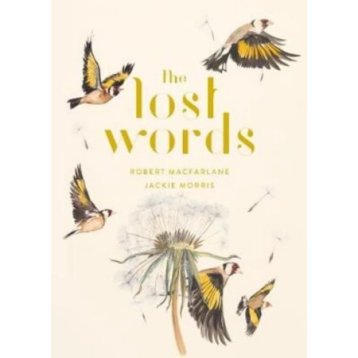 A sumptuously illustrated, coffee-table sized book, which contains magic within its pages. Inspired by the decision of the Oxford Junior Dictionary to remove 50 ”nature” words from its pages to replace them with words such as “broadband” and “attachment” . It has been recognised that there is a connection between the decline in natural play and children’s wellbeing so for me this is a partial antidote.
 Wendy Welch: Books, Yarn, Cats, Opioids