
Jack continues his pursuit of Wendy – –
I flew to St Johns in Newfoundland for Christmas shortly after Wendy commenced her PhD studies and discovered why a small town had such wide streets – they needed somewhere to park all that snow. It’s so cold there that every flake that falls remains until Spring.
I also discovered it was very like a Scottish fishing town, with terraced streets in parallel with the harbor, and descending alleys between, that had pubs just like the ones in Scotland. Which I took as a good sign.
I discovered as I was boarding that the plane continued to St. John in New Brunswick after landing at St John’s in Newfoundland. What I only found out later was that if the weather was too bad it would just go straight to St. John, so I might have missed out on meeting Wendy altogether. But the weather wasn’t too bad, just high banks of snow either side of the runway and taxi way; when we landed the pilot asked those disembarking to “please keep a firm grip of children as we don’t like them blowing around the airport”!
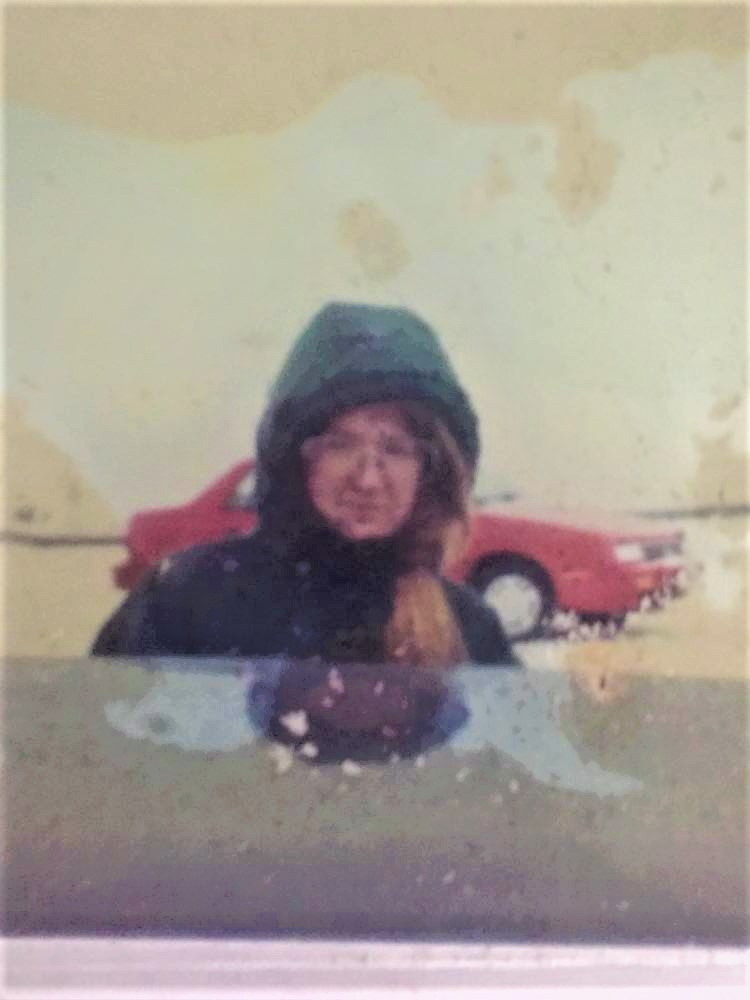
Wendy was still unsure about the relationship at that point, but she drove me to the place nearby from where Marconi sent the first transatlantic radio message. We still have the photo of her looking over the top of her still decrepit Toyota with a look of deep suspicion on her face that said ‘who is this guy and what does he want?’ We put it in a double frame with our wedding photo.
I saw quite a few things for the first time that trip: Outside Christmas lights – unheard of back then in Scotland. Everyone there had indoor paper decorations and maybe candles on the tree (fire hazard, but nothing in Scotland can burn for long, given the rain content in our weather).
Fog banks weren’t new, but how thick they were was. Scotland’s got nothing on Newfoundland for fog. Giant icebergs floating past the harbor entrance. The gulf stream that rounds the outer banks of Newfoundland heads up north past the Irish and Scottish coasts and is still warm, but then skirts Iceland and Greenland and heads back south by which time it’s much colder – hence the icebergs.
Ice breakers – I mean breakers on the coastal beaches that were frozen solid where we went walking.
Of course I was concentrating on Wendy, not the weather. Her initial reception of me was pretty frosty at this point. I mean, I had invited myself over and she was concentrating on her studies, surrounded by bearded young academic hunks—I mean minds.
More about walking next week.

 Wendy Welch: Books, Yarn, Cats, Opioids