
The Monday Book – A Place Called Home by David Ambrosz

Guest review by Janelle Bailey, retired Literature teacher.

As soon as I began reading I felt this, “Gosh, I’ve read this story before” feeling and immediately connected to two different books I’d read at two very different, distant from each other times, in my life but with similar subjects: poverty and foster care, here combined. I thought of Jeanette Walls’s The Glass Castle in terms of poverty and Steve Pendleton’s A Chance in the World in terms of foster care…and here they were, both authors, blurbing this book on the back when I flipped it over.
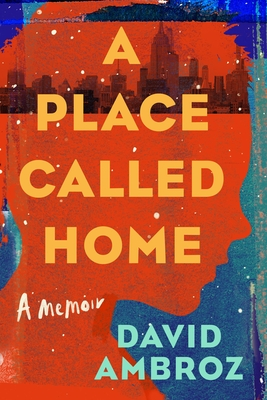
Different from the two of them, however: no immediate assurance from the start that it all, somehow, turns out okay. Walls’s and Pendleton’s books each begin with an end that provides reassurance that it all, ultimately and somehow, after I complete my reading of the 300-ish pages, turns out with them each in an okay place. This book does not provide that same reassurance from Ambrosz. I find myself continually flipping to the inside back cover to his author photograph, which presents that reassurance in a slight smile, suggesting that he, too, comes out of it all–this, which I read with challenge and pain, much of it–okay, or at least better than he is while enduring it all.

And while in some ways David Ambrosz’s story is similar to theirs, albeit with a combination main course of poverty and terrible foster care, and added sides of single parent with mental illness and being gay in an anti-LGBTQ+ (not even the acronym, yet, then) world, his challenges are individually special and his own, even though he endures what others similarly have.

Ambrosz is a storyteller who takes us along on his difficult journey and allows us to endure the difficulties and pain with him but also to feel the hope he shares for a better future for himself and others AND the gains he makes in small and large ways to find himself and become a confident and stable and strong self, ultimately.

I’ll need to do further research into the legislation for which he’s worked and pushed, to see what’s come of it all. But I am happy to have met him here and know so much more about him and his story. This is an enlightening and eye-opening–valuable–read.
Open Door

We have a foodbank in our town called Open Door. It’s a café where you can buy lunch for yourself, buy suspended lunches for others through a token system, or work off lunch with an hour of stuffing giveaway bags for kids at risk of weekend food insecurity.

Open Door is run by a nice guy named Mike. Although one is told not to trust a skinny cook, Mike has a way about him that belies this. And his volunteers love him.

So when Open Door needed to shut down for two weeks for an overhaul–paint job, remodel, and new equipment—Katie called.

Katie is one of the people I would literally follow into Hell if she asked. Trustworthy, kind, no-nonsense—also skinny, but well we can’t all be perfect.

Katie is the one who suckered me into the Wytheville Women’s Club, a group of kindly do-gooders who go around filling blessing boxes with canned goods, paying for kids whose parents can’t afford to send them on end-of-year field trips, and visiting homeless encampments with rainproof tarps. I think they also put a new roof on a historic building a couple years ago.

You know, do-gooders.

The do-gooders would be filling in while Open Door was closed. Katie drew up menus, which were promptly redrawn when Open Doors threw wide their walk-in refrigerator and we saw just how much fresh produce gets thrown away in Wytheville, if the food pantries aren’t there to catch it.

The homeless ate chef salad, stuffed peppers, baked potatoes with all the toppings, fresh fruit, and about a thousand of those nasty sheet cakes with greasy neon icing. We threatened people that they couldn’t have salad unless they took a dozen cupcakes.

The people coming to eat were kind, friendly, sad, damaged, mentally challenged, fighting breast cancer, dealing with a nasty divorce, reeling from the loss of a spouse who had been paying the whole mortgage, and otherwise figuring life out from the underside of the helping hand. The people offering the helping hands were kind, friendly, sad, damaged, mentally challenged, fighting two different kinds of cancer, dealing with recent loss, and owned our own homes and businesses.

It was like playing food Tetris. A bus would pull up (homeless people can get free transit from temporary hotel placements or the camp at the park) and discharge six to eight hungry passengers. They would go first to the table of free food, select salads, fruit cups, packages of bread, politely try to refuse the cupcakes. Then they would pick up the Styrofoam clam shell of lunch. One woman, when I pointed out the heat-and-serve microwave Italian meals, gave a sad smile.

“Our power’s off. I only got a gas oven going.” We loaded her up with pre-chopped celery, onions, olives, flatbread, and spaghetti sauce.

The next lady said she couldn’t cook in her living situation at all. She pointed. “I’m living over there, under those trees.”

We gave her cookies, some egg salad and ham sandwiches we warned her to eat that night or throw away, and a container of taco chips. And a half dozen cupcakes.

Some could cook, some could keep food cold, some both, others neither. As we smiled and held out items and packed food into bags and boxes, we noticed patterns. On both Fridays we were out of food 45 minutes before we quit serving. All week people had said things like “No just this will do me, give the rest to someone who really needs it.” On Friday, they accepted everything we suggested.

Making it through the weekend until the café reopened Monday.

It’s a fail good, what we did, a system put in place so nice people can take up slack that shouldn’t be there at all. But it makes a difference to the people who ate those ten days, and kept their family carbohydrate over the long, hot weekend.