
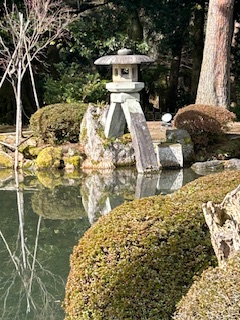
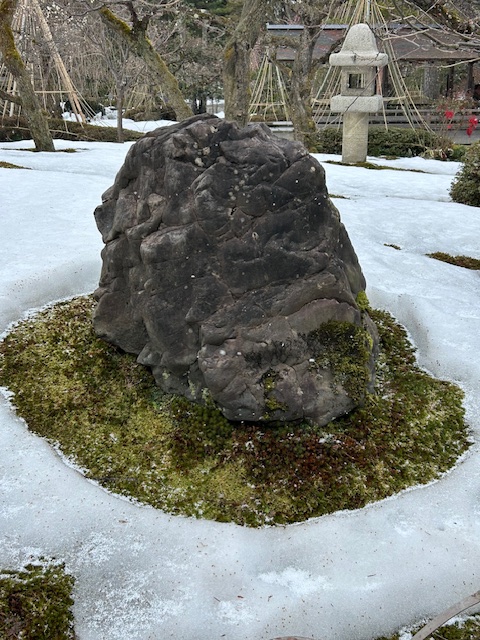
Kenrokuan Gardens are in Kanazawa, and they are quite something. I enjoyed them, but Amelia was having a mystical experience. After her first trip to Japan a couple of years ago, she built a Shinto garden at her Airbnb–which is her maternal grandmother’s old house, modernized for visitors–and we do believe she has the only Tori gate and Inari shrine in Elk Creek, Virginia. (Inari is the white fox who guards rice, and therefore prosperity and possibility.)
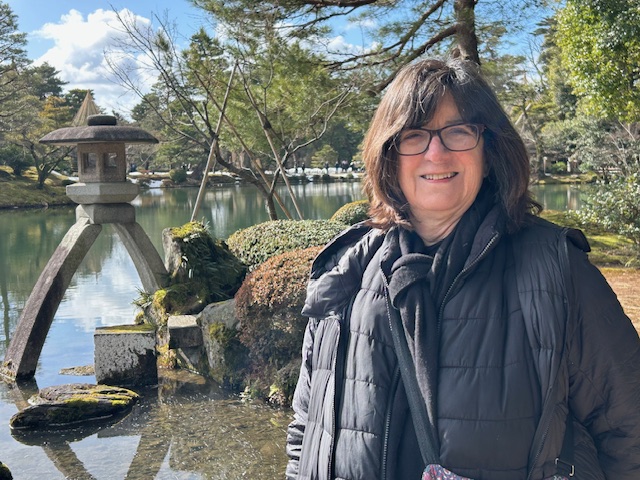
A kind couple at the bewildering array of bus stops at Kanazawa station helped us to the right bus and were very sweet in helping us get off it properly, as they were headed to the gardens themselves. The gardens are free if you’re over 65, so Amelia’s happy day started early. I had to pay 500 yen (which is a little over $3).
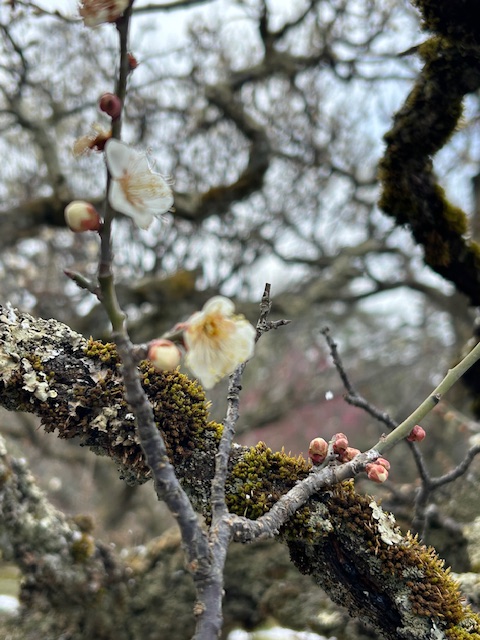
Plum trees blossom in snow. I did not know this until I saw them with my own phone camera! The gardens are famous for that era of rapid transition in Japan, when feudal lords (samurai) were on the way out and modern Japan as a power to be reckoned with in manufacturing and goods was hoving into view.
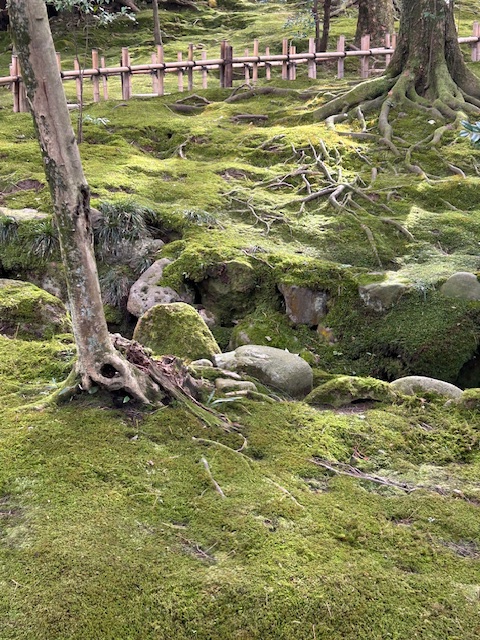
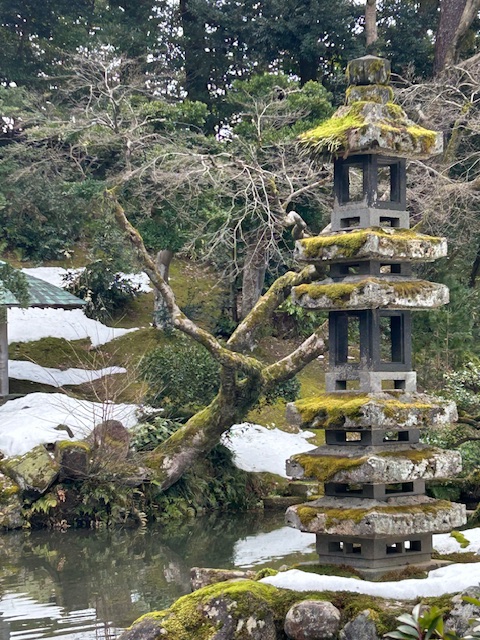
Of course, the samurai didn’t like this, and many of them were wiped out around the same time as the American Civil War in an ill-fated rebellion. It was shortly after this that samurai were forbidden to carry swords as part of their daily attire. (I am ignoring the implications to open carry in my home commonwealth of Virginia and moving on, thank you.)
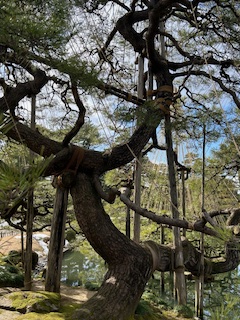
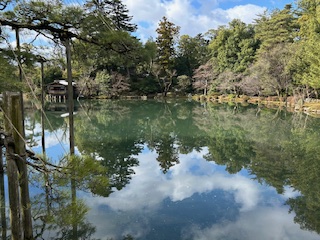
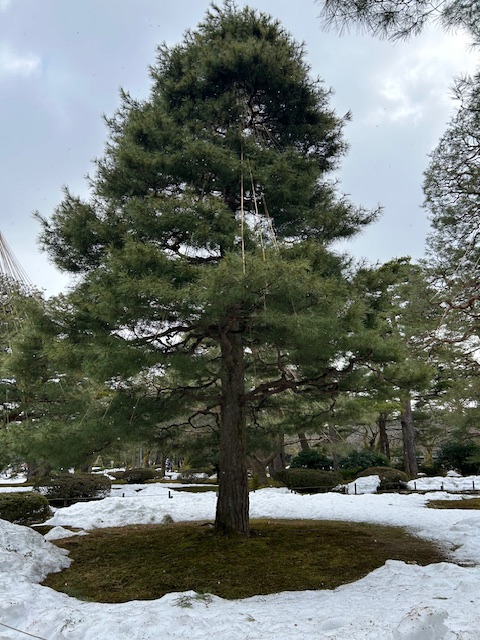
The gardens are named Roku because of Japan’s six prized landscaping elements incorporated in their design: open spaces, panoramic views, solitude options, art made by humans, ancientness, and lots of water features. One of Japan’s oldest trees (a pine) sits in the garden. Amelia’s aunt sat on the tree seventy years ago to take her bridal picture, but it’s roped off now. One too many tourists, probably.
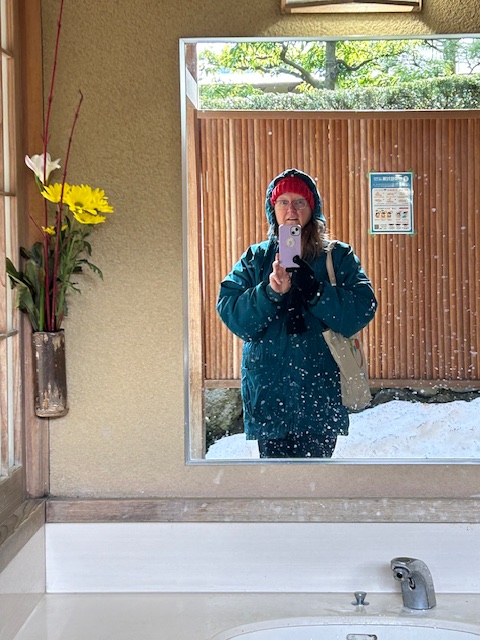
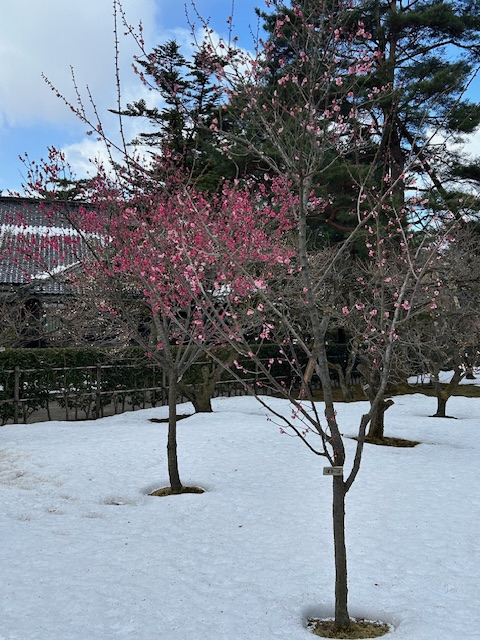
Amelia walked around in a daze, every turn and corner a new epiphany. I am a cheerful but not accomplished gardener, so I walked around going “Oh, pretty” and “I wonder if this is edible or medicinal.” (Bad gardeners make good foragers.)
And of course we had to do the winter tea experience, because it was cute. This country invented cute. They do cute with elegance, cute with glitter, cute with dignity, cute with gravitas. Warning to visitors: DO NOT LAUGH when you see a businessman in a black suit and black cashmere coat carrying a black backpack with a dangling fuzzy bunny onto a train. This was our international incident #17 or so, we think. We’ve lost count.
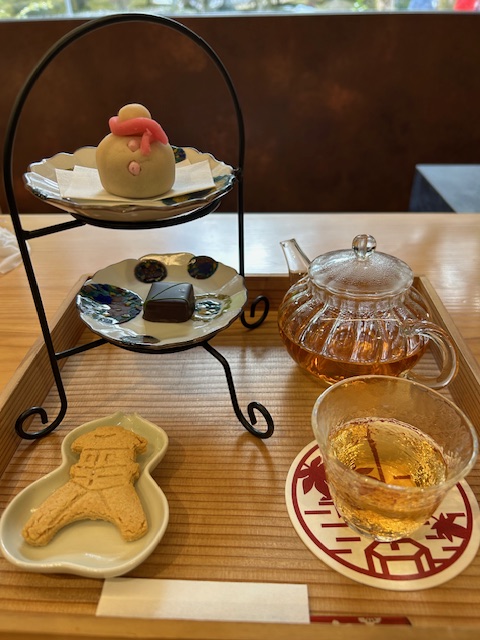
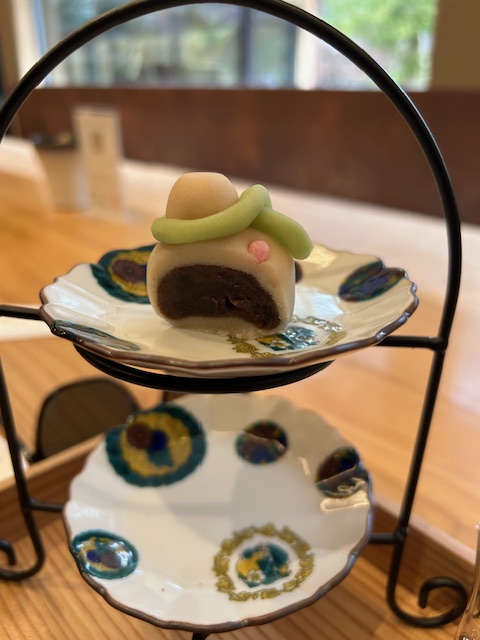
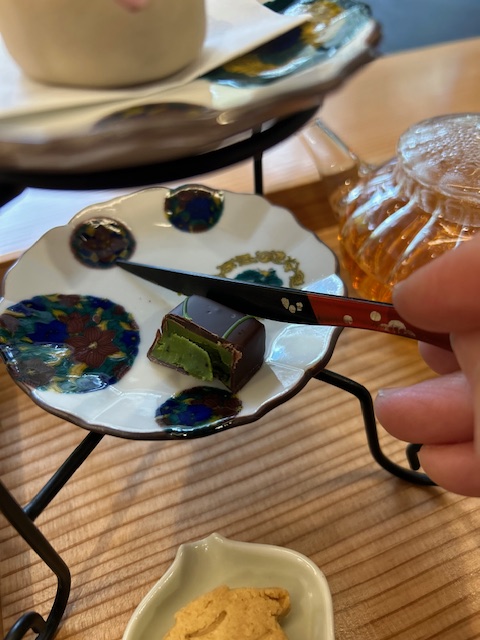
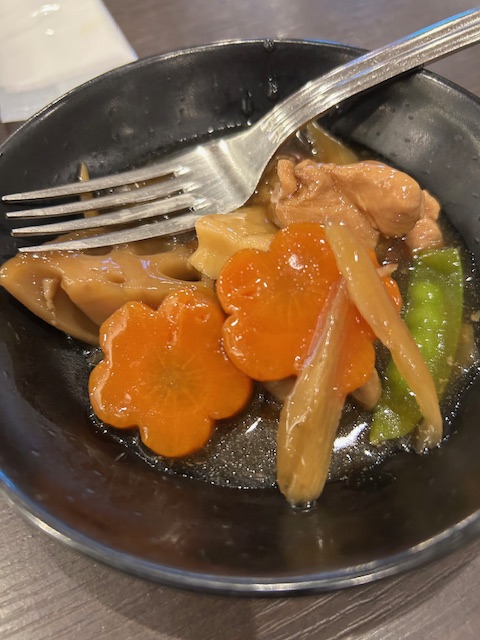
Amelia sat in blissful silence, munching her bean paste snowman, matcha chocolate, and almond lantern cookie in deep contemplation. She’s planning her garden back home. I bit the head of my snowman and watched a fat raven work the crowd outside the window.
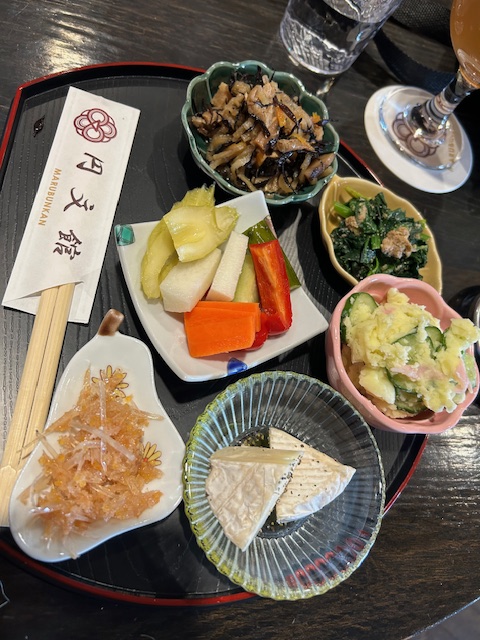
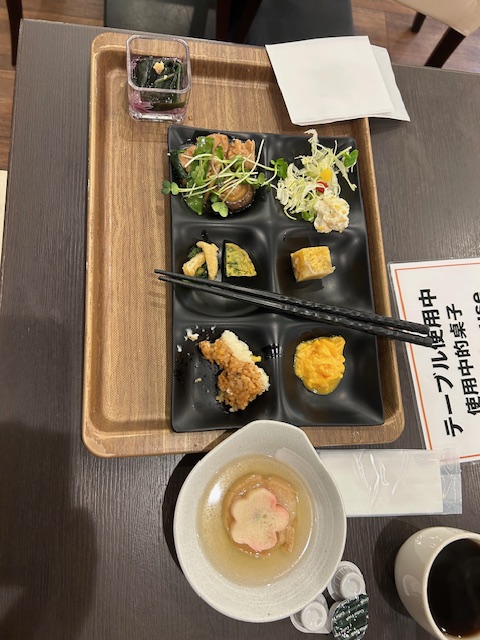
After the gardens we investigated the reconstructed castle walls, then wandered through town. The high tea Japanese style was charming, but not entirely filling, so we stopped at what can only be described as a Japanese tapas bar.
The owner was a very sweet woman, and I had an assortment of six dishes plus hot red wine. (That is a big thing here and one of the cultural imports I will be making at home. Hot red wine is delicious, not mulled, just heated.)
She had a small display of handmade jewelry all in the same pattern, a family crest. Her sister makes them. Amelia and I treated ourselves to earrings, and then headed for a neighborhood outdoor onsen. These communal baths use volcanic hot water with a lot of natural minerals in it, and they are awesome. International incident #18, I left my glasses in the washing room, so had to reenter it after the onsen, with my sweatshirt on. You don’t wear street clothes into the bathing area.
The onsen also shows something kind of gritty about human divides. In America, many Americans will avoid direct contact with Mexicans unthinkingly, or make assumptions about their cleanliness and such without overtly expressing why they decide not to sit there, eat that, talk to him or her.
In the onsens we have visited, if we go to the inside tub, the Japanese women who come in after us go to the outside, and vice versa. Once an older woman shot us a suspicious look and left. By contrast, at my first ever onsen, the only woman there spoke fluent English and welcomed me to the experience when she discovered this was my inaugural immersion.
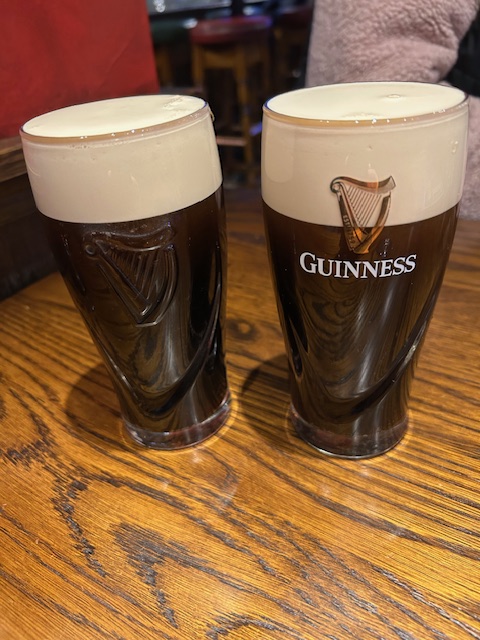
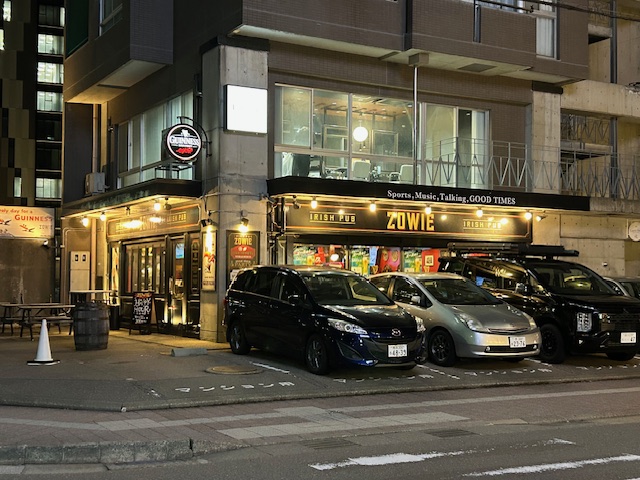
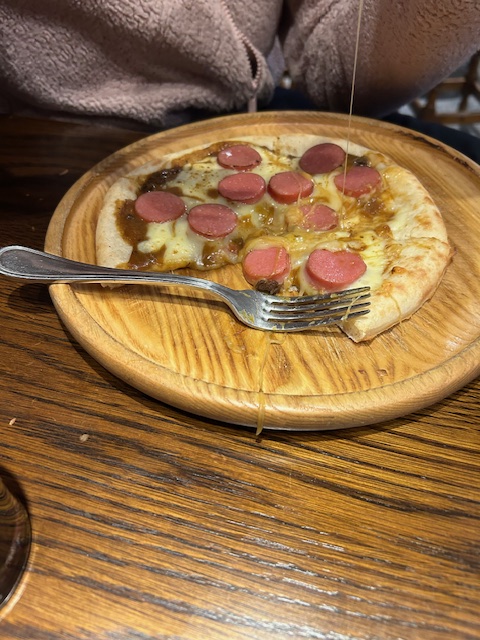
The neighborhood onsen was sublime. The gardens were spiritual. So what better ending to such a meaningful day could there be than an Irish pub in the heart of Kanazawa at happy hour? Amelia had a curry pizza. I had sausages. The Olympics were on a massive screen TV, showing the Asian figure skaters. A good time was had by all.
 Wendy Welch: Books, Yarn, Cats, Opioids
I am so enjoying your adventures!
>