
The Monday Book – Forgive Me, Leonard Peacock by Matthew Quick

Guest review by Janelle Bailey, retired Literature teacher.

This title popped up on Libby recently, as I sought a new audiobook to read while walking (LOVE that I can be reading two books at once that way, one in print and one audio). I had not heard of it, yet I am SO pleased to have been handed it this way. Everyone should read this one.
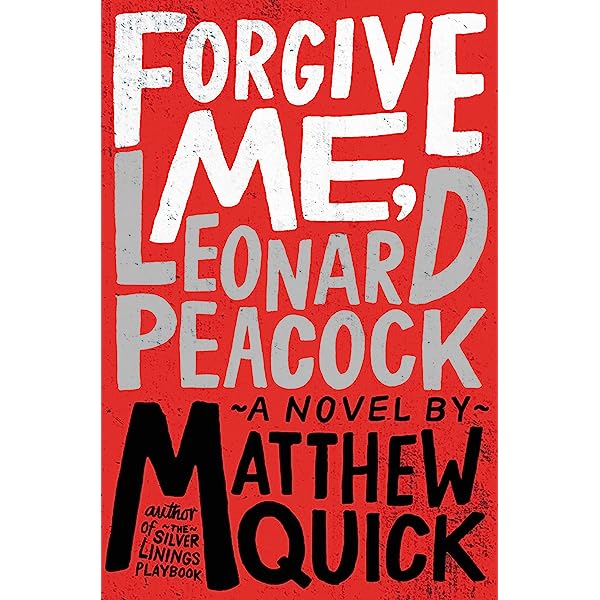
Leonard Peacock, high school senior, has very clearly been neglected and left to his own devices, left ON his own to take care of himself by two parents too full of themselves and too selfish to address their son’s daily care with the devotion demanded. Honestly, Leonard’s not asking for much–just his parents to, well, “parent.”

Thank goodness he has other caring people in his life, including an elderly neighbor Walt, a social studies teacher Herr Silverman, and his AP English teacher, his counselor, a couple of others. Nobody really has daily duties for supervising Leonard, but each of these adults are attentive to him and notice the changes in his behavior that are alarming.

And Leonard is an interesting young man himself. He’s bright, well read, and conducts interesting humanities experiments, occasionally skipping school to put on an old suit, ride the subway, and follow for a while some sad adult to see yet another life he does not wish to grow up and into himself.

Not all readers will love the initial setup for this story, but that should not deter a single one from reading it in its entirety. Quick is a smart writer, and Leonard’s story is an important one.

Radio Buzz

Many of you know I took on a side gig as a Folkways Reporter for the program Inside Appalachia. We had our first “radio school” retreat last month to learn how to use the equipment and deal with problem soundscapes (being outside, rooms with air conditioners, etc.). Sound is different from print, y’all. Books is easier.

Daunted but determined, I set out last weekend to the Knoxville Farmer’s Market, there to meet my informant, the indomitable Femeika Elliott. Meika won a Foodways Practitioner Fellowship and I planned to do a feature story on her work with nutrition education and self-sustainability in East Knoxville. I planned to cover her class leading newbies through the Farmers Market teaching them to navigate its mysteries.

I set the equipment up just like they taught us radio school. Donning my headphones and taking up my microphone complete with that big fuzzy wind barrier you see reporters use outdoors (it’s called a dead cat and I have nothing to say about this) we traversed the market.

You tend get your best tape at the beginning and end of an interview, when the subject is on top form, or too tired to mince words. So when Femeika paused early on before some purple cauliflower and began an elegant soliloquy on wide ranges of produce being part of a just and healthy landscape, I kept the mic in her smile zone and stood back. She was nailing it—

–and a small child darted beneath the mic and began to play a clapping game.

They didn’t cover this in radio school.

Ok, I would recreate that information with a voiceover, let’s keep walking. Femeika was already moving on. They talked meats, dairy, veggies. She began discussing the kinds of vegetables different body types could benefit from—

–and a bee landed on the dead cat. Apparently, she liked it there, because as Meika droned on, the bee began humming a cheerful little bee song to herself while attending to some self-care about the feet and antennae.

I am allergic to bees. She rode the length of the market’s bread section with us. Fortunately, not a lot of meaningful moments came from the carb section. In desperation, I finally gave the microphone a surreptitious shake. The bee shot me a reproachful look and flew away. Her feet looked great.

A timpani band played hymns in the background, mostly of a Scots-Irish background, and the fusion music was, well, cute ambiance. With the music behind her voice, Femeika said, “Most importantly you—“

–and the guy next to the timpani band blew his shofar. Tents in the market sucked in with contracted air. Mothers clutched their children. Dogs howled—at least their mouths opened; no one could hear anything else. A cop grabbed his radio.

They didn’t cover shofars in radio school, either.

I dunno guys, at least when you’re writing books, you can keep typing while the shofar blows.

As I shook hands with Femeika, dismantled my mic, and exited the market, a bee flew in front of me. She gave me the finger.