
Guest review by Janelle Bailey, retired Literature teacher.
I no longer recall exactly who prompted my adding this book to my tbr pile (please identify yourself if it was you!), but I am still and always of the mind that something divine happens in my selecting what to read at all, let alone “next.”
What is it, but something orchestrated elsewhere, that compelled me to, in this case, first pack this book among the 16 I took on our annual camping vacation (me figuring that we were headed out for 13 days, and I could NOT run out of books–can only have too few along, never too many–and I don’t like being locked in but prefer, instead, to create a little stacked library in the camper and get to choose each new read as I finish the previous)? Then, second, what compelled me to pick it up “last” on that trip, such that I had barely begun it by the time we returned home?
I have no idea (keep reading).
This book’s main characters, the Adlers, are members of the Jewish community in Atlantic City in 1934. They keep the faith and adhere to, honor its customs, and are also concerned for the well-being of others connected to them who are still in Nazi Germany and seeking emigration to the U.S., as things heat up there. And this is just one of the book’s layers, then, this sharing of Jewish customs and practices, which includes, due to the storyline, the practice of burial as soon after death as possible and then a week of Shiva.
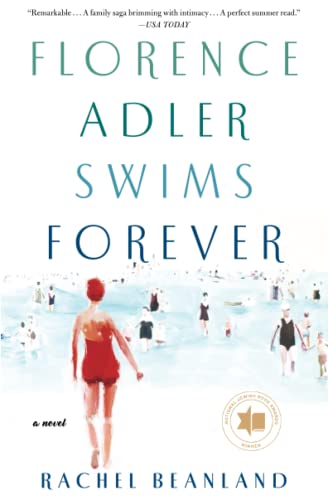
And it was as I was finishing the book last night that I learned of the sudden passing, Tuesday, of a colleague and with whom I had met via Zoom just Monday morning, and that his funeral is tomorrow, Shiva starting shortly afterwards. And that is part of what I am still trying to understand: how this very book made it into my hands and reading eyes at this very time for me to be reminded of these Jewish customs of death, as well as the meaning of life in the faith. Beanland presents here through her characters that the “most important question” is “Whether you’ve been a good person. Done good things for other ” (142). And in the case of my recently departed friend, there is nothing but a clear and very certain “Yes, he did!” response to that most important question. And I am pleased to know that and have learned that through my reading of this work of literature simultaneous to his passing. May his memory be a blessing to all who knew him.
And as for the “rest of the book,” it is simply very well done. While its main character and her plight–to swim the English Channel–are fictitious, Beanland is honoring her great great aunt who shares first names with the main character, Florence, and who was also a swimmer who also died in a swimming accident. She has certainly honored the memory of her family in creating this story, which allows Florence to “live” for as long as it helps others to believe that she is.
Fearing I’ve already told you too much, I’m going to stop right there and suggest that…as I often do…you read it yourself. It’s a good one.

 Wendy Welch: Books, Yarn, Cats, Opioids