
Guest review by Janelle Bailey, retired Literature teacher.
I eagerly picked up this second title of Steve Pemberton’s after enthusiastically finishing his A Chance in the World (a second time) and while also eagerly anticipating his visit to Pulaski and the opportunity to have him sign my books.
Meeting Steve in person before reading this new book likely changed—enhanced, enriched—my reading experience, as I simply heard him reading it, saw him sharing it much as he spoke to all of us during his visit, and that is the valuable thing that can happen once one has met a book’s author. And when anyone can make a gymnasium full of 1000+ high schoolers feel like a little conversation, keep the attention of that group, and address individual students and remember their names, well…he made a difference that day for a whole lot of people, I am sure!
Pemberton’s “lighthouse effect” is an idea that must have come about while writing A Chance in the World, as he references from early on in that book individuals who were “lighthouses” or even “buoys” for him as a child being abused by his foster parents, as a child without a family or true home. Thankfully, there were others, like Claire Levin, who made eye contact with him and provided for him in ways they knew to; in Mrs. Levin’s case it was to bring boxes of books to Steve, books her own sons had read and outgrown. Steve’s life may have been saved by those books and what they afforded him in hope and trust that there was, somehow and some way, a better life out there for him. It just took him a long time to get there. But I’m not sure hed have believed it if not for reading all of Mrs. Levin’s books, specifically his very favorite, Watership Down. He very much identified with that particular story.
In A Chance in the World Pemberton has not yet located Mrs. Levin to thank her. But eventually he does, and she has her own a section of the nine in The Lighthouse Effect, for being one of Pemberton’s very critical “lighthouses.”
His reasons for thinking of people—ordinary people—as “lighthouses” are numerous and apt. I won’t spoil any of that here, as you should read the book yourself to let Pemberton explain it himself. I expect that many who read this book might see the “lighthouse” they themselves are as well.
The book profiles ten such “lighthouses,” with not only Mrs. Levin but a few others whom readers of A Chance in the World will also recognize, including John Sykes, to whom The Lighthouse Effect is dedicated. How apropos! It is enjoyable to hear the “more” of each of these stories and learn how Pemberton stayed in touch with these individuals very significant to his childhood, how he maintained his connection to them.
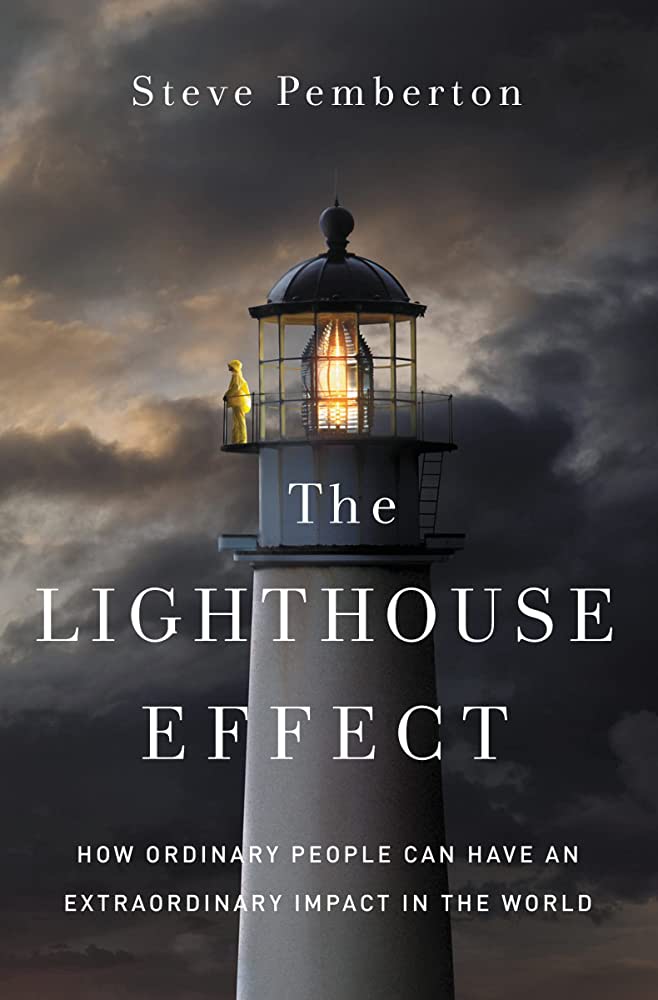
The others who are newly introduced in this book are lighthouses for others much as the previous handful were for Pemberton himself. The “lighthouse effect” is for certain an interesting consideration that probably prompts many readers to also reflect on and consider whom the lighthouses in their own lives have been.
Having read A Chance in the World twice, I recognized most of the stories Pemberton told during his assembly at the local high school. The Q and A sessions, though—and he initiated one each of the three times I got to hear him speak (one all-school assembly, one community and school leaders group, and one student leadership group)—were my favorite part of the day by far. I appreciated completely Pemberton’s vulnerability, his sincerity of response, and his heartfelt interaction with both the students and adults. I learned early in the day that there were students who, having read his book (it was an all-school read the past few months), really wanted to speak with him, and he honored that meeting individually with a number of students. He never got a break all day, actually, moving from one conversation to the next and also lingering to sign books, take photos, and interact with any who were waiting for him.
I am honored to have met Steve Pemberton. If he ever does run for office again, I will be very pleased to say…”here we are back when,” and I am truly honored to have met him!

 Wendy Welch: Books, Yarn, Cats, Opioids