
I’ve been helping my parents clear their basement of unwanted detritus (as opposed to wanted detritus) and found a large stack of Saturday Evening Post and LIFE Magazines from the 1960s and 1970s. Some of them are collectable, so we’re selling those off for Mom’s pin money. But it’s slow work because Jack and I keep getting sucked into their content.
Affordable housing shortages, race relation troubles, the decline of the education system, corrupt politicians, and America getting involved foreign wars: such a different time, those sixties….
The more things change the more they stay the same is only half the story, though. At first reading of the stories of enforced integration and the Watts Riots, what immediately struck me was the different framing, the use of language to create subtle (maybe not-so-subtle) perceptions of how to approach “the problem.”
Let’s talk about the advertisements. Certain cars, certain cigarettes, certain alcohols, attract blondes. Really slender-yet-curvy blonds. Certain flavors of Campbell’s soups create wholesomeness. And let’s not forget the nerve pills and the soft drinks Mommy needs for energy—especially as she might be entering the workforce as a nurse or teacher.
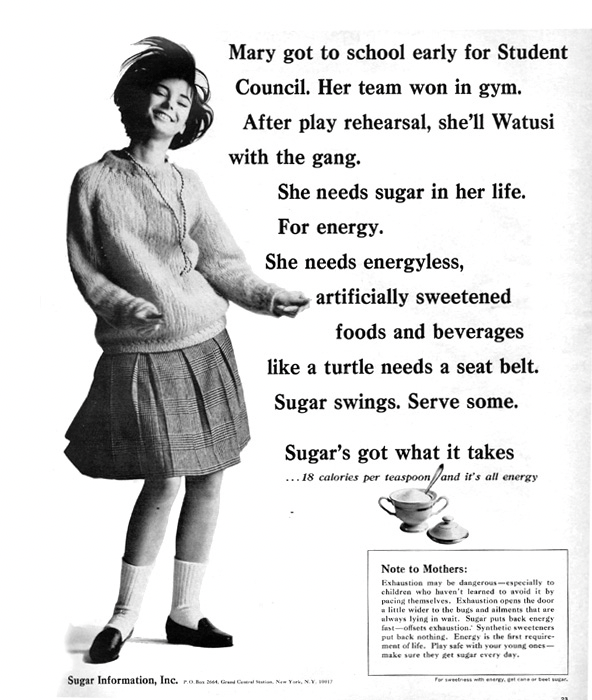
I have started collecting the sugar ads. Somewhere around 1966 diet culture got big (ehm, no pun intended). So, the sugar company fought back: full-page ads featuring (so far) four different kids, detailing their busy days, explaining why they needed sugar’s wholesome energy. My favorite is Mary, who “needs sugarless soda like a turtle needs a seat belt.” Nice double whammy there, as seat belts in this era were 1) optional and 2) controversial.
But it’s the racial framing that really gets to me. In 1963, a reporter came to the integration story from the framework of heartbreak and chaos for northern schools just trying to get on with their job of educating future America. The not-entirely-subtle subtext: couldn’t those pesky Black people just be happy they had separate but equal schools and not rock the boat carrying America’s most precious asset? It wasn’t until the 1970s that a report on the same topic suggested, ever so simply, that America’s most precious asset included Black children AND that all the kids would benefit from knowing what America’s difficult past included in terms of teaching the Civil War and the slave trade as economic prosperity for those who sought to uphold it.
Might be coincidence, but that reporter’s byline didn’t appear in the few magazines I found after that date. There were only a few, so no conclusions can be drawn.
Has the language changed? Sometimes. Have the issues changed? Sometimes. Do we still eat sugar? Sometimes. Is this progress? Sometimes.

 Wendy Welch: Books, Yarn, Cats, Opioids