
Jack continues the story of his cars – –
It started with me riffling through a copy of the London Sunday Times around 1980. I was idly looking at holidays (vacations) and I flipped over to the last page. It had adverts for used cars and there was one that caught my eye. It was a 1974 Morgan 4/4 with only 6k miles on it and the seller had a Glasgow area phone number. Except I could see that the number was missing the final one!
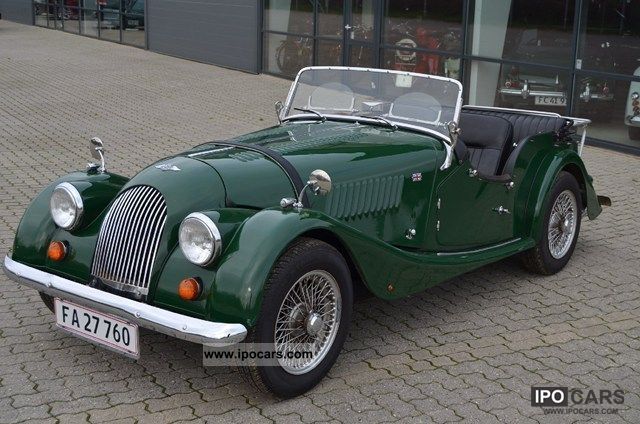
The Morgan company only made 9 cars per week (hand built) so there was a long waiting list for new ones. That meant that used low mileage examples were at a premium.
But I knew that the phone number just needed somewhere between 9 and 0 stuck on the end – –
So within a short time I was speaking to the local postie (mailman) who knew exactly the house and phone number of the folk that were selling it (it was a small village). I phoned the seller and drove through to see the car and it was in perfect condition. He was the wealthy owner of a trucking company and had bought the car as a present for his wife, but she didn’t like it! So it had sat for six years in one of his garages and once a year one of his mechanics took it out and ran it around for a bit.
He wanted 7k pounds for it so I said fine. But he explained that because of the demand this would be like buying a house – I needed to offer above his base price. So back home I went.
About two months later he phoned me to see if I was still interested at his price. Because of that missing digit in the phone number no-one else had contacted him!
Although the car looks very snazzy it is basically a 1930s design with a traditional chassis and wooden frame on top and finally steel or aluminum panels nailed (yes – nailed) onto the frame. It was said that if you drove over a penny you could tell whether it was heads or tails.
I didn’t use it in winter and every spring when I got it out of the garage the clutch would be stuck – every single year! So I’d phone our local trusty mechanic and he’d come and do something frightening on the street to get it freed. I think he drove it in whatever gear it was stuck in then holding the clutch pedal down with one foot while he jammed on the brakes with his other one.
On one occasion I phoned the factory to get a new parking brake cable and the man there went to his card index files to update the individual card for my car with me as the new owner! When the cable arrived the end anchor wasn’t attached, so I phoned them again and he explained that because the cars are hand built none of them are exactly the same length!!

 Wendy Welch: Books, Yarn, Cats, Opioids