
Guest review by Janelle Bailey, retired Literature teacher.
Wow. What an amazing, wonderful, relevant and timely, well-written book. And what a very different book for Louise Erdrich!
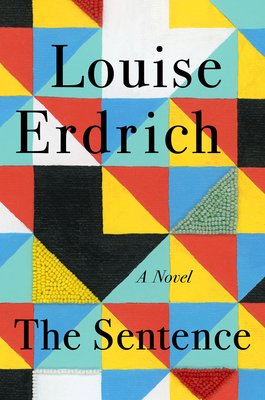
I have read many of her books and have always decided to read her when I was prepared to engage in either dark or Native American experience or dark, Native American experience…but almost always (minus one book!) able to trust that I’d be engaging with smart and really good writing and that I’d come out on the other end better for the experience and the time spent there. (Okay, that one book was Future Home of the Living God; maybe I just didn’t get it.)
But opening up The Sentence has taken me on a tremendous adventure and, I think, directly into Louise Erdrich herself. She even terms it, albeit in the voice and term of a different situation, “autofiction.” I get it! Autobiographical fiction…not memoir but a special blurring of autobiographical fact but spun as fiction. This is the first I’ve seen the term, but it is completely apt! And it gives me the means to re-see and talk anew about, say, Ayad Akhtar’s Homeland Elegies. I think that’s what that is, too.
So this is all to say that Louise Erdrich is a character in this novel…that is written by Louise Erdrich. And the bookstore that Louise Erdrich owns, Birchbark Books, located in St. Paul, Minnnesota, is both real and a specific setting in this novel. And I LOVE that I have been there multiple times, know it exactly as it is described here, have never seen Ms. Erdrich there herself, unfortunately, though I have absolutely entered the store with hope of that every single time. And I have eaten multiple brunches at the elegant and simple restaurant just two doors away that is also mentioned here, along with the school across the little busy road. So in all of these things, there is truth and reality and fact. And that is the case, also, with much that the book so relevantly for its contemporary and current setting of time also discusses: the pandemic, the shutting down of all things, the “abundance of caution” with which many of us proceed, the strange dismissal by so many of science and the horror of their choosing conspiracy and some strange idolatry over everyone else’s desire to do right by and for alllllll involved. Okay, in all honesty, those issues are actually presented more subtly and are more PC in the book than I feel them myself. Erdrich is so smart. The novel does have a thoughtful character assert that: “I really believe that to live inauthentically is to live in a sort of hell” (347).
This book is set in and addresses the realities, too, of George Floyd’s death and all that followed, police officers and that work as a reality and conundrum at the moment, including this novel’s main character’s husband being a former tribal officer and his grandmother’s warning him long ago to “Watch out…for when that uniform starts to wear you” (283). Wow.
Additionally, I am entangled in notes of all of the authors and books that are mentioned within this book, that wonderful thing happening when authors reference titles and authors known to the reader so engaged anew in the mind of the author and feeling that very special reading kismet as well as frantically wishing to also read and soon everything mentioned not already read or shared by the reader.
And there are so many other good things layered in this book–families and culture and tradition and love and heartbreak and most especially spirits–and which, if you read my reviews with any consistency, you know I never reveal all details thereof, for I never aim to spoil but to strongly encourage you, in this case, to also read the book…so that we can talk about it together and share our reading heads and reading hearts and build a community and a bridge to an even better way of living…together.
Read this one and soon. I do not think you will be disappointed.

 Wendy Welch: Books, Yarn, Cats, Opioids