THE TRUMPET UNBLOWN (Doubleday,1955) by William Henry Hoffman
Reviewed by Phyllis Wilson Moore

Winners Do Not Take All
The World War II era novel THE TRUMPET UNBLOWN (Doubleday,1955), by Charleston, West Virginia, native William Henry Hoffman echoes every war. It is not an easy novel to read and dismiss. It has clout.
Published in 1955, twenty-five long years before Post Traumatic Stress Disorder (PTSD) became an official diagnosis, it could serve as a template for understanding the condition. Reading it might help families understand why some veteran have difficulty articulating their distress and might help counselors assist veterans in putting the pieces of their lives back together.
It is the story of idealistic eighteen year old, Tyree Jefferson Shelby, III, and his stint in a World War II Medical Corps at war’s end.
Like many high school seniors of the day, Shelby, eager to prove his loyalty and manhood,volunteers to risk his life at the Front defending the United States against Germany and Japan.
A leader and top notch new graduate of a private military high school, Shelby feels prepared for war. After all, he was a cadet officer and many of his ancestors served nobly in previous wars. A teenager, he eagerly enlists, leaving his proud, religious and wealthy family, his virginal girlfriend, and his plans for college behind. In a few months he is in England, the youngest man in a medical hospital unit waiting for what we now know as the Normandy Invasion.
Being a “third”, and obviously from an affluent family, he is immediately at odds with some of the older more seasoned veterans. He does things by the book. He likes to keep clean and neat, no easy feat with cold water and no soap. He doesn’t drink. He is a virgin and plans to remain one. When his girl’s country club poolside photograph is stolen he finds it soiled and hanging on a support beam in a room the Corps shares. He fights for it and loses.
As they wait for their orders, Shelby goes with the other men as they make the rounds of the bars and brothels. He is goaded into paying a prostitute but can’t perform.
Once in France he learns to hurry up and wait. Disgruntled fellow soldiers and an ineffective commanding officer make matters worse. Setting up the field hospital is grinding work but once it is done, they wait. No battles ensue. Members of his unit begin to explore the area and visit neighboring villages. From the supply tent they steal canned food, cigarettes, drugs, and army supplies to barter for alcohol, sex, and fresh vegetables.
Finally a major battle occurs and the hospital staff is overwhelmed.The mind boggling carnage and chaos troubles him but he does his job of carrying the wounded to and from the operating arena.
Between battles they wait. Sometimes they tear down the camp hospital and move closer to the action and the carnage begins again.
Each day the Corps proves the opposite of what he expected. He is not fighting the Germans or the Japanese; he is being bullied.
When another young soldier offers two villagers a ride and then rapes the girl, Shelby, in the jeep’s front seat, does and says nothing. He listens as the struggling girl and her now restrained boyfriend beg someone to intercede. Finally,the couple is thrown from the jeep more dead than alive.
Back in camp, Shelby begins to steal from the supply tent. He joins the drinkers in their search for prostitutes and more alcohol. He finds a prostitute and pays her with drugs he steals from the medical supply ten
Eventually, he and his buddies are suspected of pilfering and selling the belongings of their own wounded. When military investigators arrive there is no proof. The Corps reputation, bad to begin with, is further tarnished.
At war’s end his Corps is tangled in a major SNAFU (situation normal, all fouled up). It receives no orders to return from the field and prepare for a return to the United States. Other units do. As the rains set in camp morale plummets and bad behavior goes unchecked. Finally they are given busy work. The useless task of hauling rocks to create an unnecessary road to nowhere only to watch as each day’s rocks sink into the mud.
Shelby, the intelligent, religious, well mannered boy, breaks and is sent to a military psychiatric hospital. Instead of feeling relief he feels shame The physicians have no treatment plan (tranquilizer and mood stabilizers were not invented until 1953) for him except to discharge him. He does not want to go home.
Eventually, he is forced to return home. Home to his waiting girlfriend, his worried and adoring family, and a world he can’t imagine re-entering. Apathetic, he wants nothing. He finds pleasure in nothing. There is no way he can recount his military experiences around the dinner table. College does not interest him. Invitations to parties or dinners are ignored. He is offered business positions but refused them.
To everyone’s amazement, he avoids his sweetheart. He will not say why. How can he explain his bout of Gonorrhea to his parents or his girl? How can he kiss her? How can he marry her?
In his own home, he is daily unnerved by the wall of military portraits showing his heroic ancestors. When relatives visit to hear of his war exploits he makes himself scarce. What he would like to do is go away, be alone, and sleep.
The book is chilling in its ability to show war at its worst and the effects of what was then referred to as “shell shock” or “battle fatigue” (General Patton called it malingering). For me, this work explains PTSD better than anything I’ve read on the subject. This haunting novel is relevant today.

 The Atlantic and I had a disagreement about how I should reach shore, day 4 of our holiday. I felt riding in on Oliver’s borrowed board was best, but the wave said I should plow to shore on my face doing about 12 mph and let the sand stop me.
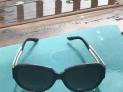 First up was a strange shell I thought was a clam, but turned out to be a pair of sunglasses. Versace, new. Brandon looked them up: $280.
 These sunglasses were more, as Brandon put it, “a Wendy-friendly style.” Aviators from Old Navy, $20 new.
 “Look at that.” I pointed to the edge of a tidal pool. We waited to see if the leopard crab shell moved. It did not. I picked it up. Empty, perfect, rare.
