Food for Thought

Living in a bookstore is cozy and fun, but also challenging. At night, trolling for a good read, my fingers ripple across the shelves, seeking back cover blurbs that make sense, authors’ names I trust.

Because I know what I like. I know what I want to hear–and what I don’t, going off in my head, voices planted by print that will chase me down hallways, seek me out in quiet moments, and start in: “Yes, but” or even the dreaded “What if?”

These voices ask us to re-examine not so much what we believe as why we believe it, a far more intense scrutiny. What did we inherit, and what did we swallow without question, and what have we observed that supports or belies these things?

A wonderful book called Women’s Ways of Knowing says the continuum of human wisdom runs from a person who “stands in her shoes and looks out” to synthesizing pieces of knowledge to create new knowledge.

Do we only read the books that agree with us? No, probably not; most bibliophiles don’t. But do we only want from books we disagree with a sense of why their argument is wrong, invalid? Or do we listen to viewpoints we would never seek out in the greater world? Is that what bookstores are for, to let us experience–at somewhat lower risk than attending a rally or visiting a friend’s church–ideas that don’t rock our world, but could sink it?

I read certain books in certain moods. Some days I want challenge; bring on Simon Schama and Jonathan Safran Foer; yes, I will try the sushi today, thanks. Other days I want comfort; yesterday, seeking familiarity, I reread Clyde Edgerton’s Walking Across Egypt. It’s as comforting as veggie lasagna, with an equal amount of thoughtful chewing.

Books make us think, and a healthy diet includes the ones that ask us to consider another’s viewpoint. I used to teach my students, back when I was teaching, that the job of the anthropologist was to help society live with ambiguity, to put two people who believe oppositional things into a room and help them shake hands and agree not to order their subjects to kill each other. Live and let live is the motto of the ethnographer.

And the bookshop owner.

The DPO strikes again

Anyone who, like me, owns a historic vehicle (mine is a 1962 MGB Roadster) will know the acronym DPO. It stands for Damned Previous Owner, and crosses our lips each time we come across some inexplicable previous ‘fix’ that makes what should be simple maintenance fiendishly complicated . I should say here that my good friend Colin, who owned the MG before me, most definitely is not a DPO. But the other guy before him….

Our home-cum-shop (for those who don’t know, we live on the second floor, the books on the first) has had more than its fair share of DPOs—particularly when it comes to electrical work over the years. We were first alerted when we had lights fitted to our shop sign recently; the contractor took me aside and said, “Lemme show ya somethin.”

I admit to a certain amount of trepidation as he led me into the basement, where he pointed out ancient, mouse-chewed wiring snaking gaily over copper water pipes.  “See ‘em?” his stubby finger jabbed at the wires. I reached up. He grabbed my wrist and said, “’Ems live.”

“Ehms live?” I repeated dully in my Scots accent. He gave me a confused look and spoke slowly: “You have electricity near copper. ‘Ats bad. Real bad. Get ‘er fixed.”

Accents have caused many moments in the six years we’ve been here. But the copper pipes and live wires were sparking serious concern, so part of our plan in redoing the basement was to, indeed, get ‘er fixed.

Our obliging friend and electrical guru (who would be known in Scotland as a ‘sparkie’), Leroy arrived with his trusty toolbox and we left our wives upstairs talking books as he and I descended into the bowels of the basement. Trying to make sense of the mixture of ancient and modern wiring down there, time swore on—not wore, but swore, I assure you.

But the air turned blue with terror when he opened up the main light fitting to discover almost every wire in the place was going in and out of there, including one that went into a wall and then came straight back out again and another that went to yet another light fitting that was inexplicably bricked up inside yet another wall.

See, electrical wiring is sort of like writing: it should have a clear beginning and a purpose for its movements, and it should reach a destination where it does something meaningful. And perhaps have a source from which it draws its power. Neither wires nor words should meander about sparking without intent.

Leroy and I got some sense restored and all the ancient bare wires disconnected without causing any problems in the house; the girls only shrieked once, when all the house lights went out as we tested which circuit went to what. All we need to do now is work out how and why the outlets in the kitchen are on the same circuit as the lights in the bathroom and mystery room, and then we’ll be able to stop cursing the DPOs – for the moment – – –

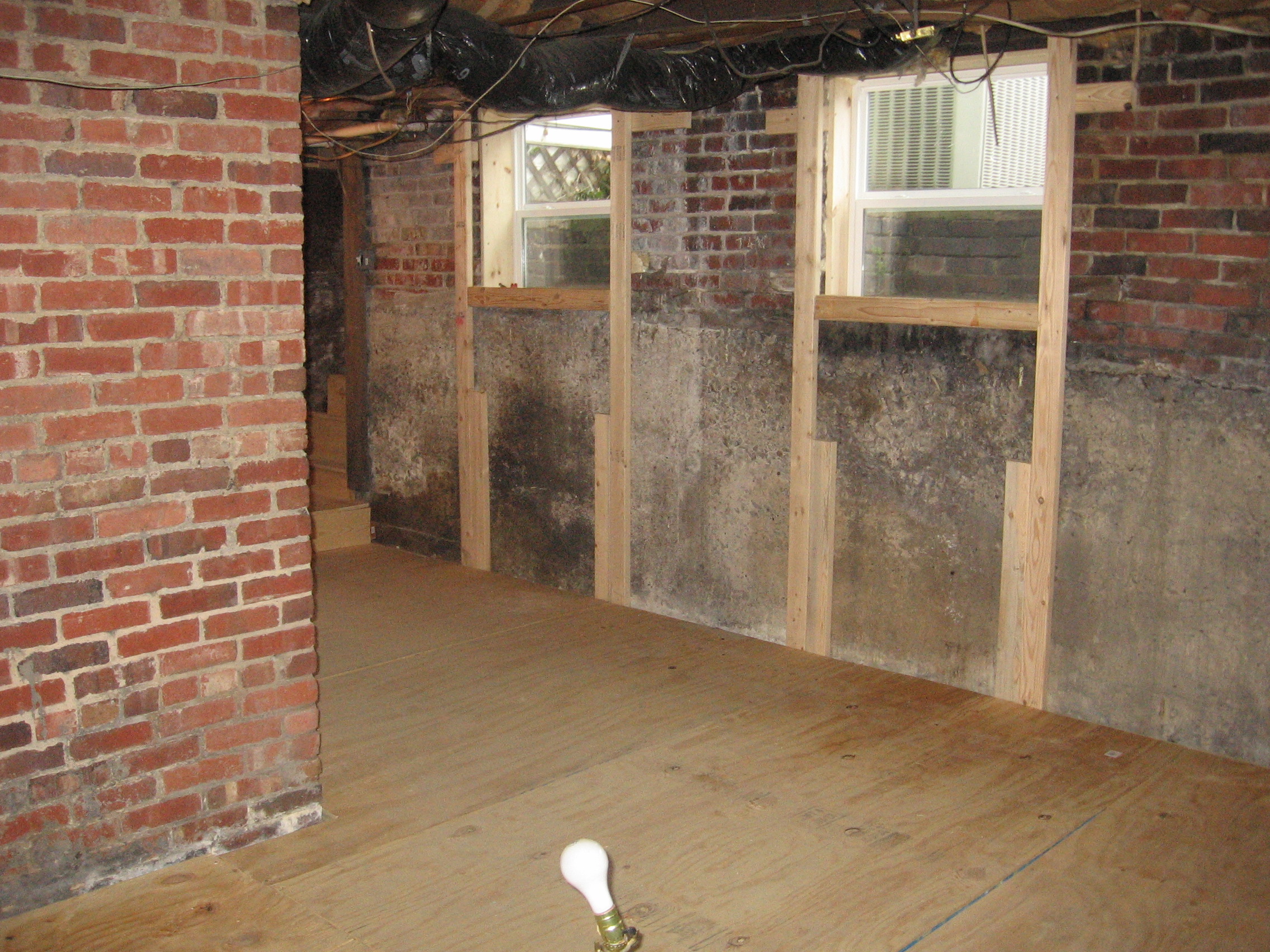
Meanwhile the non-electrical work in ‘Tutankhamen’s Tomb’ continues apace –

The hidden fitting

The hidden fitting


a new wall takes shape

a new wall takes shape

the infamous windows

the infamous windows