
Old in Art School: A Memoir of Starting Over by Nell Irvin Painter is reviewed by Janelle Bailey this week. It’s not her fault it falls on a Tuesday.
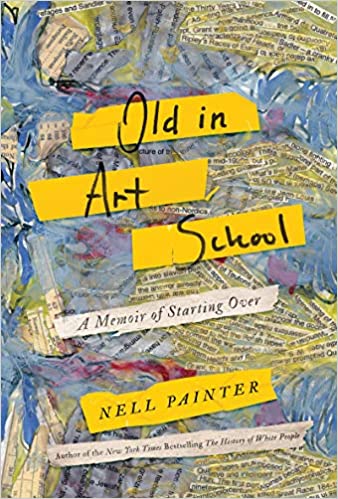
Having now read this book through once in its entirety but read to read it and not stopped to do all of the research I considered doing or could have while reading–looking up the name and art of every artist mentioned with whom I was not familiar but not wishing to stop reading every time that urge hit–I am strongly considering reading it all a second time very soon, checking into all of those details, now that I know Painter’s “story” or its general “flow” and premise in essence and have the sense of all of that.
For now and in hindsight I wish to learn, through research and deeper analysis, more about the numerous references she makes…but I might first read at least one of her historical works as well. Maybe her biography of Sojourner Truth. Maybe <i>The History of White People.</i> Maybe something else.
I am curious to see how Painter addresses race–specifically her own–in her historical works, given her aim to incorporate that and more of her own experiences in her art. I am not certain how to feel about all she says and does not say here, for at times she definitely seems to be saying–please pardon me if I have it wrong–that it is socioeconomics more than race that fuel or do not one’s success or failure–but then in other breaths conveys experiences of having been mistreated or questioned solely for the color of her skin. It’s a little confusing to me at times, but it sounds like she has lived a life of privilege in many ways.
Ultimately I am awed by Painter’s actual process: she retired from Princeton after a very successful career in education and publishing written works, and then at 64? 67? (I have seen both, and she really does not like to be asked about her age) pursued first a BFA and then also a MFA, and aimed at beginning a new career.
She talks much about and processes that being and/or becoming “An Artist” is different from being and/or becoming “an artist,” and she certainly addresses how the younger folks who are expected to be in college and/or graduate school, by their ages, when she is in college and/or graduate school with them face a number of aspects of their lives much differently from how she does. And while she aims, it sounds like, to point out these differences just as “differences” and not one perspective or approach having greater value and/or merit than the other…she does, indeed, sound critical, especially since she feels labeled and judged and separated for being the age she actually is at the point in time of the book’s action.
I ultimately enjoyed this book much…and enjoyed discussing it with not one but two book clubs this summer.
 Wendy Welch: Books, Yarn, Cats, Opioids