Japan: Amelia’s Happy Day

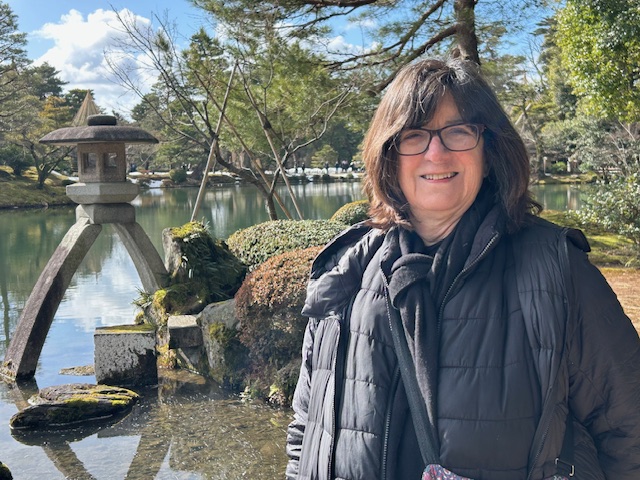
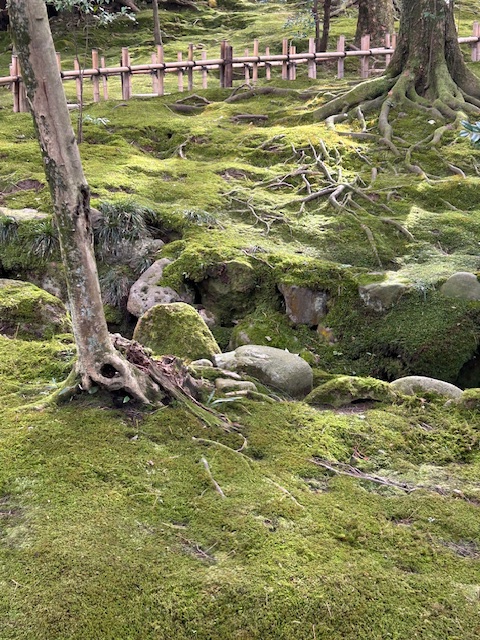
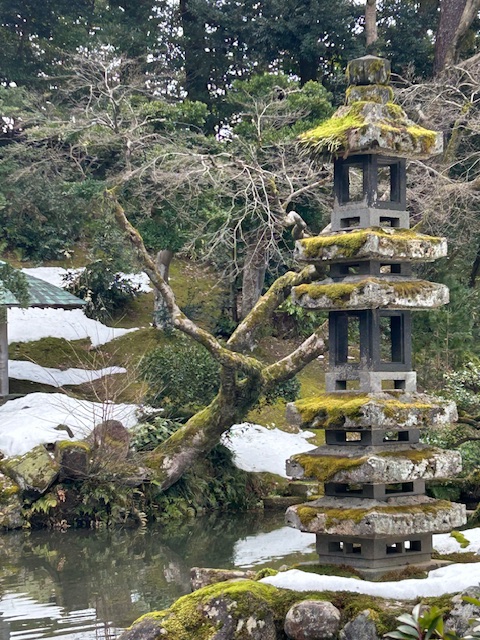
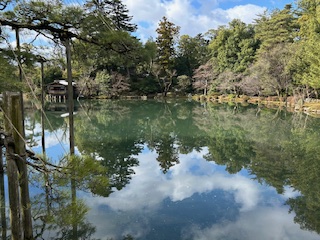
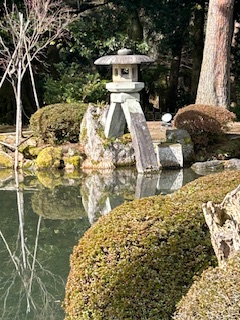
Kenrokuan Gardens are in Kanazawa, and they are quite something. I enjoyed them, but Amelia was having a mystical experience. After her first trip to Japan a couple of years ago, she built a Shinto garden at her Airbnb–which is her maternal grandmother’s old house, modernized for visitors–and we do believe she has the only Tori gate and Inari shrine in Elk Creek, Virginia. (Inari is the white fox who guards rice, and therefore prosperity and possibility.)

A kind couple at the bewildering array of bus stops at Kanazawa station helped us to the right bus and were very sweet in helping us get off it properly, as they were headed to the gardens themselves. The gardens are free if you’re over 65, so Amelia’s happy day started early. I had to pay 500 yen (which is a little over $3).

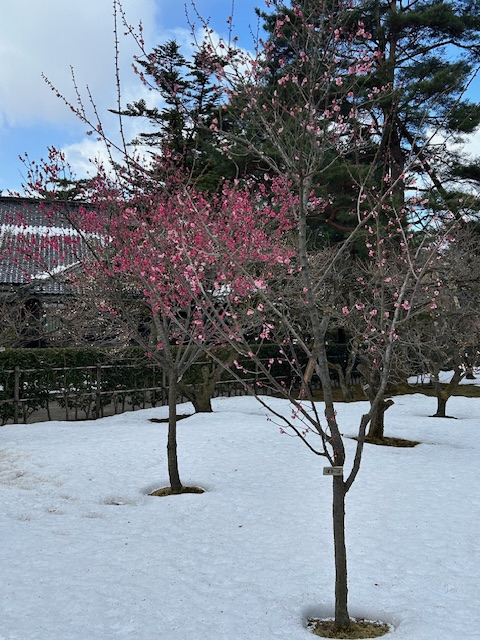
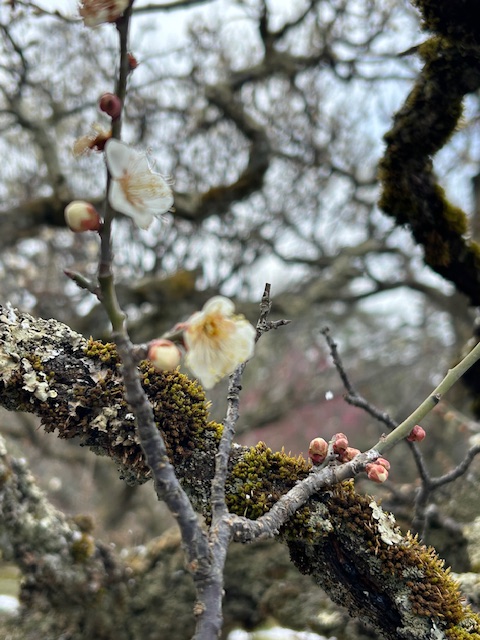
Plum trees blossom in snow. I did not know this until I saw them with my own phone camera! The gardens are famous for that era of rapid transition in Japan, when feudal lords (samurai) were on the way out and modern Japan as a power to be reckoned with in manufacturing and goods was hoving into view.

Of course, the samurai didn’t like this, and many of them were wiped out around the same time as the American Civil War in an ill-fated rebellion. It was shortly after this that samurai were forbidden to carry swords as part of their daily attire. (I am ignoring the implications to open carry in my home commonwealth of Virginia and moving on, thank you.)

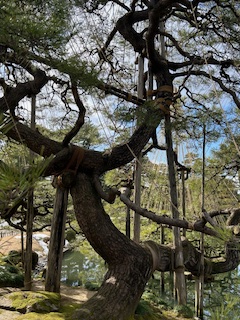
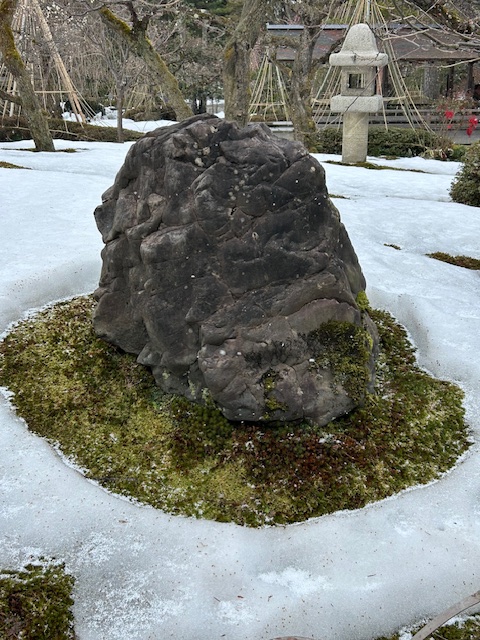
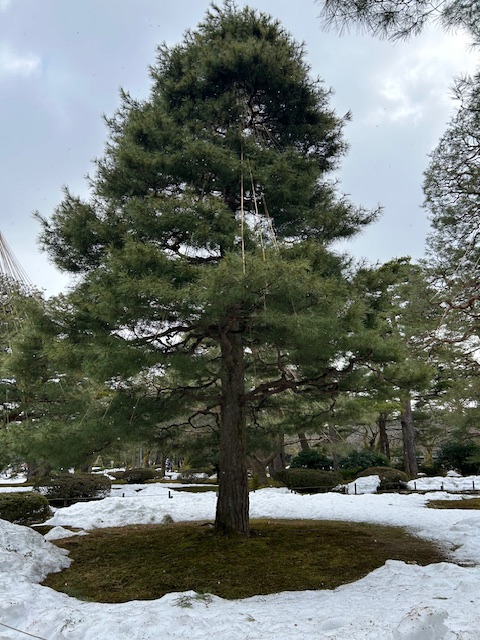
The gardens are named Roku because of Japan’s six prized landscaping elements incorporated in their design: open spaces, panoramic views, solitude options, art made by humans, ancientness, and lots of water features. One of Japan’s oldest trees (a pine) sits in the garden. Amelia’s aunt sat on the tree seventy years ago to take her bridal picture, but it’s roped off now. One too many tourists, probably.

Amelia walked around in a daze, every turn and corner a new epiphany. I am a cheerful but not accomplished gardener, so I walked around going “Oh, pretty” and “I wonder if this is edible or medicinal.” (Bad gardeners make good foragers.)

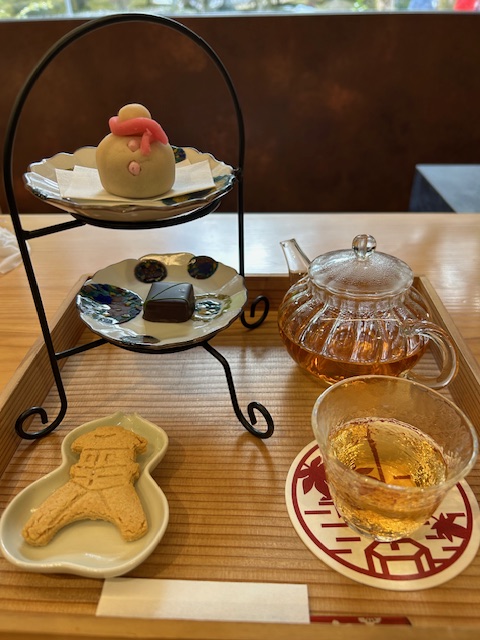
And of course we had to do the winter tea experience, because it was cute. This country invented cute. They do cute with elegance, cute with glitter, cute with dignity, cute with gravitas. Warning to visitors: DO NOT LAUGH when you see a businessman in a black suit and black cashmere coat carrying a black backpack with a dangling fuzzy bunny onto a train. This was our international incident #17 or so, we think. We’ve lost count.

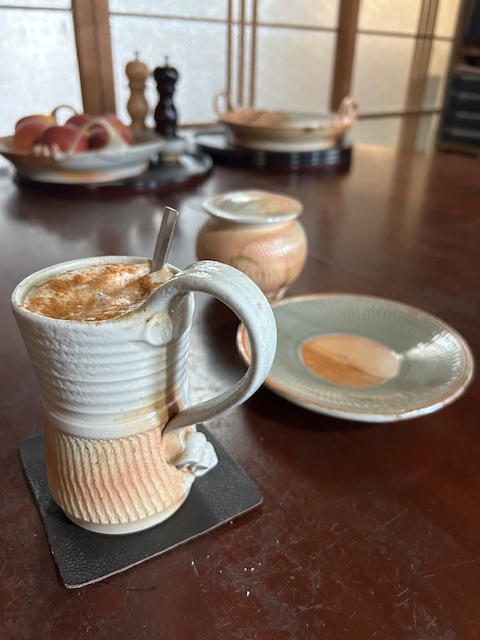
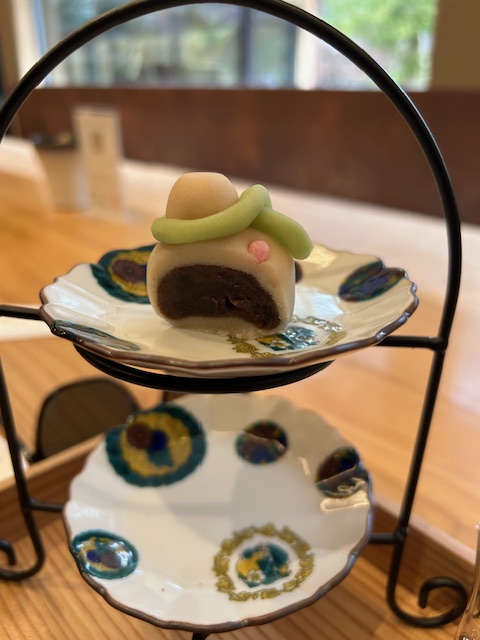
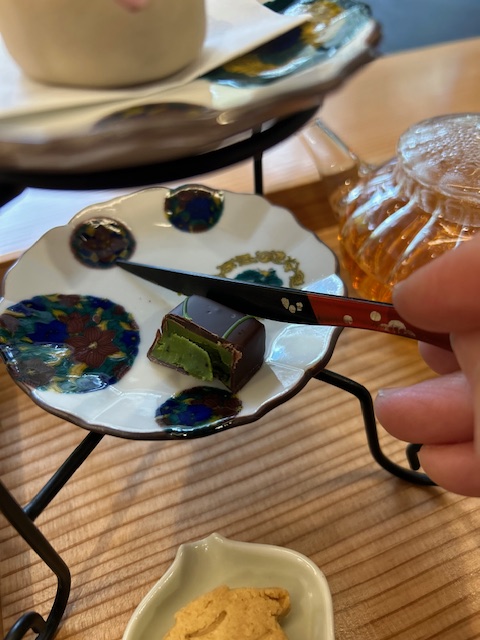
Amelia sat in blissful silence, munching her bean paste snowman, matcha chocolate, and almond lantern cookie in deep contemplation. She’s planning her garden back home. I bit the head of my snowman and watched a fat raven work the crowd outside the window.

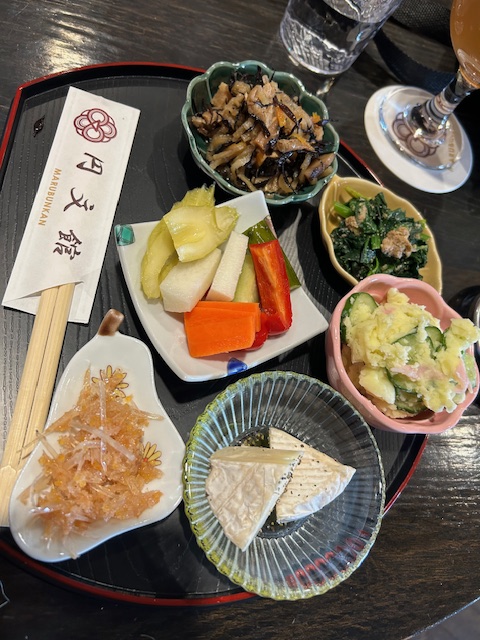
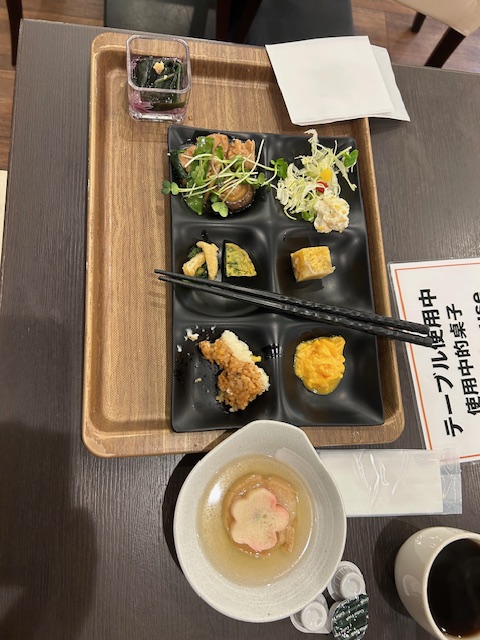
After the gardens we investigated the reconstructed castle walls, then wandered through town. The high tea Japanese style was charming, but not entirely filling, so we stopped at what can only be described as a Japanese tapas bar.

The owner was a very sweet woman, and I had an assortment of six dishes plus hot red wine. (That is a big thing here and one of the cultural imports I will be making at home. Hot red wine is delicious, not mulled, just heated.)

She had a small display of handmade jewelry all in the same pattern, a family crest. Her sister makes them. Amelia and I treated ourselves to earrings, and then headed for a neighborhood outdoor onsen. These communal baths use volcanic hot water with a lot of natural minerals in it, and they are awesome. International incident #18, I left my glasses in the washing room, so had to reenter it after the onsen, with my sweatshirt on. You don’t wear street clothes into the bathing area.

The onsen also shows something kind of gritty about human divides. In America, many Americans will avoid direct contact with Mexicans unthinkingly, or make assumptions about their cleanliness and such without overtly expressing why they decide not to sit there, eat that, talk to him or her.

In the onsens we have visited, if we go to the inside tub, the Japanese women who come in after us go to the outside, and vice versa. Once an older woman shot us a suspicious look and left. By contrast, at my first ever onsen, the only woman there spoke fluent English and welcomed me to the experience when she discovered this was my inaugural immersion.

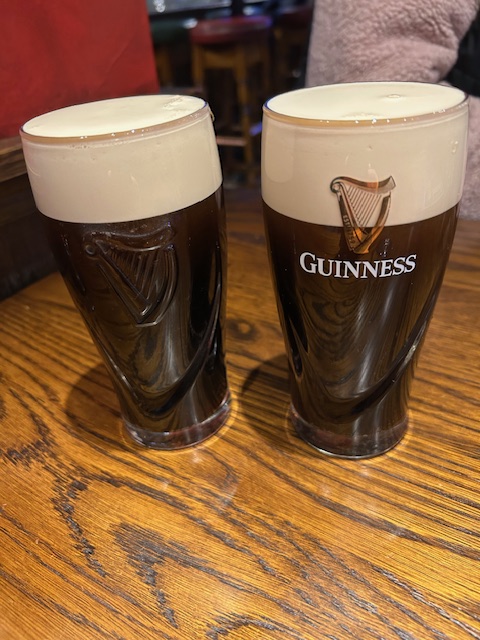
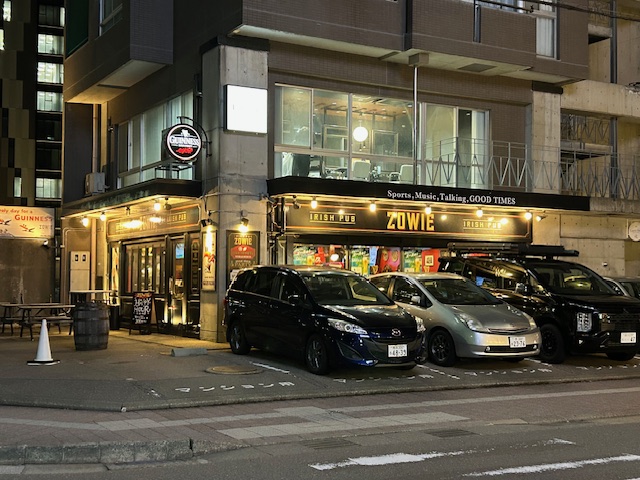
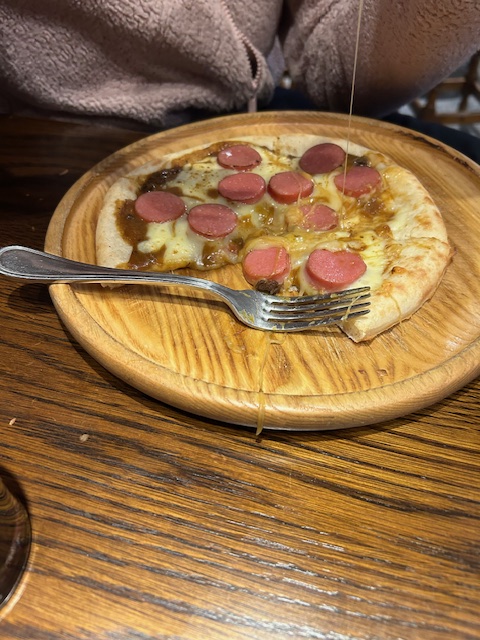
The neighborhood onsen was sublime. The gardens were spiritual. So what better ending to such a meaningful day could there be than an Irish pub in the heart of Kanazawa at happy hour? Amelia had a curry pizza. I had sausages. The Olympics were on a massive screen TV, showing the Asian figure skaters. A good time was had by all.

Japan: Please Send Bail Money

Amelia and I have racked up quite an impressive list of cultural faux paus and international criminal activity since arriving in Japan. Here are some fun facts so you can avoid arrest.

There are no public trash cans. You buy it, you carry it until you get to your home, hotel, hostel, what have you. In desperation once, I stuffed a leftover plastic container in the corner of an obscure toilet in a remote area – and waited for the sirens to go off. The postal boxes in Japan wear signs saying more or less “Yo, westerners, this is not a trash can.”

Several of our crimes involved toilets. We were desperate to reach one at an unstaffed train station, and our Suica card (the subway pass) activated the barriers on the exit machines. We pushed on through because, toilets. We believe we committed a $4 crime, not paying for that train ride.

Toilets in Japan are intimidating. They come with a long row of buttons whose symbols and names are equally bewildering to the Japanese kangi characters accompanying them.

One has musical notes and says ‘privacy.’ I thought “Well, a little music would be fun,” so pushed it.  Waterfall noises began; it’s so you can poop without disturbing your neighbor.

The privacy feature will auto-activate. I discovered this the morning after our spectacular Indian curry meal—the results of which were equally spectacular.

The buttons on the toilet led to our next international incident. Amelia took me to this swank department store (the Japanese Saks Fifth Avenue) where they keep a constant display of goldfish. For $20 you can walk amongst them for an hour and that’s the best $20 I ever spent. Photos tomorrow.

But the toilets in that café offered a dazzling array of support features (plus those fabulous heated seats; Japanese toilets feel so good when you’ve been walking all day, like little rest stops for weary bones).

When I started trying the smorgasbord of features, water shot up parts of me that don’t normally get that treatment; I pushed the privacy button to drown my yelping. Then I couldn’t find the off button, but inadvertently appear to have found the call attendant button, because one of the four Japanese words I know is “help” and the lady standing outside my toilet door a moment later was definitely asking if I needed any.

I finally got the buttons turned off—including, unfortunately, “Flush.” That was not one of my four words, so explaining to the long line of well-heeled women waiting their turn was difficult. “The American broke the toilet” I am pretty sure one of them said over her shoulder. They shot me sympathetic-to-hostile looks as I slunk out.

A lesser amount of slinking accompanied our ride on the bullet train this morning. Shinkansen trains require supplemental tickets; as they were heavily booked Amelia and I got the last seats of 10 B and 11 B—because the center seat is never cool. We boarded to a wall of blackness- and not just hair and suits. When you get on public transport in Japan you realize just how little color people wear. Except the pubescent girls. That’s a different thing altogether. Everyone else is in shades of black and grey, and of course most Japanese people have black hair.

The businessmen—to a man; we were the only women and the only foreigners in that train car—glared at us. Maybe because my Hello Kitty laptop case is pink. Or because after four days in Tokyo souvenir shopping we could no longer fit our shoes into our backpacks, so had them tied outside. I tried not to hit the guy in 11A in the face with my tennis shoes as I deposited my overstuffed bags overhead, sat down, and pulled out my crocheting.

Since I now have three pieces of luggage and the train was only stopping for a minute at our destination, I started gathering stuff five minutes before. Which meant I wound up facing backwards standing up with bags in my seat, while the men on either side of my tried very hard to pretend none of this was happening. They wore suits, had laptops, and did not want to be associated with my weirdness in any way.

But as I rode backwards like a puppy with her head out the window, a guy several seats along looked up from his laptop, did a double take, and then pulled down his mask to grin at me. Well okay, then. If the Zombies showed up on this Train to Busan, we’d team up with him. At least he wouldn’t throw us to the flesh eaters first to save himself, not like the rest of these guys.

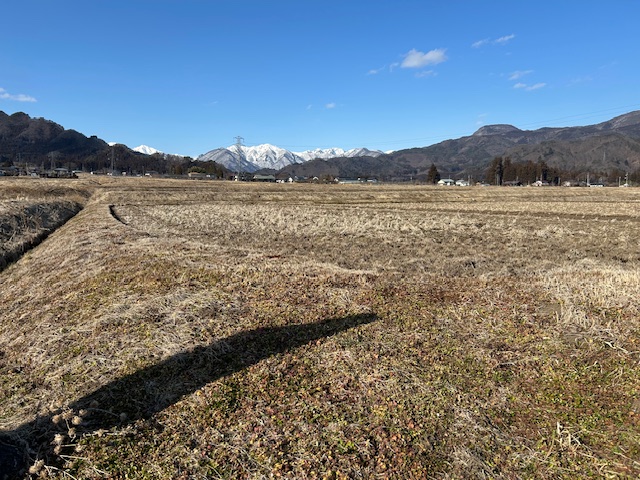
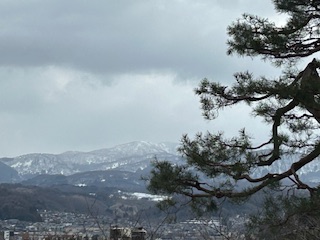
We descended at a tiny little place called Gokan and discovered we would have 96 minutes to enjoy the snowcapped mountain vistas around us, because the bus to our hotel wasn’t coming until then. Ah well. A slowdown after Tokyo will be nice. So long as the law doesn’t catch up with us. Or any of those guys from that bullet train.