
Leafing Through Old Magazines

I’ve been helping my parents clear their basement of unwanted detritus (as opposed to wanted detritus) and found a large stack of Saturday Evening Post and LIFE Magazines from the 1960s and 1970s. Some of them are collectable, so we’re selling those off for Mom’s pin money. But it’s slow work because Jack and I keep getting sucked into their content.

Affordable housing shortages, race relation troubles, the decline of the education system, corrupt politicians, and America getting involved foreign wars: such a different time, those sixties….

The more things change the more they stay the same is only half the story, though. At first reading of the stories of enforced integration and the Watts Riots, what immediately struck me was the different framing, the use of language to create subtle (maybe not-so-subtle) perceptions of how to approach “the problem.” 

Let’s talk about the advertisements. Certain cars, certain cigarettes, certain alcohols, attract blondes. Really slender-yet-curvy blonds. Certain flavors of Campbell’s soups create wholesomeness. And let’s not forget the nerve pills and the soft drinks Mommy needs for energy—especially as she might be entering the workforce as a nurse or teacher. 

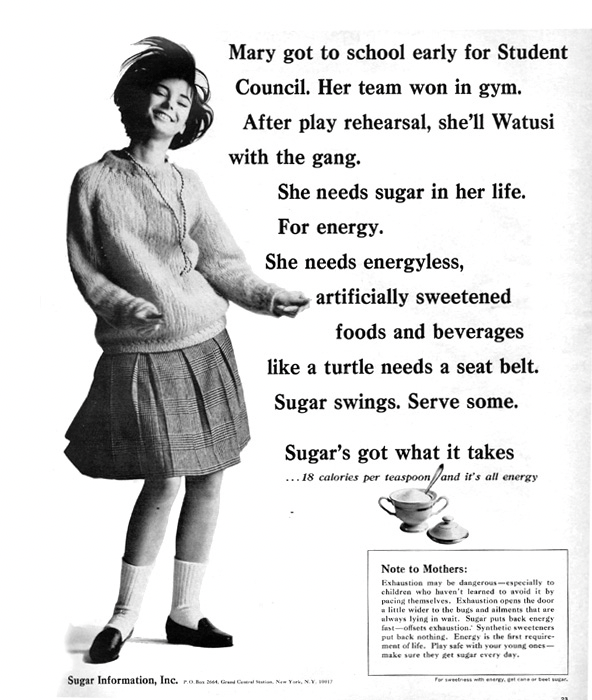
I have started collecting the sugar ads. Somewhere around 1966 diet culture got big (ehm, no pun intended). So, the sugar company fought back: full-page ads featuring (so far) four different kids, detailing their busy days, explaining why they needed sugar’s wholesome energy. My favorite is Mary, who “needs sugarless soda like a turtle needs a seat belt.” Nice double whammy there, as seat belts in this era were 1) optional and 2) controversial.
But it’s the racial framing that really gets to me. In 1963, a reporter came to the integration story from the framework of heartbreak and chaos for northern schools just trying to get on with their job of educating future America. The not-entirely-subtle subtext: couldn’t those pesky Black people just be happy they had separate but equal schools and not rock the boat carrying America’s most precious asset? It wasn’t until the 1970s that a report on the same topic suggested, ever so simply, that America’s most precious asset included Black children AND that all the kids would benefit from knowing what America’s difficult past included in terms of teaching the Civil War and the slave trade as economic prosperity for those who sought to uphold it.

Might be coincidence, but that reporter’s byline didn’t appear in the few magazines I found after that date. There were only a few, so no conclusions can be drawn.

Has the language changed? Sometimes. Have the issues changed? Sometimes. Do we still eat sugar? Sometimes. Is this progress? Sometimes.
Peppers & Tomatoes

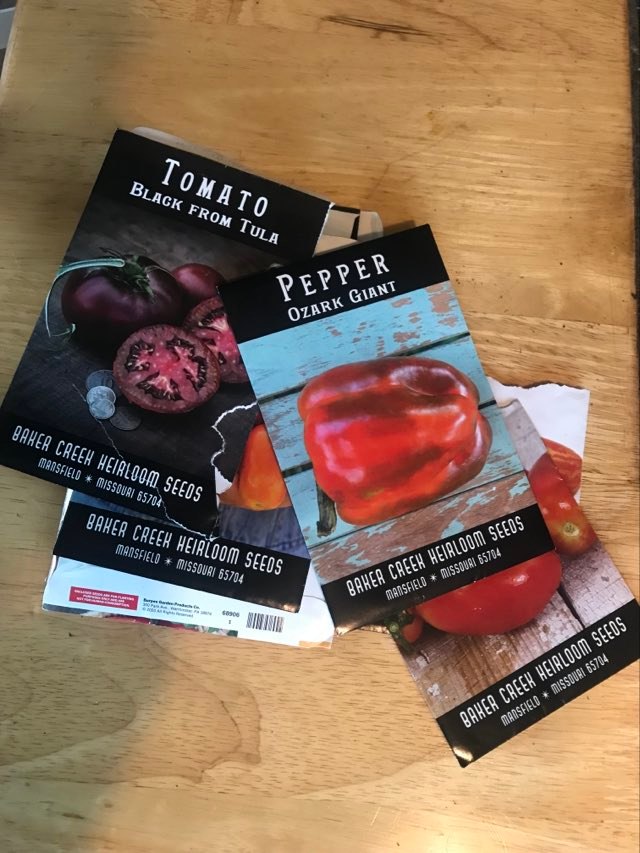
On Wednesday I seed-started our peppers and tomatoes. Every year when I do this, I listen to Ralph McTell’s song of the same name. It started back in Scotland when I was using growbags (because the Scottish climate is not friendly to tomatoes, so one must grow them indoors).

The bags say, “this soil is suitable for growing peppers and tomatoes” and Ralph McTell being the songwriting genius that he is, Kosovo being in full swing, and a very weary “same story different people” feeling pervading the general response to the violence, well, he wrote the song based on seeing those words on a growbag.

By now you know his song is not about planting peppers and tomatoes; it’s about growing hatred in carefully cultivated soil. The song spoke to me in large measure because at that time I was working with people who had entered the UK under difficult circumstances.

I ran a library group (as one does) for asylum seekers, most of whom were Middle Eastern Kurdish, African Christians, or Albanian Muslims. (Kurdish could bat for any religious team.)

During the course of an event, Mohiba, a Muslim refugee from Kosovo, and her daughter talked about their neighbors, the rising tension, the dropped comments of “you can buy gold but we are buying guns” and other hints of what was going to happen. Just because you can see something coming doesn’t mean you can get out of its way, Mohiba said. It takes money and strategy to get out of the way fast enough to not get hurt.

But Mohiba had more to say: how the Jews ruined everything, how the One True Religion had saved her, how righteous warriors were avenging the deaths by dealing out deaths of their own. This was at a time when new mass graves were being found in Iraq, where regime violence outweighed (or intermingled with) religious and ethnic violence fairly often. Saddam’s disappeared enemies were being pulled out of unmarked pits.

Naziq, an Iraqi Muslim whose husband got targeted for being an English translator, had begun talking about this, through her daughter Fatima’s translation since Naziq didn’t speak English. She had been watching the coverage non-stop on the BBC—and Mohiba interrupted.

“It is a lie, false news from the Jews who own that network,” she said. Fatima did not translate for her mother, and we tried to direct the conversation to less hate, more healing. It felt a lot like herding snakes.

After the session was over, Fatima came up to me, rigid and livid. She said her mother had been going to tell the group that Naziq’s father, missing for four years, had been identified as one of the pit bodies. He had gone up against Saddam over his policy of separating families who had married across tribal identities, literally sending people to Iran overnight without their families knowing. Grandad paid for it with a bullet.

“It is not the work of anyone else. It is not for anyone else to say such things. And for someone who has endured such violence to say more violence will solve it….” She shook her head, wise beyond her teenage years. “We cannot have these conversations, even.”

Every year, I think about the friends I made then, and how Naziq and Mohiba’s daughters must have children of her own by now. I wonder what they teach their children. And I listen to Ralph McTell’s Peppers and Tomatoes.