
Jeanne Powers’ Monday Book


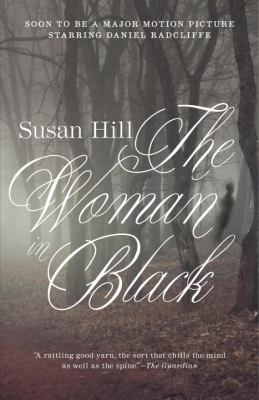
041389b2caf661540eb4ebe445ddcf5dd96a288dThe Woman in Black by Susan Hill

Young solicitor Arthur Kipps is sent by his firm to a rather secluded English village in order to tie up the affairs of the late Mrs. Alice Drablow, a recently deceased elderly client. The villagers don’t seem inclined to discuss Mrs. Drablow, or anything else for that matter, though they do make Arthur welcome. At the funeral service, Arthur catches a glimpse of a woman in black lurking around the churchyard, but his inquiries are brushed aside. Resolutely, he prepares to go to Eel Marsh House, Mrs. Drablow’s residence, which is in a marshy area accessible only at certain times due to the tides. Once there, he will be cut off from the outside world until such a time as the pony cart can cross the causeway to fetch him.

He’s going to wish he had taken a tide chart with him.

The subtitle of the book is “A Ghost Story” and that’s exactly what this is, in the best sense of the phrase. The old fashioned setting, the formal narration, even the nature of the story itself harkens back to those wonderful early ghost tales where the chills and thrills came from the mind and not blood spatter. Hill has perfectly captured the flavor of these Victorian tales . It’s beautifully written; Arthur, the narrator, is looking back at an event which shaped his life and he tells his tale without hyperbole or exaggeration. It has the ring of authenticity.

The book is just so wonderfully atmospheric. I could practically smell the sea air and shivered a bit in the dampness. While there were definitely warning signs, the book wasn’t over laden with signs and portents. The villagers may not have been over communicative, but there was nary a pitchfork nor cackling crone in sight. Arthur enjoys a hearty meal at the inn, a warm fire and a comfortable bed. The skies are blue and largely clear but cold. No air of menace hangs overhead.

The haunted aspects come later.

The ending is abrupt and I was taken aback at first, but it is the perfect ending. He has told his tale; there’s no analyzing or rationalization that this might have been just his imagination. This is what happened and, like the villagers, he has no wish to discuss it further.

There is a theatrical production of the book and there has been at least two movie versions but I don’t think either could ever capture the book, especially not the ending.
 

Things I Learned during Writing Residency

19226005_10154761056583505_1735351353313373426_nThings I have learned (some about myself, others about writing) during this residency:

Crocheting is as important as writing. Find your BECAUSE YOU LIKE IT thing and do it. You don’t need any more reason than that, so long as it’s not killing the household budget. If what you like is expensive or takes time your family can’t give you, see if you can pull a little dangling thread somewhere to get a small marked bit of time and space. You need it in life even more than writing.

The value of silence: it is tempting to tune into online TV during crochet time, the radio while we drive. Do without every so often. Sit and listen to what you’re thinking about, and be surprised at the connections that form because of the silence.

Don’t lose sight of places you like to be. Until I got to Fayetteville, I had forgotten how soothing, how inspiring, being in the woods is. Church, ball game, bathtub: wherever you go to get your writer on, don’t let anyone keep you from it.

Do new stuff because it’s new. This could be writing, finding a new place to hike, visiting a different town, cooking something weird, trying an intense craft pattern. Bust out of your comfort zone.

Know what you believe. I believe in Jesus. After that I’m listening. Right now polarities are oppositional in politics, religion, even how to cook lasagna. Every idea space is full of debates and hurricanes. Listening is good. Keeping one’s mouth shut is good. Usually people don’t want to know what you think; they want to tell you what they think. Let them; it’s grist for the writing mill, and not difficult to shake off what they will enjoy as a power move. It makes GREAT character study. Don’t get excited; get a notebook.

Draft fast; edit slow. My latest manuscript of 65K words drafted in three weeks. It was crap but had great bones. I set it aside for three weeks, then edited, sent to readers, edited again. The polished draft is with NYC’s publishing deities. Time plus chair plus keyboard makes drafts; fallow time plus finessing makes books.

Work with other writers in a bordered capacity. I’m fortunate to teach for Memory2Memoir and mentor writing educators with American NewMedia Foundation. What other people struggle with, how other people choose to tell stories, invigorates your writing. That said, offer too many consults and your time will disappear. When I sat down to do “other writer stuff” besides drafting or editing my manuscript, how much “other writer stuff” there was startled me.

Enter contests carefully. Writers can spend their lives looking for and finding them at $25 entry fee per. Like a plot itself, getting sidetracked to tell a wonderful story about some minor character may be fun, the writing great, but it doesn’t advance the overarching narrative. Entering contests because you don’t know what to write about yet? Awesome, keep going. Entering contests as avoidance to writing your book? Nope.

Have simple foods on hand. Peanut butter and apples were my staples, plus Trader Joe’s frozen polenta for hot meals. When you’re knee-deep in plot yet hungry, you can keep going.

Hope these are useful to you. I’ve loved my time at Lafayette Flats.

16996112_1413870752024892_5559679091652011148_n