
We return to our friend Jeanne Powers for this week’s Monday Book….
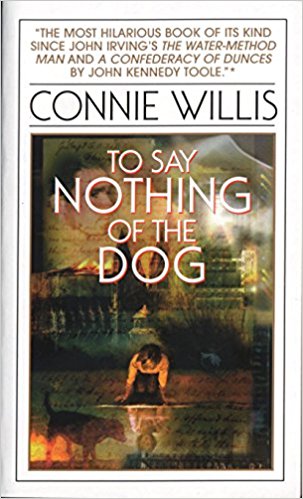 When Lady Schrapnell agrees to endow the time travel project, it seems like a dream come true for the researchers at Oxford University. They didn’t count on their benefactor deciding to use the project to re-create Coventry Cathedral, sending travelers back to umpteen different time periods to locate objects. Time lagged and exhausted, Ned Henry is sent back to Victorian England to recuperate away from the demanding patron. Unfortunately, he’s sent so hastily that he arrives unprepared to fit into an era of séances, village fetes, and penwipes. He lands at a railway station in 1888 where he meets a dreamy college student who spouts poetry and tends to fall in love suddenly, an eccentric Oxford professor, a bulldog named Cyril and a whole host of characters who could have walked out of a P.G. Wodehouse novel. Ned is infatuated with Verity, a fellow time traveler, but he isn’t sure if it’s true love or time-lag. Whatever, they need to resolve a little problem caused by Verity’s accidental removal of an item that needs to be returned to its rightful place or else. . . well, they’re not quite certain what may happen but that might mean the downfall of civilization. At the very least they might be stuck in the past.
As you may have gathered, this is a difficult book to explain properly. I can tell you that it’s an entertaining adventure with science fiction, a bit of romance, some farce and a comedy of manners. I think it’s a delightful tale that should appear to a wide variety of readers, including those who don’t usually like science fiction or fantasy. One of my favorite scenes has a weary 1940 time traveler telling a colleague that a native asked about the Queen. “I told him she was wearing a hat. She did, didn’t she? I can never remember which one wore the hats.” They all did, is the response, except for Victoria. And Camilla. (It’s worth noting that this book was written in 1997.)
By the way, the title comes from Jerome K. Jerome’s Three Men in a Boat, but you don’t need to have read that to enjoy some of the in-jokes and brushes with history.
I’ve read it twice now, and enjoyed both times. It’s part of a series which includes The Doomsday Book—a book that is considered a bit of a classic as it won both the Hugo and Nebula awards when first published—and the more recent WW II book, Blackout /All Clear. However, each is a standalone book. While Dog is a much more light-hearted book than others in the series, Willis is using it to put forth her vision of time and time travel but wrapped up in an entertaining package.
I’ll admit the book drags a bit in the middle, but all the seeming side-trips play a role in the grand dénouement, making for a most satisfactory ending.
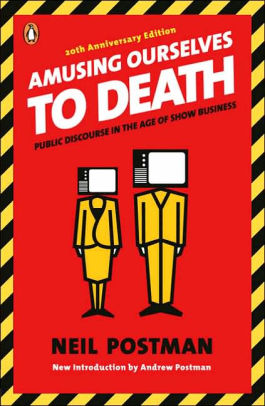 In the 1960’s the media and culture critic Marshal McLuhan famously opined “The Medium is the message.” Neil Postman, who was a student of McLuhan’s expanded McLuhan’s thesis in “Amusing Ourselves to death.” The book is a stinging critique of the television culture and how television and other forms of media have changed society forever, and not for the better.
 Wendy Welch: Books, Yarn, Cats, Opioids