
Observations from my first cruise:
Going on a cruise is like being in an airport where everyone is going to the same place, so the entire airport’s ticketing desks and security lines are aimed at one single door.
When you get on the ship you have entered a floating airport stacked on top of itself like layers of a wedding cake. Swarovski crystal and duty free shops dominate the lower flowers. There are people everywhere. Most of these people are reallllllly excited to be in this floating airport—which is so big it kinda doesn’t feel like it’s floating. You can’t tell at first, and then you realize, every once in a while, that you are lurching toward a wall for no reason.
Many excited children (350, we would learn later) are in the floating airport. The airport is stacked, not flat, and the things the children want to do are at the top and bottom of the airport. You are going to get a LOT of experience over the coming week at dodging children on the stairs dressed in swimsuits, decked out as fairies and tigers complete with face paint, occasionally appearing in wolf and bear hats once people have visited ports and tourism shops. You will become accustomed to this changing wardrobe and also an expert at dodging the small human bullets of enthusiasm. But be wary: the enthusiastic little critters are followed by large exhausted critters, always holding an open canister of either hot coffee or sticky cocktails with fruit. Do not run into them; they will become angry if the liquid spills, and they are not looking at you; they are looking at the small human bullets ricocheting off the stairs.
The staff on the cruise ship are there to make you happy. This can become frightening. Of the just-under-6K people on the ship, 1,500 of them are staff. They are watching you. They will approach and open or shut windows so you can see better. They wipe wet seats, fogged viewing areas, and their own facial expressions when people start getting grumpy on day three. YOU are the target of their compensated kindness, and they want to make you new drinks, great food, and happy. If you are not happy, more of them will appear. Fake a smile if necessary, and they will dissipate.
If you take an Alaskan cruise going north in September/October, you are basically swimming upstream against every whale in the Pacific. The first day someone sees a whale spout, everyone on the boat will rush to that side of it jockeying for position at the railing.
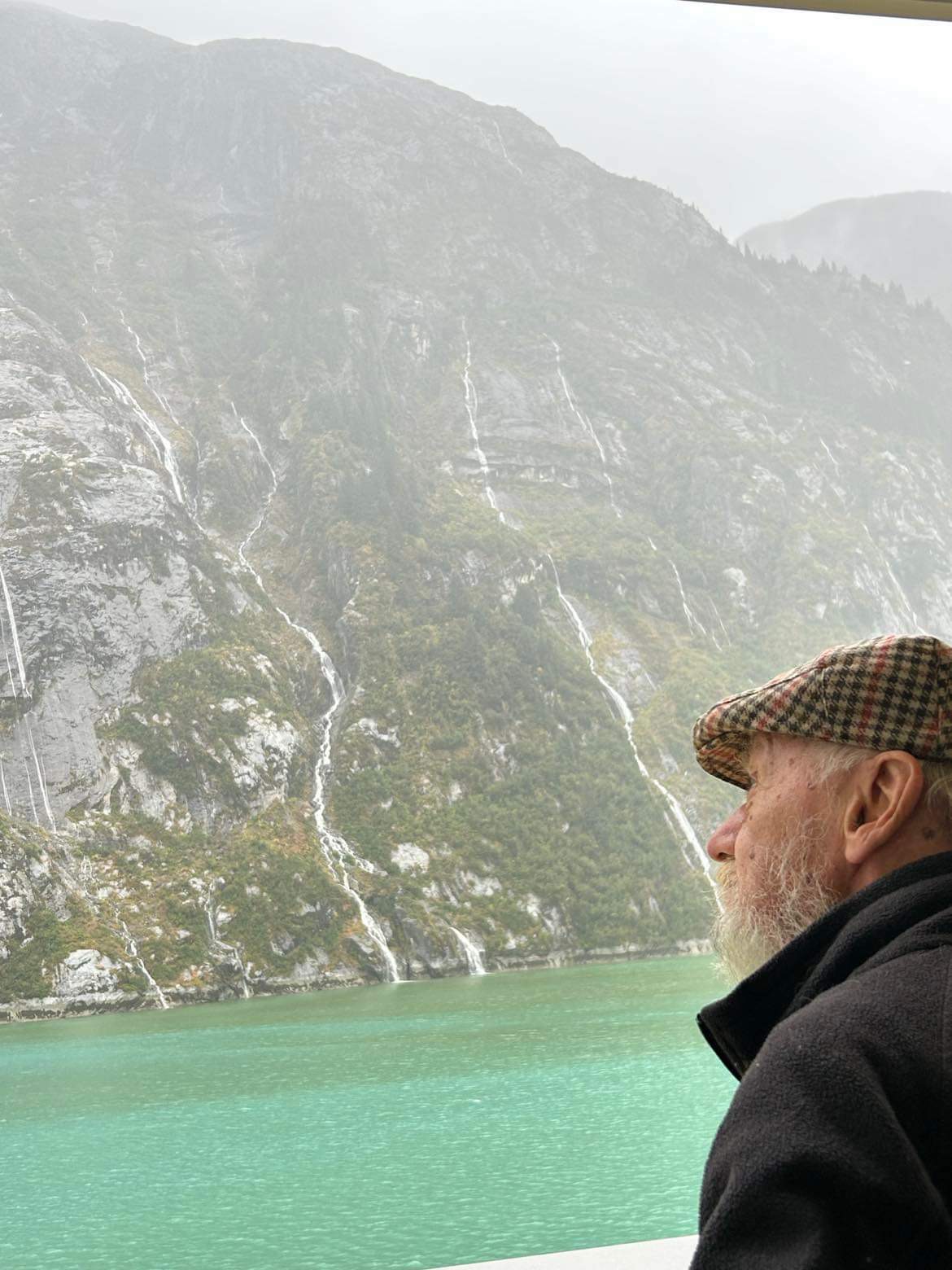
By day three, someone will glance up from reading their book in a deck chair, yawn, and say “there’s another one.”

All bets are off if it turns out to be an orca. We only saw one of those, as opposed to about a thousand whales, and several groups of dolphins–or maybe porpoises. We weren’t close enough to be introduced properly.
When you pull into a harbor, everything swarms the ship. The seagulls and scua take up residency atop the lifeboats and wait for you to toss them pieces of muffin and toast from your balcony. This is forbidden, but the seagulls know human nature.
The seals and dolphins swim alongside the ship, doing cute things and picking up pieces of muffin and toast from people who overestimate compensating for wind in their trajectory. The people selling tours swarm the dock shouting interesting things you can do. Because the people who have never been on cruises before didn’t know they were supposed to pre-book excursions, they kinda wander ashore looking befuddled and are quickly eaten by the independent tour guides.
Next week we can talk about scenery and stuff.

 Wendy Welch: Books, Yarn, Cats, Opioids