
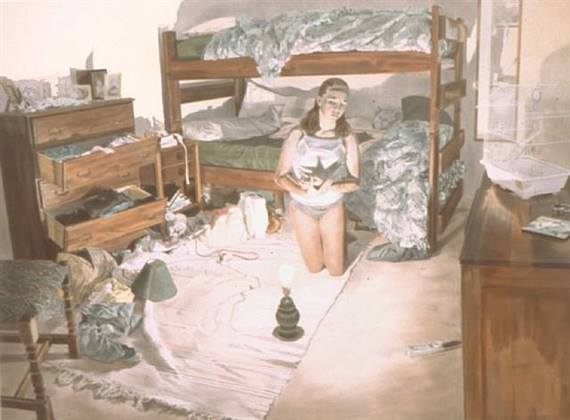
Years ago our then-pastor Tony Palubicki preached an Advent sermon using art. He showed us pictures of the Annunciation, including an amazing panting titled “Overshadowed.” Artist Patty Wickman produced it December 21, 2008.
I fell in love with Wickman’s painting at first glance. Mary comes too often in that Raphael-esque “aren’t you the image of feminine virtue” with a veil and is not relatable as the unwed teen mother she was about to become. Or the story she couldn’t tell. Or the woman with a definite strain on her forthcoming marriage. She carried all that and Jesus, too.
And then a couple of weeks ago a friend posted this poem by Kaitlin Shelter, and I cried my eyes out. This is what is wrong with how churches see women, and this is why Mary is the ultimate example of what it means to be a Christian woman, not the veils and the downcast eyelashes and the artful folds in her robe of the male masters who decided she needed to be softened at the edges. She changed the world, not as a vessel, but as a woman who raised divinity with humanity. She spanked him, changed his diapers, and cried her eyes out at what was coming. And she did it all in a world full of men who debated when the Messiah would show up and how they would all be ready to greet him and be part of his wonderful army and reign.
SOMETIMES I WONDER by Kaitlin Shelter:
sometimes I wonder
if mary breastfed jesus
if she cried out when he bit her
or if she sobbed when he would not latch
and sometimes I wonder
if this is all too vulgar
to ask in a church
full of men
without milk stains on their shirts
or coconut oil on their breasts
preaching from pulpits off limits to the mother of god
but then i think of feeding jesus
birthing jesus
the expulsion of blood
and smell of sweat
the salt of a mother’s tears
onto the soft head of the salt of the earth
feeling lonely
and tired
hungry
annoyed
overwhelmed
loving and i think
if the vulgarity of birth is not
honestly preached
by men who carry power but not burden
who carry privilege but not labor
who carry authority but not submission
then it should not be preached at all
because the real scandal of the birth of god
lies in the cracked nipples of a14 year old
and not in the sermons of ministers
who say women
are too delicate
to lead

 Wendy Welch: Books, Yarn, Cats, Opioids