
I don’t know when I’ve enjoyed a book so much, not least because half of me was engrossed in the story as a reader and half of me was sitting back as a writer going, ‘how is he managing to do this?’
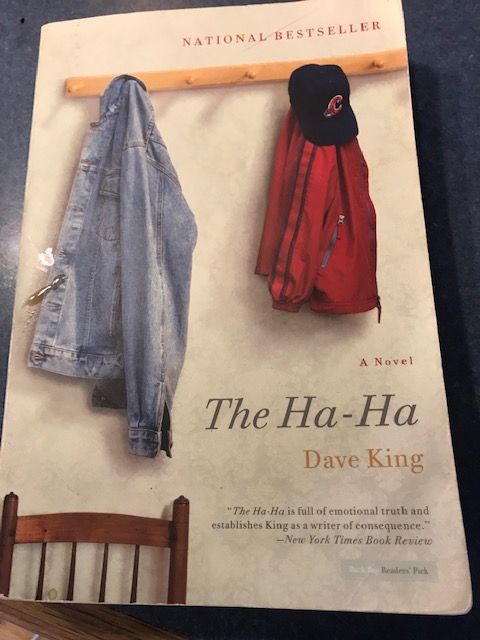
Think of the challenges you would have if your narrator were a man incapable of speech. And if the narration were limited to his point of view. And the cast of quirky characters included five well-drawn people whose points of view you’re not allowed to hear unless they speak out loud, and a handful of supporters.
This was an amazing novel.
The protagonist, Howard, was injured when his sergeant stopped paying attention to the dangerous territory through which they passed, and started investigating local flowers. There are many lovely sections about Howard remembering the life-changing, speech-taking event, sometimes comparing the flight through the air in slow motion to the disruptions of his life.
Howard, in high school, went with a girl named Sylvia, both of them casual drug users. Sylvia got hooked where Howard got drafted, and when he came home and got well enough to go back out into society, Sylvia had a little boy named Ryan. So when Sylvia had a chance to go to rehab, guess who got asked to look after Ryan?
In the intervening years, Howard had built something of a life by taking in renters: Laurel, an Asian woman who makes soup for a living and home delivers to her buyers. (Her soups are awesome.) Then there’s Nit and Nat, according to Howie, but Steve and Harrison according to Laurel, two guys who kinda hang around and do pick up jobs and such. Howie doesn’t consider them much until Ryan comes to stay with them and suddenly the house pulls together around his child needs. They go to his concert, they enroll him in Little League, and life is happening.
But Sylvia is going to get out of rehab, and her pull on Howard remains like a bad boomerang.
The book is called The Ha-Ha because Howie’s job is lawn maintenance at a local convent. The convent is near a major road, protected from it by a landscaping feature literally called a ha-ha. You’ve probably seen them; sound walls built out of manufactured hills. At the bottom of the hill you see the restraining wall of beams and dirt. At the top of the hill you think the hill continues without the large gap that accommodates the road. They are designed to hide both sound and sight to the casual eye.
Howie, the mowing machine, the ha-ha, and life are a good metaphor for all the insanity going on between these finely-drawn characters. Reading the pain, dysfunction, and desperation of the characters comes from Howie’s point of view, but comes through clearly for all the main players. They are a Gordian knot of competing needs.
Where character drives plot, Howie driving his mowing machine over and over toward that dangerous gap makes a story not to be missed. Highly recommend picking up this book.


 Wendy Welch: Books, Yarn, Cats, Opioids