
Wales – A History (Gwynfor Evans 1996)
Jack gets to write the book review this week –
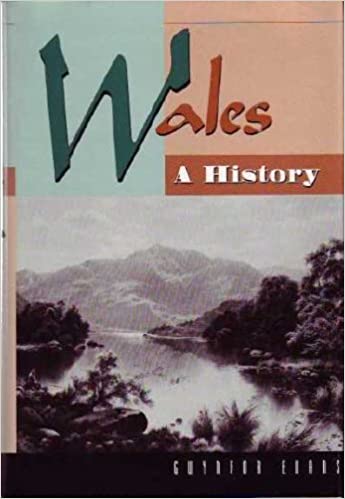
I was taught hardly anything about Welsh history at school, so this was a real eye opener for me. All I knew was that Wales has a strong indigenous culture and language and that its influence extended once to southern Scotland, Cumbria, Cornwall and even to Brittany.
What Evans explains is that while it was never a ‘kingdom’ with a centralized ruler, it was a loose federation of ‘cantons’ rather like modern Switzerland. It was held together by its shared culture, language and values. Sometimes the various local leaders fought each other but often they banded together to resist incursions by, in turn, Romans, Danes, Normans and English. In effect Wales, including all its territories where Welsh was the common language, was the land of the Brythonic Celts.
He also points out that despite attempts to anglicize Wales over many centuries, the sense of Welshness in a large part of the population remains strong.
The book ends just before the Welsh assembly was established which introduced a limited amount of devolved responsibilities and democratic accountability. The UK government now frequently refers to a United Kingdom of four nations – England, Scotland, Wales and Northern Ireland. There’s also strong evidence that support is increasing for Welsh independence, for which Evans argues powerfully.
I suppose all historians write from their own perspective, prejudices and world view and sometimes this can be rather hidden and subtle. I prefer when the author makes no secret of their point of view and so I was able to keep Evans’ obvious enthusiasm for independence to the side and concentrate on his well researched factual narrative.
I must admit that at various points I had to concentrate hard to distinguish between the many Llewellyns and Daffyds that appear, but I also have difficulty with the many Scottish kings called James!
This is a very readable book and highly recommended for anyone with Welsh roots, interested in Wales or how it fits into the wider Celtic picture.

 Wendy Welch: Books, Yarn, Cats, Opioids