
The Monday Book – The Sinner

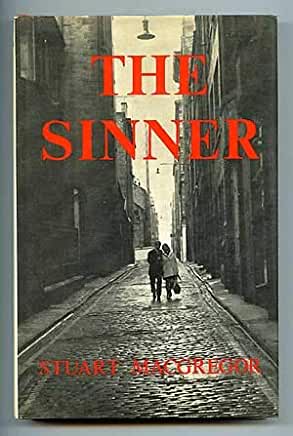
The Sinner – Stuart MacGregor (J Philip O’Hara 1973)
There are many facets to the city of Edinburgh – cultural, historical, academic and poor suburbs. I lived most of my life within easy distance and rode the thirty minute train journey most weeks in the late 1950s and early 1960s to go to jazz clubs and folk clubs. It usually involved climbing the steps from the station to the high street, stopping at the pub halfway, then on up to Bunjie’s coffee bar and finally to number 369 and the jazz club before racing for the last train home.

MacGregor’s book is set around that time and captures the atmosphere well.

There are really three strands to the story – the main character is Denis Sellars who has an on-off relationship with Kate and is a folksinger. Then there is a debate between traditionalist folkies and entertaining folkies. There are many thinly disguised real people who emerge in this strand. Denis is caught in the middle and his brother is being groomed as an entertaining folksinger.

I could fairly easily recognize many of the ‘real’ people who were referenced and I worried about that, as I don’t think they were as ‘right and wrong’ as MacGregor suggests. My memory is of a much more understanding time and Hamish Henderson (who is one of the thinly disguised ones) always encouraged guitar wielding youngsters like me.

I do believe, however, that he captured a particular atmosphere of cultural Edinburgh at that time really well. That I recognized!

The relationship with Kate was also believable and, I’m sure, would chime with many of my generation.

MacGregor was a medical student at the University of Edinburgh, helped start one of the first folksong clubs in Scotland, and wrote songs and poems. After graduating, he married and moved to take up a job as a doctor in Jamaica. He died in a road crash around the time this book was published.

I was amused that the cover looks like a reference to Bob Dylan’s second album.

His best known song is ‘Coshieville’ a bittersweet love song set in a small hamlet in Perthshire when the hydro-electric dams were being built – here’s a nice performance –

The Monday Book: THE SINGING TREE by Kate Seredy

This YA novel is actually the sequel to a famous children’s classic called The Good Master. Kate and Jansci are cousins introduced in that book, when Kate is sent to live with her father’s brother’s family because she’s a spoiled city girl who has been ill.

The Singing Tree is a much deeper book, detailing the experiences of the Hungarian farmers during World War I. The book deals in childlike innocence with topics such as anti-Jewish sentiment in Hungary, the power grab of Austria, the terrible opening of the war, and how Hungarians and Germans set themselves up for future enmity.

The farm where Marton Nagy (the good master) keeps his family safe, and later shelters neighbors who lose their farms, and then houses Russian prisoners of war who work the farm while he is in the army, and finally takes in a passel of German refugee children, is a big happy place. Part of why I like this book is its sappy “Sound of Music” plot twists. (For one example, a stray cat having kittens makes Kate detour the farm wagon to an army field hospital, where missing Uncle Marton is discovered as an amnesia patient. I know, right? Eye rolling.)

And yet throughout the book are these amazing moments of writing, where true horror is simply spoken out by the beloved characters in heartbreaking poetic ways. Marton tells his family the story of Christmas 2015, when soldiers on each side of the trench separating them from killing each other the next day began lighting candles.

Light a candle for Christmas Eve, men whispered and their very words seemed to turn into tiny stars as dozens and dozens, then hundreds of candles came forth from the knapsacks to be lighted and stuck in the snow…..

Kate sighed, a long, tremulous sigh: Oh that was beautiful! What happened after?

The candles burned down, Kate, and the–darkness closed in again. Let those who made war heard the story of what happened after. Let them see.” He lifted his arm and covered his eyes.

Lots of characters fill out the pages and the plot in lovely ways, like Uncle Moses the shopkeeper and Sergei the head of the Russian prisoners, and Mother, who is described in the title. She is the tree that shelters what turns out to be more than twenty people from five nationalities on their farm. Unbelievable, except, in Seredy’s masterful style, it is.

I loved this book as a child and found additional meaning to it as an adult. Give it a read.