
THE MONDAY BOOK: A Good Neighborhood by Therese Anne Fowler

Normally I only put books I like in the Monday book. But after battling through this plot, I need to talk.
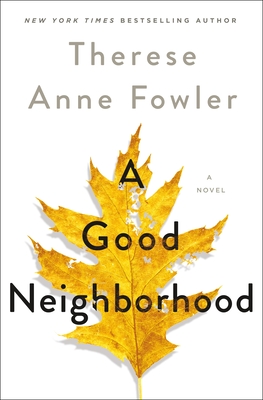
Character driven books are my favorite. This one set up a premise and then populated it. A black family live in a neighborhood where a white family move in and make some major changes to the property, resulting in damage to a historic tree on the black family’s property.

The black family would be bi-racial, except the white dad died because his family wouldn’t accept his black wife. It’s that simple. And it was kinda…. just too simple. This whole book feels like someone said “I need to write about the plight of American suburbs trying to not be racist” and then kept thinking up more convoluted ways to explore that. There are myriad ways of exploring racism in American suburbs without complications. Try skittles and iced tea walking home from 7-11. You don’t need to kill a historic tree through ostentatious display of wealth.

The narration of the story is told by “the neighborhood.” You never know or meet who is talking. They explore the character of the fall guy in this novel – the creepy stepfather who sets up his stepdaughter’s lover on a rape charge using his connections, and then finds his connections won’t actually turn it off again when he wants.

There’s also a totally unbelievable phone call from the teen girl who keeps saying she wasn’t raped, to the district attorney who is determined not to back down, and a conversation with a counselor who tells her 2/3 of women don’t believe they were raped at first, and pretty much have to come around to not accepting blame.

This is when I threw the book across the room. How many women have said they were raped and told they weren’t?

The plot is convoluted, the people are cardboard, the narration is weird, and frankly the handling of both racism and race culture feel like “what can I write about that will make people read me” rather than real. Those are terrible topics. They’re not entertainment fodder and if you can’t handle them with honesty and authenticity, write something else.

Two Movies, One Theme

I have a big crochet project on, which means I’m logging some serious streaming time right now. The other day I watched a limited series called UNBELIEVABLE. I’m not normally a true crime person but hey, it was one of the choices and it involved a foster kid.

The story was amazing: a girl who is raped in Washington State is not believable, and there is no pursuit of her assailant, but of HER for false reporting. Her tenuous life of security and safety come unraveled.

Meanwhile, in Colorado, the guy is still at large and it isn’t until he’s caught that the detectives – who are women and who have taken his growing list of victims seriously – realize he struck first in Washington. What the series doesn’t reckon with is how many women wouldn’t have been harmed if the first victim had been believed. It does a whole lot of reckoning with everything else, including how the police treat women if the police are men. The whole series never let up for a second, until the end–when it didn’t call into account just how much harm comes from disbelief.

Next, because I will watch almost anything about India, and I don’t know why, was a documentary called TO KILL A TIGER. I didn’t watch it because it had a similar theme – in fact I didn’t know the similar theme until I started watching it.

TO KILL A TIGER follows a family whose 13-year-old daughter is raped by three older teens. There is never a question that the events happened. The questions center around why the father wasn’t more protective (read: restrictive) of the daughter to keep her from being in harm’s way, why the girl thought she was safe to be at the wedding in the first place and how she encouraged the boys by dancing, which of the boys she should marry since no one else would marry her, and why the family were pursuing a criminal case instead of resolving it as a village matter.

The film even presents itself as a “you’re not gonna believe these backward villagers, and how they shame the victim and the family.” The 14 months of the proceedings are hard to watch. But the way the film more or less says “look at how awful this culture of rural life is,” yeah, no. The same stuff was in the film about Washington and Colorado cities. The foster kid “didn’t act like someone who was raped.” Victim shaming. She lived in a foster kid adult community, and was “upsetting the balance.” Same thing, different accents, different food.

It has taken me awhile to sit with this. Don’t for one minute tell me about the progress we have made as women. Tell me you can watch these two Netflix offerings and not see the same thing. Tell me the reason the case was cracked in Colorado wasn’t because two female detectives saw a different world than their male counterparts.

Go on, tell me.