The Monday Book – The Sleepwalker’s Guide to Dancing by Mira Jacob

Guest review by Janelle Bailey, retired Literature teacher.

I obtained this book quite a while ago after first being introduced to Mira Jacob when I read her Good Talk. Reading Kristen Radtke’s Seek You recently  reminded me of Jacob’s Good Talk, and I realized, then, that I had not yet read this older of Jacob’s books. So I packed it up as a treasure to enjoy on a recent vacation. And I am not all sorry to have done so or spent that beach time with these characters and their stories.

This novel provides engagement with and a thoughtful introduction to an Indian-American family and the people, history, culture, and stories connected to them. These characters are complex and interesting and thus present worthwhile story and themes as well. It seems that many immigrants to this country navigating the language, culture, traditions, reception of them, etc. may see themselves reflected, and those of us whose experiences have not been similar can certainly learn from and perhaps empathize with others we meet who have traveled this route. Additionally, these characters face many realities and issues that exist for many if not all—not only immigrants—such as work/life balance, insomnia(?!), marriage, religion, family, tragedy, childrearing, illness and wellness (physical and mental, both), many relatable for lots of us.
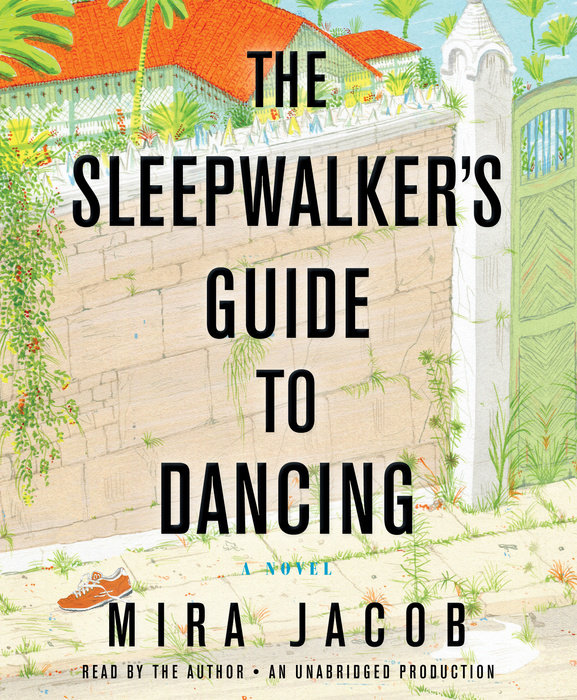
Thomas and his wife Kamala, along with their children, son Akhil and daughter Amina, navigate this cross-country/cross-cultural existence in the 1970s-1990s, as they raise their family in New Mexico—and at a great distance from some of their family in India. The story alternates between the most recent events—somewhat bizarre—affecting them and the past twenty years of their own American lives and history. And sometimes understanding what is “real” or true is a challenge for all involved, including the reader.

This is truly a thoughtful and engaging read on a number of levels and with the rich characterization and those thoughtful, thought-filled “layers” of value and meaning that I find only in the very best books.

The Sleepwalker’s Guide to Dancing is nothing like Jacob’s Good Talk, at least not in form–that a graphic collage and this a traditional novel—but I very much enjoyed this book of hers as well. Clearly she is a talented writer and mixed media artist, both.

Get the Lead Out

Eating dinner off my mismatched-and-pretty thrift store plates, their decorated rims rich with flowers and birds, I read an article about Corelle/Corning saying everything made before 2006 should be considered “decorative” because of lead and cadmium content.

It’s easy to go down a rabbit hole of health misinformation. I write and speak about this for a living: rural rage, deliberate astroturfing, politically misguided truthiness to let ends justify means. But when I looked down at the design on my plate, rated at 48,000 parts per million of lead (safe is 90 ppm) something in me snapped.

If the offices designed to keep us safe want our trust, could they please do their damn jobs? (Waving at you, Food and Drug Administration.) Lead regulations went into effect in 1971; they just didn’t get enforced until 2006. The plates my family used growing up, the plates my parents use now: both patterns were in the “nothing to see here, we didn’t do anything wrong, just use these pretty plates as non-food pieces” information put out by their makers.

Jack and I grow or buy about half our food locally. We pay attention to the contents of processed edibles. To look down at my backyard salad and see that poisonous design filled me with rage. You’re doing everything right, and then it’s wrong at the literal foundation.

I sought advice from a colleague at a national public health organization, who said, “Oh we’ve had a buy-back program for ages, for people who discover they have lead dishes. It got defunded during the pandemic.” Another healthcare provider, mother of a small child, smiled. “You’re just discovering this because you don’t have kids. I’ve been reading leadfree mama since the day I got pregnant. It’s a nightmare out there.”

Indeed it is. Tamara Rubin, the leadfree mama website operator, is the most hated woman in thrift store history. While many of us scour secondhand places trying to find antique pyrex, she’s putting up their lead content (look it up, you don’t want to know, though) and getting hate mail.

Trying to find dishes without lead content provided a freaking nightmare for my mother, sister, and me. Following advice from those fully versed on the issue is tricky: no melamine; avoid bright reds, oranges, yellow; if the design is raised, big red flag. Best bet? Glass. Just pure, plain glass.

Glass dishes may be safe, but they’re boring and Mom wasn’t having it. “Find me something pretty and safe.”

My sister and I scoured thrift stores and managed to find six plates and four bowls from different patterns rated safe—and their blues matched. Everyone else in the store thought we were crazy, as I searched sites, calling back numbers as Tracy read info from plate bottoms. We finally pulled together a 4-piece whole group from stoneware and vitrified glass for $20.

My favorite from the thrift haul

It’s almost impossible to follow the maze of advice on which patterns from what companies work. Exhausted from doing our best, listening to Tracy detail the dishes she would have to retire from her kitchen and what was she going to replace them with, I looked down and saw a stack of glass plates, 50 cents each. Scattered along the same shelf, 11 clear glass mugs in three different designs. We bought them all and split them between us.

“Let’s stop thinking about this now,” I said. “There are better things to worry about.”

“Like having ugly dishes and seeing how much milk you put in your coffee,” she said, eyeing the mugs.

But at least we got the lead out. If only figuring out how to keep our families healthy were as transparent as glass.