Guest review by Janelle Bailey, retired Literature teacher.
This tome of a novel feels like at times like a contemporary update of Roots, at least as I recollect from my childhood what a big deal it was when that novel and family saga became a mini-series on television back in 1977 and sharing Alex Haley’s family story, tracing the life of Kunta Kinte from his18th century Africa selling into slavery through his life in the US and his descendants’ lives and what they endure and experience.
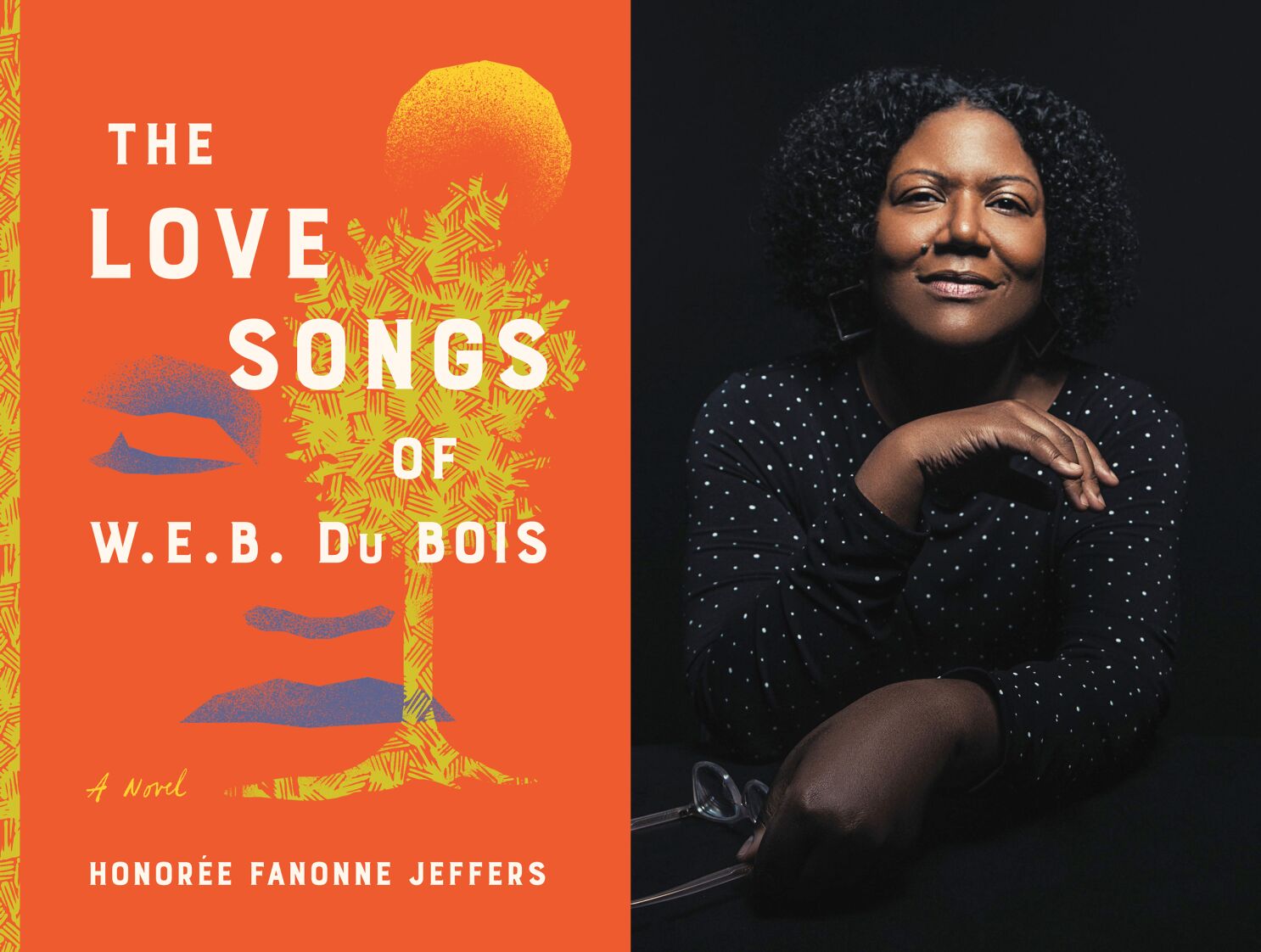
This book, The Love Songs of W.E.B. DuBois, by Honorée Fanonne Jeffers, operates somewhat similarly in that it takes us back and even a little further back than Roots did, to the 17th century arrival of European immigrants to the US who settled in Georgia, through their interaction with the Creek natives who owned that land, and then through the manipulation of the Creeks and takeover of the land from them, and turning it into a quintessential Southern plantation and cotton farm, to then be run by one big creep of a man, character Samuel Pinchard. While his owning slaves is, unfortunately, somewhat standard behavior for that time in US history, it doesn’t make it feel right or make the story pleasant. We can’t really change that history, try as some will to dismiss or justify it or bury it (for what purpose, I truly do not, personally, understand). But Samuel Pinchard is a complete creep for what he did to little girls…and over and over again.
The story here follows not only Pinchard and his descendants but also some of those who managed to escape him, tracing some lives right up through 2007. Those more contemporary characters struggle in a variety of ways, only some of which have anything to do with their race, though their stories are valuable and rich also because of what we learn about race, what we see through these characters’ eyes, what we learn.. These contemporary characters present their own personal and family histories—tragedies abounding—and including besides race, other big things like childhood sexual abuse by family members, drug addiction, and more.
It is not an easy story to read. And that is not solely due to its being 800 pages long (may have been sufficient at 500, even, with a more critical editor) but moreso for all the pain these characters endure. Included for some of them is the discovery and/or acknowledgment of their own family history and the struggle to accept these stories themselves, or to work through current conflicts with family members that harbor the old stuff. There are layers of discovery and layers of trauma uncovered for the reader but also for the characters themselves. At the point when the reader engages with the characters and their stories, she becomes also invested in the challenges these characters face, and it is—so much of it—pain-filled. Whether a reader’s own history is parallel to these characters’ histories or not, it just cannot be read without hurting for all who suffered similarly.
That makes it a challenging read at times emotionally.
I also cannot honestly say that I “enjoyed” the book overall. Some of that is also due to what it puts the reader through, as previously indicated. It does contain some beautiful storytelling at times, some vivid sensory experiences, and certainly some poetry and poetic writing, both in its inclusion of passages of W. E. B. Du Bois’s writing and in some of the author’s storytelling.
But in being completely honest in this review as I am in all of them that I write, the other reason it wasn’t easy or enjoyable for me as an 800-page read was the inclusion of multiple typos and its reading, at times, like a first draft rather than a final, and then also some inconsistencies in characterization that nearly stopped me from finishing it at times. I came to wonder whether Jeffers was under some kind of fierce pressure to finish and/or whether she had possibly arranged it all differently initially and then changed the organization, for some of the choppiness and change in characters’ development and motivations that I sensed.
It is unfortunate that a book this long and a story this important will possibly not be read by all who would gain from it. I do believe that its stories are important for all to learn and understand. And I am most certainly in support of everyone in the United States learning of these horrors of our own country’s history and how it impacts the people we meet today. But there are other books that do that extremely well that I will recommend before this one. I’m sorry, Ms. Jeffers.