Guest review by Janelle Bailey, avid reader and always learning; sometimes substitute teaching, sometimes grandbabysitting, sometimes selling books
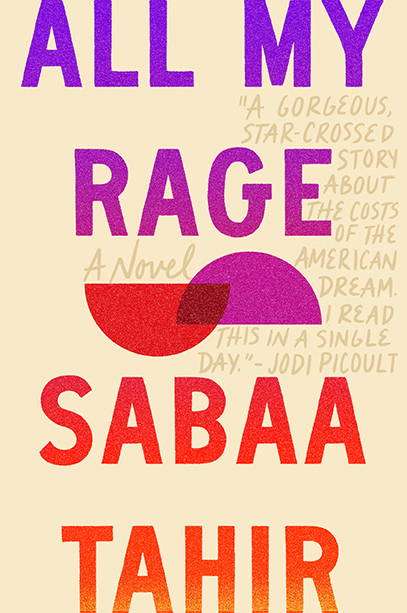
All My Rage by Sabaa Tahir
86: All My Rage by Sabaa Tahir
I added this book to my tbr list the very day I subbed in a local high school’s “at risk” classroom and learned that this was the book they were reading together as a class and wanting to–before I would sub for or even run into any of these kids again–read what they were reading.
As soon as I obtained it, it moved into “on deck,” and as soon as I could, I dug in and thoroughly devoured it. What. An. Important. Book.
Classified as “young adult” literature for its main characters, Sal and Noor, being young adults–high school seniors when the story starts–All My Rage is a book for all ages, teenagers and beyond, given its tremendously important content: loss and grief, racism, drug use and abuse, post-secondary education, alcoholism, relationships, music, and its various and very relevant themes. Everyone should read it…and then talk about it with others. Smart and thoughtful young adults reading it may feel “seen” and understood in variously valuable ways, and parents and grandparents, along with other adults playing those roles in young people’s lives–neighbors, as well as other family members–reading it may “see” those children’s and grandchildren’s lives in ways that are better understood and newly discussable, all of them able to talk, together, about the book and how they do and do not relate to its content in valuable new ways.
The book is very well-written, the stories told alternately from the points of view of Sal; his mother–Misbah–in earlier times; and Noor, his classmate and long-time friend. The three of them weaving together their current stories with the previous ones, together detailing how they’ve all gotten to “here” and “now” and then also working through that which comes up during the novel’s duration. We learn about others, as well–Sal’s father, Noor’s uncle and his wife, Sal and Noor’s classmates–yet all of them primarily from these other prime lenses and perspectives, their characters less “main” but not necessarily any less round or dynamic to the full story and its value, or the value of any conversations or discussions about them, furthering the book’s value.
There are some similarities between author Sabaa Tahir and main character, Sal–each living in their parents’ small family-run motels, for instance–so one does wonder if there’s even more that is common to their experience, this another example of some “auto-fiction.” I’m certainly of the mind that Tahir knows well her subjects and tells well the stories, so it’s entirely possible.
There are rich allusions to music and that layer of things, most especially a steady reference to a Johnny Cash and U2 collaboration, “The Wanderer,” to which I am just now listening. I was reminded, in experiencing this aspect of Noor’s character, of a number of students–including one especially treasured one in particular from many moons ago–who definitely listened to their music as distraction from all of the real noise coming in from all angles and as comfort and therapeutic soothing, centering and calming their souls and giving them strength. And this regular reference also reminded me of my own long ago brush with U2, running into their bass guitarist Adam Clayton at a rest area in the fall of 1990. Those were the days…(about which I still need to write, myself!). A super wonderful playlist could be created from the book’s mentioned titles, allowing a reader to hang in the musical mind of Noor and see some things like she did. And given Tahir’s own love of music and nerdiness, I suspect this might be a visit to her own musical tastes, too.
As a huge advocate of a good AP English classroom’s valuable purpose–reading good to great literature together and then helping kids to develop their discussion and writing skills to similar strength–I so valued this component of All My Rage‘s values as well. Tahir knows her stuff…and maybe had a good teacher and AP experience herself, that she writes about it this way. I also value tremendously that in the book the AP English teacher, Mrs. Michaels, teaches from her wheelchair, and I cannot help but LOVE the book’s entirety being a testament to a very favorite poem of mine, Elizabeth Bishop’s “One Art.” There is so much about this book to value and appreciate…and the layers and layers necessary for “literary fiction” that are well-met.
Additionally, that Tahir acknowledges up front the book’s “triggering” content, including Islamophobia, repressed sexual assault, and more…is very much in line with the practice of reading and even teaching books that include the tough stuff so that it can be discussed, talked about, processed, and more, rather than “banning” the best books to avoid alllllllll of those realities from being shared. It is only when we read and discuss and process–together–the best books that we learn the most important lessons.
Come back next Monday for another book review!


 Wendy Welch: Books, Yarn, Cats, Opioids