
The Monday Book: Race to the Pole – Sir Ranulph Fiennes

Jack is the guest reviewer this week –

This is the story of Robert Falcon Scott’s ill-fated expedition to the south pole in 1912.
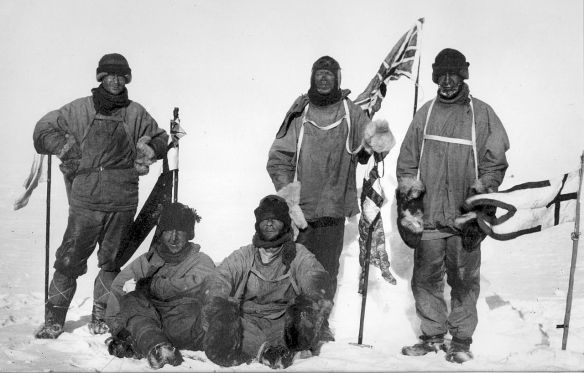
Scottgroup

I started reading this and almost immediately thought I wouldn’t like it!

Fiennes is clearly an upper crust member of the British establishment with an inflated sense of his own importance. All through the book he compares himself to Scott and a goodly part of it is about his own travels to the south and north poles.

But despite all that he managed to suck me in!

Fiennes really did do good research and approaches the more contentious issues very fairly. He also goes outside of the central story to get different points of view. This was also where I had some questions, though. Roald Amundsen, a Norwegian, beat Scott by a month to the pole and is presented here as somewhat devious and a bit of a cheat. I see here Fiennes buying into the old story of the ‘above board’ British against those dastardly foreigners.

What is also well explained is the context of Scott’s doomed attempt – British exceptionalism, Government under-funding, class divisions, civilian/service divisions, limited meteorological knowledge etc. What also comes through clearly, though, is Scott’s abilities as a leader. He made difficult decisions, led by example and persuaded his team to incredible feats of endurance!

So my take away from this book is that Scott really was a doomed hero and Fiennes is a bit of a narcissist!
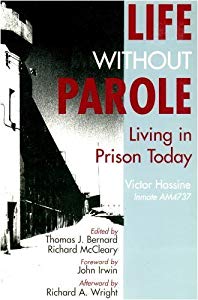
The Monday Book: Life without Parole – by Victor Hassine

Jack’s guest post is actually the Monday book so could be on time or not –

life without parole

I have been a regular monthly visitor to our local Federal Penitentiary for nearly five years. Each time I visit with two inmates for around an hour with each and we talk about all sorts of things.

But the hardest thing is to get any idea of their everyday lives before and after the visit!

I got some idea from ‘Orange is the New Black’ by Piper Kerman, but that was from a woman’s perspective. However Wendy gave me Hassine’s book and that really opened my eyes. His experiences were in a state prison but I’m sure they would have been much the same in ‘the pen’.

‘Life Without Parole’ is a series of essays or interviews by an inmate sentenced to life in 1981 who was an educated and thoughtful man. He documents his experiences over time, his conversations with fellow prisoners and his observations on the culture of prison life.

Hassine makes no attempt to excuse his crime or to suggest he doesn’t deserve his punishment. He simply relates his life behind bars.

This book spares nothing and describes a desperate and harrowing world that I have had the tiniest glimpse of. Hassine doesn’t try to excuse either himself or any of his prison community, yet draws us in and shows us a parallel world that ‘there but for the Grace of God’ any one of us could only too easily be part of!

His analysis of the various problems with the prison system is scholarly and erudite and makes for gripping reading. Each chapter features an introduction written by eminent criminologist Robert Johnson, and the book is divided into three sections: Prison Life, which introduces readers to the day-to-day aspects of Hassine’s life in prison; Interviews, which presents a series of candid interviews with Hassine’s fellow inmates; and Op Ed, in which Hassine addresses some of the most significant problems within the current prison system.

The author was an Egyptian born immigrant to the US and a law school graduate. He died in prison in 2008 under unclear circumstances although it seems likely he took his own life following an unsuccessful appeal.

I can thoroughly recommend this book, which is now in its fifth edition, to anyone interested in prison life.