
Observations on Humanity While Cruising to Alaska

Observations from my first cruise:

Going on a cruise is like being in an airport where everyone is going to the same place, so the entire airport’s ticketing desks and security lines are aimed at one single door.

When you get on the ship you have entered a floating airport stacked on top of itself like layers of a wedding cake. Swarovski crystal and duty free shops dominate the lower flowers. There are people everywhere. Most of these people are reallllllly excited to be in this floating airport—which is so big it kinda doesn’t feel like it’s floating. You can’t tell at first, and then you realize, every once in a while, that you are lurching toward a wall for no reason.

Many excited children (350, we would learn later) are in the floating airport. The airport is stacked, not flat, and the things the children want to do are at the top and bottom of the airport. You are going to get a LOT of experience over the coming week at dodging children on the stairs dressed in swimsuits, decked out as fairies and tigers complete with face paint, occasionally appearing in wolf and bear hats once people have visited ports and tourism shops. You will become accustomed to this changing wardrobe and also an expert at dodging the small human bullets of enthusiasm. But be wary: the enthusiastic little critters are followed by large exhausted critters, always holding an open canister of either hot coffee or sticky cocktails with fruit. Do not run into them; they will become angry if the liquid spills, and they are not looking at you; they are looking at the small human bullets ricocheting off the stairs.

The staff on the cruise ship are there to make you happy. This can become frightening. Of the just-under-6K people on the ship, 1,500 of them are staff. They are watching you. They will approach and open or shut windows so you can see better. They wipe wet seats, fogged viewing areas, and their own facial expressions when people start getting grumpy on day three. YOU are the target of their compensated kindness, and they want to make you new drinks, great food, and happy. If you are not happy, more of them will appear. Fake a smile if necessary, and they will dissipate.

If you take an Alaskan cruise going north in September/October, you are basically swimming upstream against every whale in the Pacific. The first day someone sees a whale spout, everyone on the boat will rush to that side of it jockeying for position at the railing.
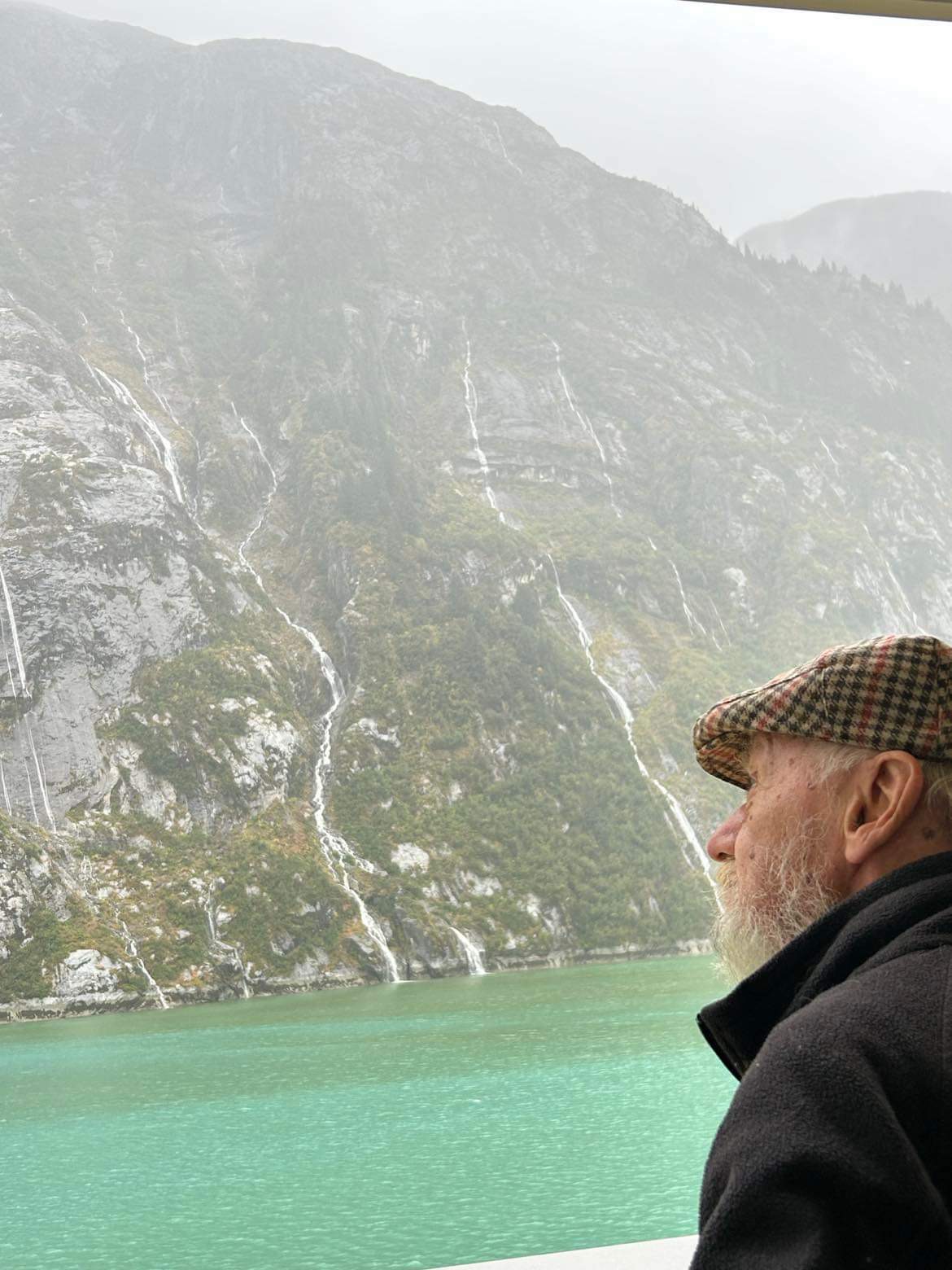
By day three, someone will glance up from reading their book in a deck chair, yawn, and say “there’s another one.”

All bets are off if it turns out to be an orca. We only saw one of those, as opposed to about a thousand whales, and several groups of dolphins–or maybe porpoises. We weren’t close enough to be introduced properly.

When you pull into a harbor, everything swarms the ship. The seagulls and scua take up residency atop the lifeboats and wait for you to toss them pieces of muffin and toast from your balcony. This is forbidden, but the seagulls know human nature.

The seals and dolphins swim alongside the ship, doing cute things and picking up pieces of muffin and toast from people who overestimate compensating for wind in their trajectory. The people selling tours swarm the dock shouting interesting things you can do. Because the people who have never been on cruises before didn’t know they were supposed to pre-book excursions, they kinda wander ashore looking befuddled and are quickly eaten by the independent tour guides.

Next week we can talk about scenery and stuff.

The Box That Holds Everything

Each month I meet, at a rent-controlled apartment complex in Norton, Virginia, friends who are doctors and professors, along with a bunch of our collective students. The professors grill burgers, the medical students do an educational activity–how your lungs work using paper bags and straws, germ glow wash your hands hygiene, teeth brushing 101–and the undergraduate students (mostly pre-med or pre-dental) create a craft that accompanies the activity.

It’s fun. People eat, they talk, they think we’re a church and they laugh when they find out we’re a bunch of academics and doctors. “Really? Not a church. Well, all the same, this is fun.”

We started at a new location in July of this year, which meant we had to build trust all over again. This is a population that doesn’t have a lot of reason to trust people who take a “benevolent interest” in them. Usually that ends up with them getting scammed. So we approached slowly, with school supplies.

In August, we went back to grill burgers, make emotional thermometers, and craft stress balls. The playground and picnic shelter where we going to meet was a mess. We found rubber gloves and big black plastic sacks, and hauled off a broken crib mattress and sheet set left by the trash can. The medical students ran to the grocery store and came back with bleach when they found the single trash can had become infested with undesirables.

None of the kids we played with after, making the stress balls and talking about anger management, said anything about this. None of the students said anything derogatory about the mess. We all had fun.

Next month, when I got there five minutes ahead of my fellow professor, four kids were at the picnic pavilion, lining the picnic tables up at one side. A little boy about the same size as the tree branch he wielded was using it to sweep the concrete pad clean. Two other boys had a small cardboard box they were filling with trash from the playground, dumping it into the single can and racing off to fill it again.

“We wanted it to look nice when you got here, so you’d know we were glad you were here,” said the oldest of the kids, Noah. Noah is transitioning. Two of the professors are also transitioning, and Noah spent a long time talking to them last month.

The picnic tables had been specially lined up, explained Skylar (a year or two younger than Noah, and the girl whose birthday we had celebrated in sudden made-up ways when we found she was alone for the evening, accompanied by two older friends who felt sorry for her because her parents wouldn’t be home that day to give her any party. The med students ran and found a candle for a cupcake and we all sang).

“We know you didn’t need them in a line, but my brother is autistic and he was helping and he needs things to be perfect and straight and all so we did it that way.” Skylar said with pride.

My fellow professors and doctors arrived, taking in the boy still sweeping with the branch, the kids busy picking up the last small bits of debris. Tori, the chemistry professor, smiled and produced a large tub of sidewalk chalk. Five minutes later the medical and pre-med students were studiously admiring artwork from the kids as they turned the basketball court all the colors of the rainbow.

That box, that box is everything. The kids were waiting for us, not passively, but with intent to make us feel welcome. Little kids who think we’re from a church and want to know how lungs work. Little kids who are teaching future doctors that poverty is not sin, nor passivity, nor a reason to dismiss anyone’s contribution to their own well-being.

The world can be beautiful.