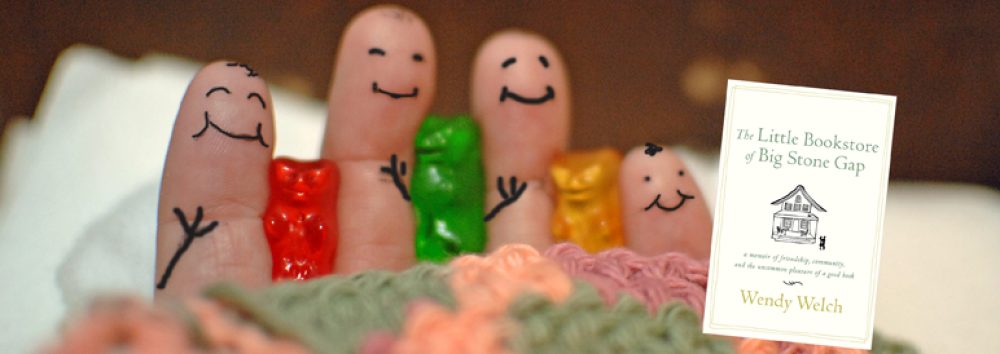
Country Cousins: 3 Books About Rural Living

Today’s blog is Wendy’s essay up on NPR Books. You can see it on the NPR page at the link below.

http://www.npr.org/2012/12/12/166479169/country-cousins-3-books-about-rural-living

December 12, 2012 7:00 AM

As a small-town girl, I love depictions of rural living when they’ve got a little style and sass in their makeup. Replete with enough quirks and quaintness to choke a mule, small towns are timelessly fertile ground for writers. But the best authors ignore — or even play with — stereotypes to tell truly compelling stories.

Cold Comfort Farm

Cold Comfort Farm

by Stella Gibbons

•

Paperback, 233 pages

Stella Gibbons has plenty of sass. She was writing in the 1930s, when the “local color” movement glossed all things rural with sentiment, and farms were described without even a whiff of manure. Her comic novel Cold Comfort Farm stuck a pin in the balloon of idyllic country living. Featuring the Starkadder family, the cast includes oversexed farmhands Seth and Reuben, crazy Great Aunt Ada in the attic, and their sensible city-dweller cousin Flora Poste, who is capable of “every art and grace save that of earning her own living.” In one of the loveliest meta-storytelling devices ever, Gibbons marks her best passages with one or two asterisks, for the reader’s enhanced enjoyment. This book makes me laugh out loud every time I read it, which is at least once a year.

Homestead

Homestead

by Rosina Lippi

•

Paperback, 210 pages

Fewer laughs and more tears come from Rosina Lippi’s Homestead. A series of linked stories, it chronicles six generations of women in an Austrian mountain village, starting about 1909. Her characters are drawn with casual grace, and her understated writing is insightful and beautiful. In one tale she describes the interaction between a man and a woman negotiating sexual politics, as “Francesco had feared to ask too much of her, and saw, too late, that he had asked too little.” Quiet stories, and gentle ones, they depict the inner longings and outer strength of mountain women everywhere.

Lest Innocent Blood Be Shed

Lest Innocent Blood Be Shed: The Story of the Village of Le Chambon and How Goodness Happened There

by Philip P. Hallie

•

Paperback, 303 pages

Through the influence of the charismatic pastoral couple Andre and Magda Trocme, the isolated village of Le Chambon became a “city of refuge” for Jewish people in Vichy France. Philip Hallie tells the story in academic language peppered with anecdotes and first-person interviews. Any small town has rivalries and factions, and these played into simultaneously creating sanctuary while dooming some rescuers. Le Chambon is part of that era’s larger story: the daily interactions of one small town set against the backdrop of hell come to earth.

These three writers reached into the enclaves of mountain villages, subsistence farms and human hearts — and gave us funny, sweet, sorrowful insights into small-town lives lived large.

Wendy Welch is the author of The Little Bookstore of Big Stone Gap.

Three Books…is produced and edited by Ellen Silva and Rosie Friedman with production assistance from Annalisa Quinn.

Robo-Owen’s Guide to Reverse Culture Shock

We are pleased to present here the first of Andrew-the-shopsitter’s guest blogs post-shopsitting. He promises to send them now and again, and we look forward to them. For those unfamiliar with the term, Robo-Owen is a wee anamatronic kitten presented to Ali and Andrew on their departure.

It’s now been a few weeks since I left Big Stone Gap. And while I didn’t feel as if I had experienced any culture shock following my arrival in September, I must admit some reverse effects upon setting foot in New York again. My ability to maneuver in crowds is only now returning, after a number of shoulder bashes on busy avenues. I am very wary of cops, and have somehow convinced myself that there are a number of New York street laws I’ve somehow forgotten and am unconsciously violating. My ability to pick good pizza slices has atrophied.

There have also been positive side effects. I find myself itching to replicate some of the regular activities from the bookstore (although I don’t see many of my friends having the requisite skills for Needlework Night). I seek out company in ways I didn’t before… in small town ways. Instead of waiting to catch up at a party I’ve dropped in on friends to chat and drink tea. I cooked some recipes I learned at my family’s Thanksgiving. And I find myself back in the habit of reading.

There is a suspicious lack of animals in my apartment. Sure, there are the mice, roaches, and centipedes, but they’re not good company like cats and dogs. Speaking of, I introduced my brother’s cat Baxter to Robo-Owen. They seem to get along, but judge for yourself.

Image

Robo-Owen is a poor doppelgänger for the possibly-evil, possibly-dumb real thing. For one, he never interferes with my cooking. But now my food-defense instincts are so strong and ingrained I’d be ready if he somehow reprogrammed himself for human food. He also doesn’t have claws, so my skin is no longer a tapestry of angry red lines. This makes him a disappointing sparring partner. Sometimes I’ll try and goad him, but unlike the real thing Robo-Owen is unflappable. Robo-Owen never falls asleep on my stomach or leaps into my arms. All in all he’s good company, and even has a mechanical purr, but he’s no replacement for the real deal Owen Meany.

Just like Robo-Owen is no real cat, I’m no longer a real shopsitter. But old habits die hard, so I may just start loitering around my local used bookstore until they kick me out for aggressive re-alphabetizing. Whatever my future away from Big Stone Gap may hold, I know that book and bookstore culture will remain a part of my life. So I look forward to sharing more of my own experiences with the book life in the near future.

Happy Holidays to all of you and to all of my friends in Big Stone Gap!