
Jack gets in over the wire for a change with the Wednesday guest post –
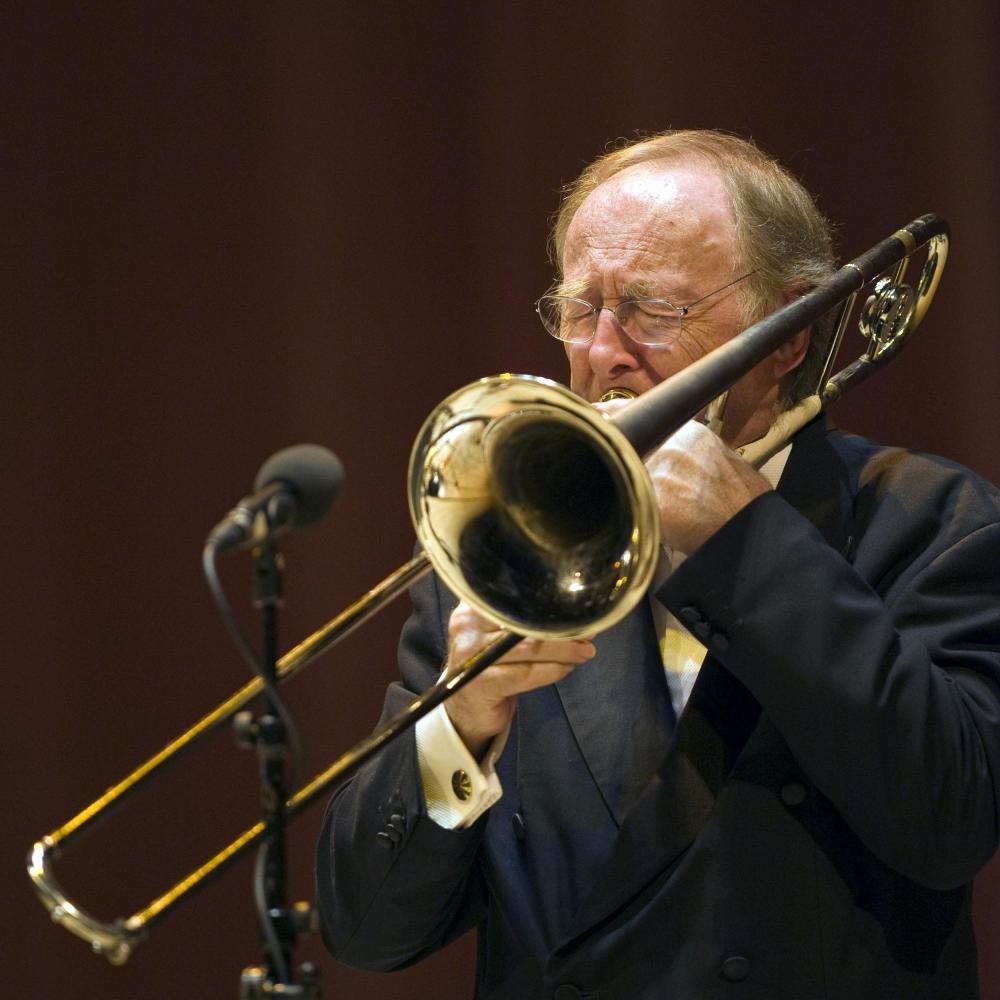
There are often events that are described as marking the end of an era, and the death yesterday of Chris Barber certainly seems like that for me. The path that led me to a love of Scottish traditional songs and music started, as it did for many others of my generation, with the New Orleans style jazz popular all over Britain in the 1950s and 60s.
Popular bands including those led by Acker Bilk and Kenny Ball regularly topped the hit parade with numbers like ‘Stranger on the Shore’ and ‘Midnight in Moscow’. But the Chris Barber Band was by leaps and bounds ahead of all the others.
The original line-up was really just the Ken Colyer Band minus Colyer, with Barber becoming the leader and Pat Halcox replacing Colyer. The story is that the members of the band wanted to experiment with music from outside the strict confines of New Orleans and that led to the split. The first big hit for the Barber band was ‘Petite Fleur’ featuring clarinetist Monty Sunshine and that brought the band to a much wider audience. Then the guitar/banjo player with the band, Lonnie Donegan, began interspersing blues and old-time American songs between the band’s instrumentals. One of these – ‘Rock Island Line’ even topped the US charts!
However Barber himself was very much in charge and stamped his personality on the band from start to finish although that seems to have been necessary with personnel changes over the years. Despite these changes the sound remained recognizable. They had always had a broader repertoire than other bands of the period, including pieces by Count Basie and Duke Ellington and this became more evident as additional players were added. There was a period in the 60s when he ran a London club called The Marquee where modern jazz would often feature with folk like Tubby Hayes and Johnny Dankworth, and this, I’m sure was how the Barber band got the inspiration for their broader approach. At that same time he was bringing blues artists from the US and touring with them as well as putting them on in the Marquee. That was how he and Donegan became the ‘firelighters’ for the likes of the Rolling Stones, Eric Clapton and even the Beatles.
The last time I saw the band was around 2007 at the Burnley Mechanics Theater in Lancashire and by that time they had become ‘The Big Chris Barber Band’ but Pat Halcox was still there on trumpet and Chris Barber on trombone. They were both in their late seventies but you wouldn’t have known it! What I loved about that concert is that they had a section in the middle where everyone except the basic seven piece New Orleans outfit left the stage and we were transported back to the 1950s for half an hour.
I think my lasting impression of the man is the curious mixture of uninhibited playing and very English laid back humor, always delivered in an immaculate suit and tie!
RIP Chris and thanks for everything!
PS – here’s a track from an early album I still have that I bought when it came out in 1959 –
 Wendy Welch: Books, Yarn, Cats, Opioids