
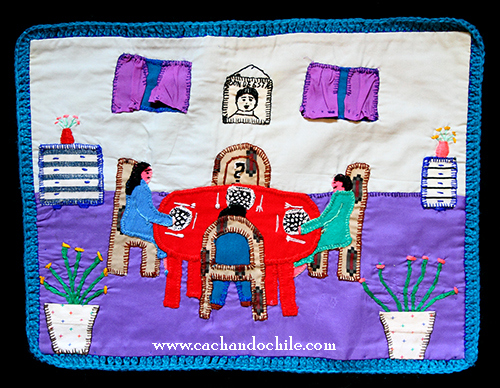
 I went to Chile hoping to see textiles in action, to visit women who spun wool and practiced traditional weaving and carved their own crochet hooks. This I found, but also something more.
The world’s most famous knitter is probably Madame DeFarge, of Dickens’ A Tale of Two Cities. Via her stitch code recording wrongs perpetrated by the autocracy during the French Revolution, many an innocent (if irregular-looking) scarf doomed someone to the guillotine. Portrayed largely unsympathetically until the end of the novel, she is herself a victim of the crimes she records.
In the aftermath of Pinochet’s Military Coup in Chile, Senora DeFarge emerged. Several Latin American cultures have a tradition of arpilleras. These are a combination of applique and embroidery depicting a typical scene from everyday life. In order to understand how they became a central fixture of a protest movement, you need to know that in 1973 Pinochet took the country by military coup from Allende (who in 1970 became the world’s first socialist party president to be democratically elected—and you can imagine how scary that was during the Cold War).
I encourage you to look up the English translation of the speech Allende gave when he knew not only death, but also revocation of his reforms to date, was imminent. His moving final address applies to a wider situation than his immediate one.
Pinochet’s promises mutated into repression. People began disappearing. Many left voluntarily after seeing the handwriting on the wall. Some received “if you’re still here next week” messages and took the hint; more than 200,000 “voluntary” exiles left between 1973 and 1988. About 3,000 people disappeared into camps–as in no one ever found the bodies–with another 40,000 detained and released.
Freedom of the press ended; unions for miners and transport workers were emasculated; and food shortages grew. The Chilean exiles talked non-stop about their homeland being taken apart, but since they were from a “Communist country” (America in particular did not like Allende) not everyone listened—at first. Inside Chile, mostly poor men and students were disappearing, so who cared?
Enter the arpillera-makers. Sad as it is to admit, attracting international attention to injustice can be hard. There’s just so much of the stuff going around, who gets attention can literally depend on how well you sell the message. Women in prison smuggled out embroidered scenes, made from threads pulled from their own clothes and wood splinter needles, showing the horrors. Outside the camps, mothers, sisters, daughters, and wives began marching, but not about the political issues; instead they made famous the question “Donde Estan?” (Where are they?) shouted from arpillera banners as they silently walked.
 From as small as 10×12 inches, to bigger than five feet square, the arpilleras also went up on walls, got smuggled out of (and into) the country, and caught the interest of television stations.
It’s amazing how loud a silent art form can be. Pinochet was peacefully voted from power in 1988 after international sanctions showed him that he’d run through his foreign friends. The “Mothers of the Disappeared” protests didn’t just help get Pinochet out with no shots fired in the change-over, they also helped locate and close the camps no one wanted to admit were out there. Never underestimate a woman’s love, plus needle and thread.
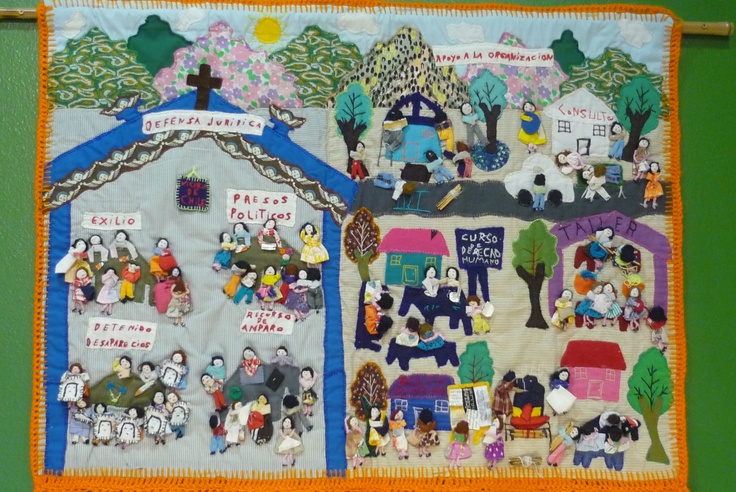 But the arpillera legacy continued. When the Chileans who’d left came home to a different country, when their children who’d matured elsewhere couldn’t identify as Chileans, when those who stayed scorned those who fled for abandoning a country that needed them, again the arpilleras came out, this time as an act of reconciliation. Scenes depicted returnees welcomed, Chile united, hands reaching across water.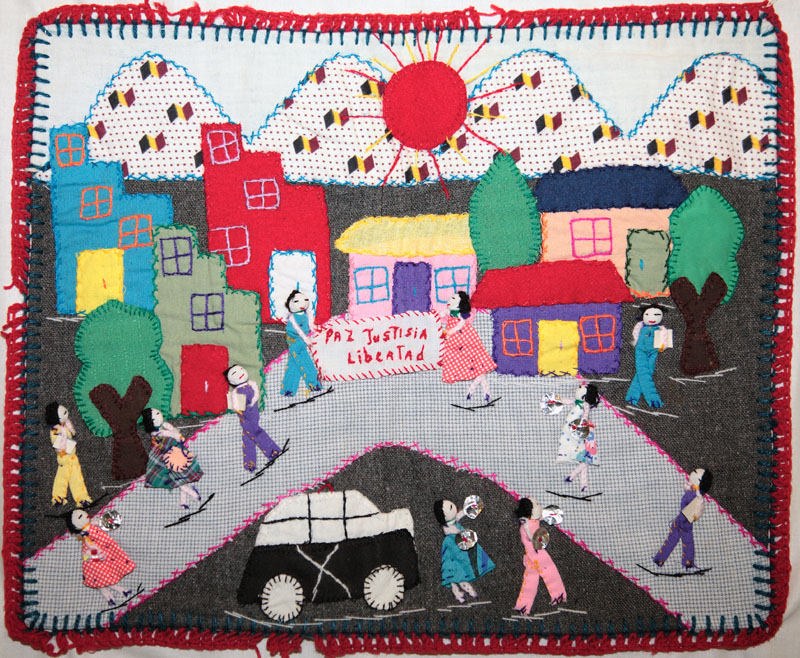
Stitching up wounds, women’s true colors show.
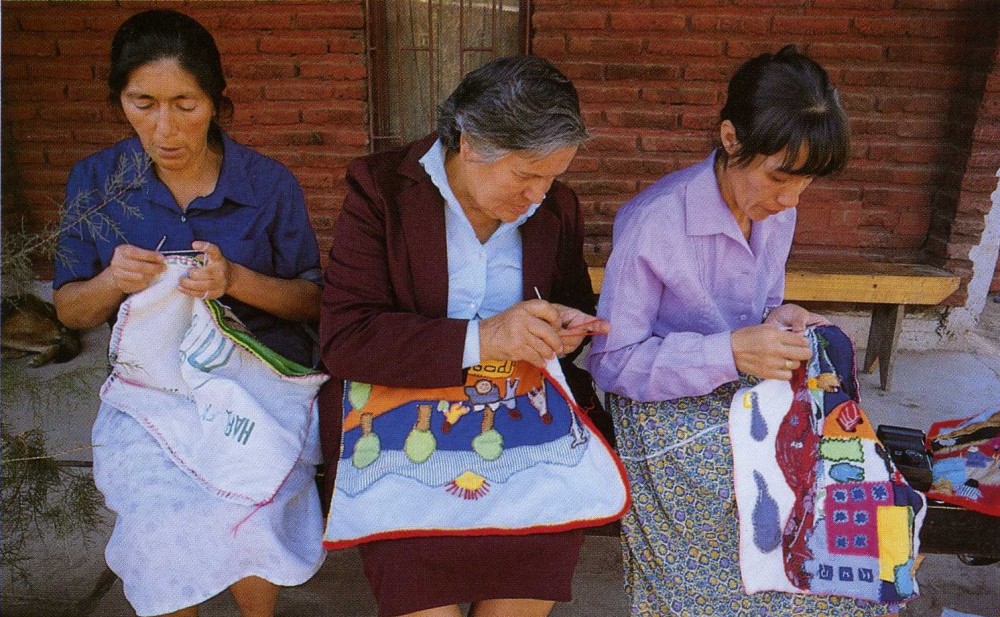
 Wendy Welch: Books, Yarn, Cats, Opioids