
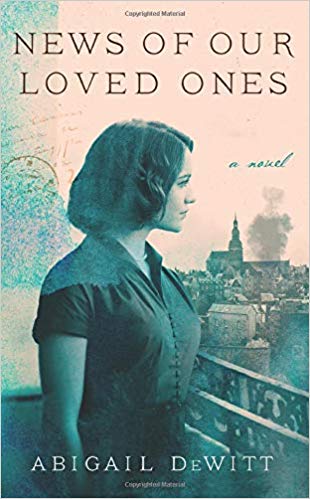
 I met Abigail at this year’s Festival of the Book, where we were both featured authors. She sent me a review copy on request for the Journal of Appalachian Studies, since she’s an author from NC, part of our jurisdiction. I’m the book editor for the Journal, although I am relinquishing the position in 2019. (If you’re a member of ASA and interested, please contact the Journal editor!)
Before passing the book on for review, I gave it a read myself. A novel in the form of multiple short stories among characters tied together by war experiences in France and in America after World War II, Loved Ones tends to focus on the family women. The first story is intense and even violent, not in keeping with the gentler, more measured and internally-exploring tones of the rest. Altogether, they trace from the loss of the family home to why the granddaughter raised in America continues to fixate on tragic events from family history.
Witt uses some lovely poetic language, but it is her women, from a small child to a grandmother, who bring to life the experiences of ordinary people in extraordinary circumstances. A gentle, breezy quality suffuses her descriptions with a one-step-removed sense of what horrors the stories may encompass or even hide between the lines.
In Mathilde, for instance, a girl is as much in love with the mother of her lad gone for a soldier as she is the boy himself, perhaps even more as the mother notices and returns affection, accompanied by advice in beauty tips and attracting men. Witt’s description of Mathilde as is lovely in itself, the kind of woman almost translucent in her paleness, made of steel beneath the skin.
I enjoyed News of our Loved Ones as a set of short stories, telling the story of one family and its scattered members, primarily because of Witt’s light touch on a dark time in human history.

 Wendy Welch: Books, Yarn, Cats, Opioids