
Jack has the honor of the Monday book post (and just scraped through in time).
Portrait of a Legend – Spitfire, Leo McKinstry, 2007
I am a complete nut for airplanes (or aeroplanes as we Scots would say), so stumbling across this book in a thrift store in Oban in Scotland a couple of weeks ago was like discovering the holy grail (we also visited Roslyn Chapel on our trip).
I should say that as a Quaker I have very mixed feelings about warplanes, but the Spitfire seems to transcend that and can stand in its own right as a thing of beauty. Many of the pilot testimonies in the book talk of that beauty of the plane as distinct from the job it was designed to do.
Most books about the Spitfire paint a romantic picture of a machine that appeared just in time to ward off the Nazi menace and the winning of the ‘Battle of Britain’ in 1940. What I hadn’t realized until reading this one was what a struggle there had been from its maiden flight in 1936 to getting it into production. The company that designed it was a very small business specializing in seaplanes and had won a series of high speed races in the early 1930s with planes designed by R. J. Mitchell who went on to design the Spitfire. But the business was far too small to undertake the contract to build the numbers that were needed in the approach to WW2. Attempts to outsource production went disastrously wrong and the construction of a massive new factory went equally badly. Even after its acceptance by the public as the ‘icon’ of fighter command it continued to be mired in high level debate surrounding its suitability for a whole range of different and essential tasks.
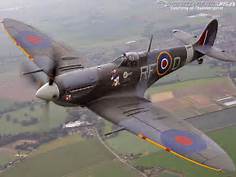
Despite all that it remained in service around the world from 1939 through the late 1950s in a wide variety of roles and still thrills crowds at air displays to this day.
I well remember seeing a Lancaster, a Hurricane and Spitfire flying over our house near Leuchars RAF base in Scotland about 15 years ago at low altitude – six Rolls Royce Merlin engines making a wonderful sound!
I can thoroughly recommend this book to anyone with a passing interest in the story of this gorgeous flying machine – a big thumbs up!


 Wendy Welch: Books, Yarn, Cats, Opioids