
Jack fails abjectly this week – Wednesday post on Friday – –
This post is about the attitude of some Scots towards Americans and why –
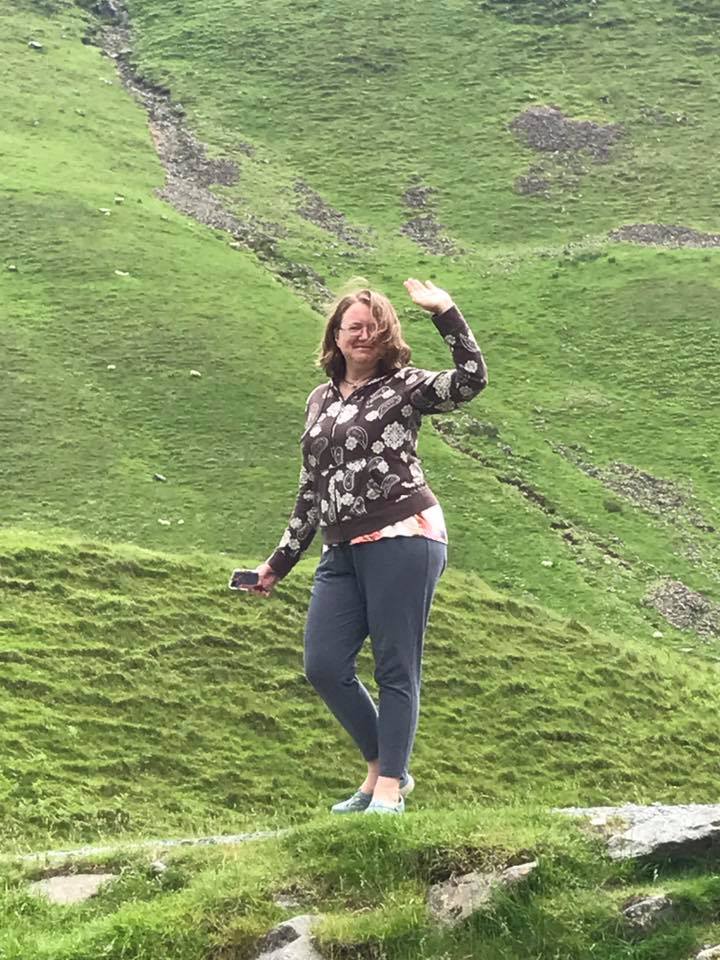
When Wendy came to Scotland twenty five years ago and we married, she was finishing her PhD in Folklore from Memorial University of Newfoundland. She had worked for years as a community based storyteller and her dissertation examined professional storytellers in Great Britain, Ireland, Canada and the US. When she arrived she set up a group non-profit called Storytelling Unplugged with local storytellers that also used storytelling in the community including a children’s’ hospice, but began to encounter some problems from the cultural establishment. This was partly anti-American, partly professional jealousy and partly because I had recently divorced and (wrong) assumptions were made. Although Wendy was creating more storytelling opportunities for more storytellers, the anti-American sentiment during this expansion even included “don’t all Americans want everything bigger?” She got tired of it and turned to writing.

My old friend Colin moved from Aberdeen to Fife in the 1970s and we became compatriots on the musical scene. A fine singer who had helped organize the Aberdeen folksong club, he had driven buses there during his summer vacations. So when I started my small group tours of Scotland he was a natural to drive the seventeen seat minivan. But he was a retired teacher of English Lit in the local high school and then of communications in the community college and had a keen ear for language. Having lived in the US for a while I had learned to ‘code-switch’ between British English, US English and Scots and Colin very quickly learned to do the same. He made many long term friends among my ‘tourists’, although I could never persuade him to come and visit here. Despite his fondness for Americans, he never cared to see America.

Another old friend was Mike who had played keyboards, pipes and whistle in my folk band. He did visit us for three weeks and charmed everyone he met. He had rented a car for the duration of his visit and delighted in getting out and about, even getting lost a couple of times. He was happy to play whistle and speak some Gaelic to a class I was teaching at the time. Although a devout Catholic he was very ecumenical and while with us he attended our Quaker Meeting, played a piano prelude at the Presbyterian Church and was mistaken for a visiting Priest at the Catholic Chapel. Once Mike went a day journey that had him asking directions everywhere, and everywhere he asked, people offered him hospitality if he didn’t think he could get back that night!
What to make of all this?
Well – Scots abroad certainly seem to find welcome signs wherever they go, and I’ve definitely experienced that. Whereas Americans abroad often find go home signs – particularly if they’re seeking to settle down. Scots like Colin and Mike were willing to ditch any prejudices and simply meet folk as they found them. The only time I ever encountered any hostility in the US it wasn’t cultural or even ant-immigrant, although it could have been seen as that. Just like Wendy in Scotland I ran up against someone who felt their little world was being challenged and their piece of the pie might be cut a little smaller, rather than enlarging the pie.
Isn’t that interesting? Of course it has no relevance to anything happening in the world today, or in America….


