
So my friend Lisa and I decided we needed to can veggies. Because, the Apocalypse. Pandemic. Whatever.
Lisa had inherited one of the best canners ever made, an All American 921. Her particular model was probably pre-World War II, which is about the last time either of us canned, too.
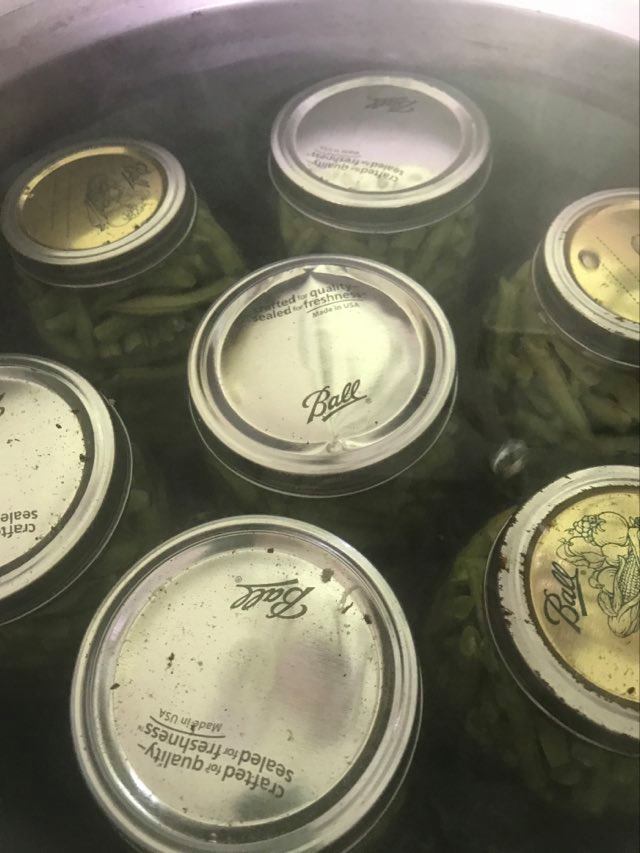
We set to with a will and a 10-lb weight of cucumbers plus a mess of beans. Amiably chatting at a comfortable social distance while snapping beans and cutting cukes, we envisioned a vitamin-filled winter of crock pot meals with green veggies, and pickles on the table.
I don’t like pickles or green beans, but that wasn’t the point. We were gonna do this American survival skill right.
We got the beans ready, got the jars ready, got the canner ready, did several runs at the fractions in the salt ratios when doubling the recipe (we were both social sciences majors), finally slid the filled jars oh so carefully into the basket and the basket into the water, and sat back with our feet up. A minute later, I said, “Did the recipe say anything about whether to put the lid on the canner?”
It didn’t. We phoned a friend. First Jen, a food preservationist from way back, read us the riot act for trying to water bath can green beans–“JUST BECAUSE THE INTERNET SAYS YOU CAN DOESN’T MAKE IT TRUE; IF THE NET TOLD YOU TO JUMP OFF A BRIDGE WOULD YOU?!” Then she explained ours was a pressure canner and yes, we should put the lid on and watch the gauge to be sure we didn’t blow up the house.
Nothing like a little incentive, so we did as instructed, and after five minutes the gauge hadn’t moved. Lisa began to investigate the canner. That’s when I found the rubber seal for its lid lying on the counter ….
That’s when Lisa put her head in her hands and began to mumble things. (Some of you might like to know this next bit is another mistake; the AA921 is a gasketless canner.)
But when we took the lid off the canner to add the seal (and let me just say that doing this with hot mitts on took considerably finesse, but Lisa and I are both crocheters) we found that some of the jar lids were bent. We took a picture and sent it to Jen. Jars too full, she said, start over.
This made things better, actually. Lisa left off the seal, I overfilled the jars. We were even.
We redid lids and quantities all ’round, and finally got the beans going. Then we started on pickles. The recipe said to cut them the length of the jars. This we had done. Now we knew what the recipe meant was to leave headroom, too. (WELL WHY DIDN’T THEY SAY THAT, HUNH?)
Lisa began chopping an inch off each cucumber. It was lunchtime, so that worked out well.
When the pickles-to-be were in, I looked at the fresh dill Lisa brought. “Supply’s holding up well, isn’t it? I thought we might run out.”
Lisa looked ill, and put her face in her hands again.
Pickles don’t really NEED dill to be tasty. Ask us how we know.
Right, two down, more fun mistakes to be made: I got out two fermentation jars and layered pickles, onions, vinegar, dill flowers–trying not to make eye contact with Lisa–and some secret spices. We set the jars in a dark closet.
At this point Lisa had to go home to see a woman about a goat (she sells fleeces and wooly critters). I bravely continued to can. There were still the zucchini.
If you think people get upset about water canning beans…..
Did you know it is actually ILLEGAL in some states to water can zucchini? All the recipes I called up by searching had notes about why they were taken down. Add stuff with high acid, or forget it, was the advice.
By this point, it was 8 pm, I was tired, Jack was helping me slice the stuff, and I looked at the freezer.
Blanching is a girl’s best friend. As we cut and froze, satisfying little pings alerted us to the success of a long day’s learning; every one of our jars sealed in the end. I have enough zucchini to make pasta-less lasagna all winter long. The house is still standing. Lisa and I are still friends. Jack has a lot of pickles. And Jen threatened us within an inch of our lives if we don’t boil the canned green beans before serving or adding to another recipe.
If you get canned goods from me this winter, please know it’s because I’m passively-aggressively trying to kill you.
Later this month Lisa and I are going to do tomatoes….. stay tuned for the sound of sirens.
 Wendy Welch: Books, Yarn, Cats, Opioids