The Monday Book: GNOMELAND by Margaret Egleton

Many thanks to Jeanne Powers for this review!

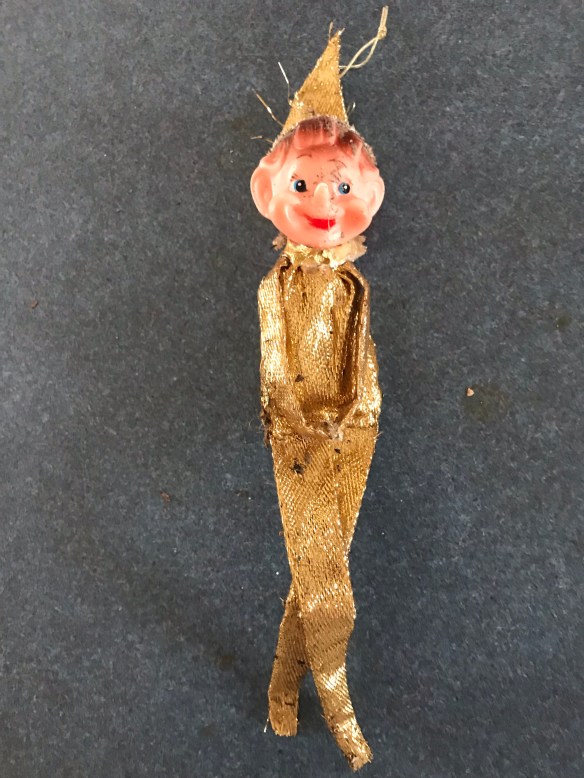
gnomelandGnomeland:  An Introduction to the Little People


First off, this is not a sequel to Gnomes by Wil Huygen, the marvelous and charming “natural history” of the shy Holland gnomes.  No, this is a book about garden gnomes.


Love ‘em or hate ‘em, garden gnomes seem to pop up everywhere.  Travelocity even has a spokesgnome, possibly inspired by a rash of gnome-nappings a few years back, in which a person or persons would swipe a garden gnome and take photos of it in various settings, sometimes sending postcards back to the owner from the gnome to illustrate its travels.

Egleton devotes the first few pages of the book to a very brief overview of gnomes in general, noting that there are several variations and tracing the origin both gnomes and their appearance. Then she delves specifically into the evolution of the classic garden gnome.

The earliest statues of the “classic” garden gnome apparently were created in the late 19th century when a large ceramic industry met an enthusiasm for garden decoration. The early figures were more of the bearded and wizened little old man variety before morphing into bright and merry little figures, which Egleton attributes to Disney’s cute little dwarf characters from Snow White.

For me, the most interesting part of the book was about the early creators of garden gnomes. Philipp Griebel added the figure to his factory shortly after opening in 1874, causing Grafenroda, Germany to lay claim to being the birthplace of the modern gnome, though there are those who would challenge this.  August Heissner apparently began creating hand-painted clay gnomes for sale around 1870.

But all of this pales beside the glorious photos of gnomes of all sorts. There are bathing beauties, politicians (there are several versions of George W. Bush), athletes, naughty gnomes, and smoking and drinking gnomes.  “Mobile Joe” is a gnome with a cell phone who crashed the Chelsea Flower Show, despite the “no gnomes” rule.  There are some astounding photos of “gnome gardens” with large collections.  One woman took inspiration from George Harrison, who had posed with the Friar Park gnomes for two albums, and created a gnome garden in tribute to the Beatle.

Gnomes are a world-wide phenomenon: they can be found all over Europe, North and South America, and even Antarctica.  Australia seems to be particularly fond of gnomes, harboring several large gnome gardens and organizations dedicated to preservation and proliferation of gnomes. “Gnomesville” in Australia has become quite the tourist attraction, despite a lack of parking and toilets.

Even if you think gnomes are tackiness personified (the book says they’ve “been restored to their rightful place of kitsch honor”) you’ll smile at some of the creative ways people have used gnomes.  It may just inspire you to add a gnome or two to your own garden. Or not.


Note:  this review is written by a person who has pink flamingos in the garden


To See Your Husband Honored

lockerbieLast week Jack and I went to catch the final performance of The Women of Lockerbie by Deborah Brevoort. Central High School’s One Act team selected the play this year as their performance piece. Jan Thompson and Elaine Sheldon, director and choreographer, called in Jack to coach the team on Scots dialect and word choices.

Normally high school directors will let dialect go, Jan says, but since Jack was around….

It was love at first sight, between Jack and the students. The play is intense, set seven years after the crash when the investigations and recriminations are over, but the women in Lockerbie still find their lives in pieces from the trauma of that time. The women describe in graphic detail picking up body parts, seeing the sky on fire, having nowhere to put the grief of Americans who come seeking solace, or their own blame for America shooting down the Iranian airliner that led to Lockerbie as revenge.

The play is based on the true story of Lockerbie’s women petitioning to have 11,000 pieces of clothing, gathered from the crash sites and investigations, turned over to them to launder and return to the families of those on the flight. Families who never received bodies, because of the nature of the bomb and crash. They wanted to bring closure to a terrible time, but they also wanted to bring healing, mother to mother, woman to woman.

That part of the play, subtle though it might have been, was not lost on the high school students. Each time the play ended, the actors were still crying. The terrible sense of loss it carries, the recognition that we are sharing a world where we might have to suffer bad things because of others’ decisions, and the bittersweet win of the women being given the clothes of the crash victims, these are heavy things. The kids carried them so well.

What people may not recognize, unless they’re married to someone from Somewhere Else, is how much everyday life revolves around not bringing up the differences between life Here and There. Or the ways in which nationalities (or nationalism) divide us.

The affirmation of the high school students to my husband, shrieking and clapping and yelling his name, each time he was recognized as their dialogue coach, heals what others have said: he was a dirty foreigner who wouldn’t say the pledge of allegiance; he didn’t deserve to vote, let alone run for office; he didn’t have to pay taxes because he was using foreign money laundering. Silly stuff in a hatemongering world. Small politics we dismissed from our minds. Emphasis on small.

But these kids, they embraced Jack as they embraced a play about world sadnesses and cracks in the walls of our defenses, airplanes that fly over them, feelings that one cannot find a way to wash away. Except by affirming kindness.

I loved seeing Jack honored by the younger generation, who don’t play the games the older ones might want to teach them. I am sorry for high school students in this era who are inheriting a nation divided, a cowardly new world to have such leaders in it, but I’m so proud of them for not letting hate have the last word.

It wasn’t just a play. It was an affirmation that the future has some bright spots–as well as some bright young minds–in it. Go forth and be kind, kids. The world needs what you’re bringing it.

lockerbie playAnd: thanks for making my husband feel good about what he contributed. He is a man of many gifts, and I’m so glad he got to use some of them with and for you.