
The Monday Book: AN ALTAR IN THE WORLD: A GEOGRAPHY OF FAITH by Barbara Brown Taylor

This week’s Monday book comes courtesy of Janelle Bailey, literacy educator and retired shopsitter from The Little Bookstore. Thanks Janelle!

I picked up this book for a book study at church, and I thoroughly enjoyed both reading this book–and its becoming of a devotional study for me–and the virtual book study with some great people from Peace whom I haven’t seen in person for more than a year but definitely enjoyed seeing this way and sharing our thoughts about this book.
Taylor does a wonderful job writing in such a manner to prompt individual and personal reflection on the part of the reader, demanding that I annotate (she didn’t direct that, but my thoughts about her written words demanded that interaction of me!) the book fully. I so enjoyed all of the places she took me during this reading, literal places of my faith but also “places” in my own personal history, to retrieve connections to ideas she developed.
Reading the book was wholly satisfying and solidifying in my own sabbath celebration and prayerful practices…and also inspired me to initiate some new ones. I highly recommend this book for anyone wanting to get in touch with their own faith. And I’d love to get a cup of tea together and talk about this book with any of you, too!
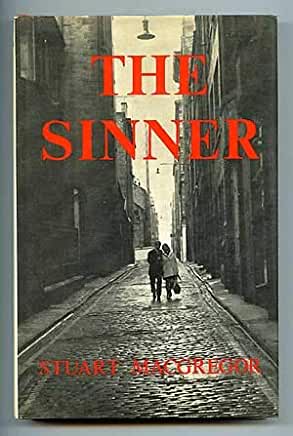
The Monday Book – The Sinner

The Sinner – Stuart MacGregor (J Philip O’Hara 1973)

There are many facets to the city of Edinburgh – cultural, historical, academic and poor suburbs. I lived most of my life within easy distance and rode the thirty minute train journey most weeks in the late 1950s and early 1960s to go to jazz clubs and folk clubs. It usually involved climbing the steps from the station to the high street, stopping at the pub halfway, then on up to Bunjie’s coffee bar and finally to number 369 and the jazz club before racing for the last train home.

MacGregor’s book is set around that time and captures the atmosphere well.

There are really three strands to the story – the main character is Denis Sellars who has an on-off relationship with Kate and is a folksinger. Then there is a debate between traditionalist folkies and entertaining folkies. There are many thinly disguised real people who emerge in this strand. Denis is caught in the middle and his brother is being groomed as an entertaining folksinger.

I could fairly easily recognize many of the ‘real’ people who were referenced and I worried about that, as I don’t think they were as ‘right and wrong’ as MacGregor suggests. My memory is of a much more understanding time and Hamish Henderson (who is one of the thinly disguised ones) always encouraged guitar wielding youngsters like me.

I do believe, however, that he captured a particular atmosphere of cultural Edinburgh at that time really well. That I recognized!

The relationship with Kate was also believable and, I’m sure, would chime with many of my generation.

MacGregor was a medical student at the University of Edinburgh, helped start one of the first folksong clubs in Scotland, and wrote songs and poems. After graduating, he married and moved to take up a job as a doctor in Jamaica. He died in a road crash around the time this book was published.

I was amused that the cover looks like a reference to Bob Dylan’s second album.

His best known song is ‘Coshieville’ a bittersweet love song set in a small hamlet in Perthshire when the hydro-electric dams were being built – here’s a nice performance –