
It has been just over twenty- five years since Marion Chesney, under the name M. C. Beaton, penned the first Agatha Raisin detective mystery. Her most recent in the twenty-eight novel series, The Witches’ Tree (Minotaur Books, October 2017, 277 pages), is by design a not-so-cozy cozy mystery.
The Witches’ Tree takes place in the Cotswold village of Sumpton Harcourt, not far from Agatha Raisin’s cottage in Carsley. The novel begins at the home of bumbling Sir Edward Chumble with a disastrous dinner party to welcome the new vicar and his wife to the village. It is a foggy night, but the dense mist thins enough for Rory and Mollie Devere to discover an elderly woman’s body hanging from a gnarled witches’ tree on the edge of the village. Later two more bodies show up, and Agatha Raisin feels pressured to find the murderer so her Mircester detective agency benefits from positive press coverage.
People who live in Cotswold cottages do not lead squeaky-clean lives, so Agatha enlists the help of her ex-husband James and potential love interest Sir Charles Fraith to dig up dirt on the neighbors and ferret out the killer. A coven of witches in Sumpton Harcourt complicates the plot, and Agatha soon becomes a target because she does not scare off easily. In the end, though, she gets her man—the villain, not a love interest.
One of the driving forces through the entire cozy series is Agatha’s desire to be successful, settled down, and madly in love with her husband. She is successful (retired public relations executive, owner of a respected detective agency) owns a lovely thatched cottage in the Cotswolds (instead of a luxury London flat), and—whoops—no husband yet. Time and again, Agatha’s pursuit of eligible bachelors sets her up for grave disappointment, which keeps her life far from perfect. By the end of this particular novel, Agatha has an epiphany, and diehard fans can appreciate the poignant moment when she finally sees her knight. For once she doesn’t mess things up, and readers feel her pain and disillusionment when her love interest recognizes the moment of truth and blows it. The chaotic pace of Agatha’s life is reflected in the book, and in the end, readers are desperate for a twenty-ninth Agatha Raisin novel so their heroine can take another stab at happiness. Hopefully, the next murder weapon is not a knife.
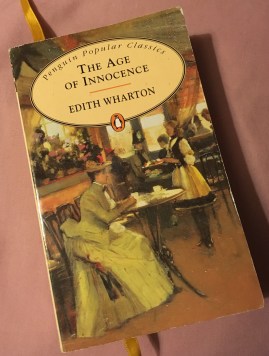 When I was a teenager, Penguin produced a range of classics for a pound a book. I’m not sure how mid-90s money translates across the Atlantic, but for this reader who’d only very recently discovered the joy of bookshops it was a revelation.
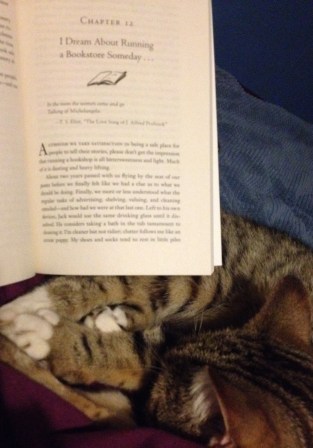 Erica Jones is a bookshop blogger, owned by a rescue cat called Dolly.
 Wendy Welch: Books, Yarn, Cats, Opioids