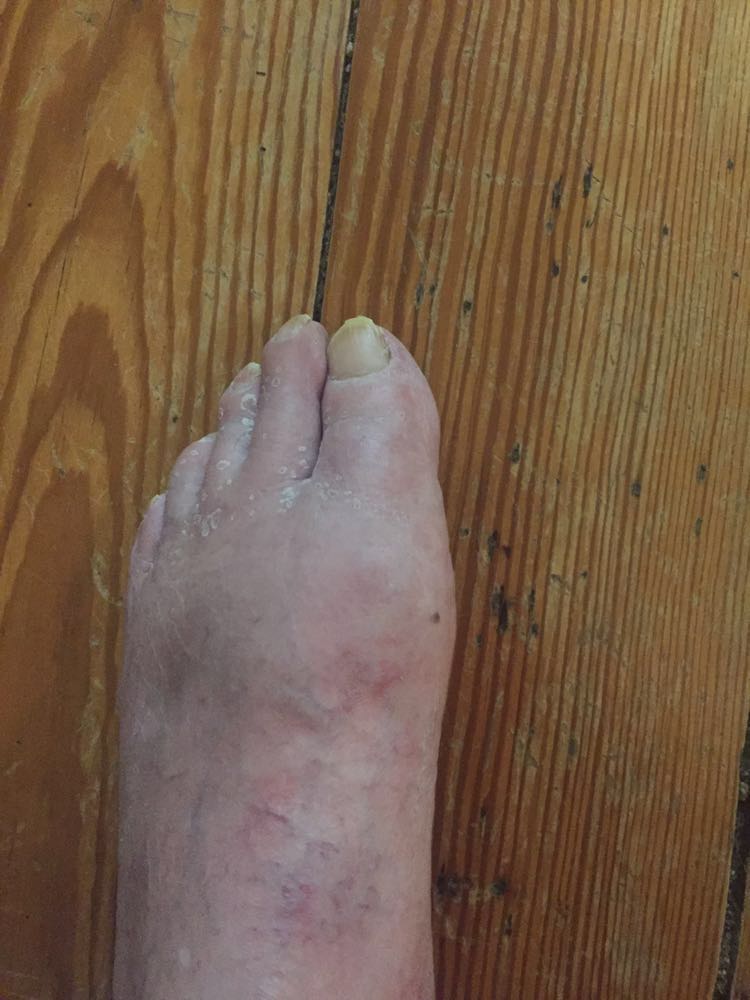
I suffer from an occasional bout of gout (is that a Haiku?).
It first happened about ten years ago and I didn’t know what had happened to my toe. At that time, living in Big Stone Gap, I had regular sessions with the great Doctor Teri Dunton to keep my bones in order. Also then I had a serious issue with sciatica. Teri advised me to keep my bulging wallet out of my hip pocket and that solved that.
I had been hirpling (a great Scots word) with two walking problems and using a walking stick to get around!
Teri also advised cherry juice for the gout and it worked – –
What have I learned from all this?
1 – don’t add the only two bottles of cherry juice in the house to your wine mixture.
2 – carry a cane and hirple when you’re flying anywhere and you’ll get to board first.
3 – always have a spare bottle of cherry juice around somewhere.
4 – avoid shrimp, mushrooms, smoking and alcohol – hang on a doggone minute – – –
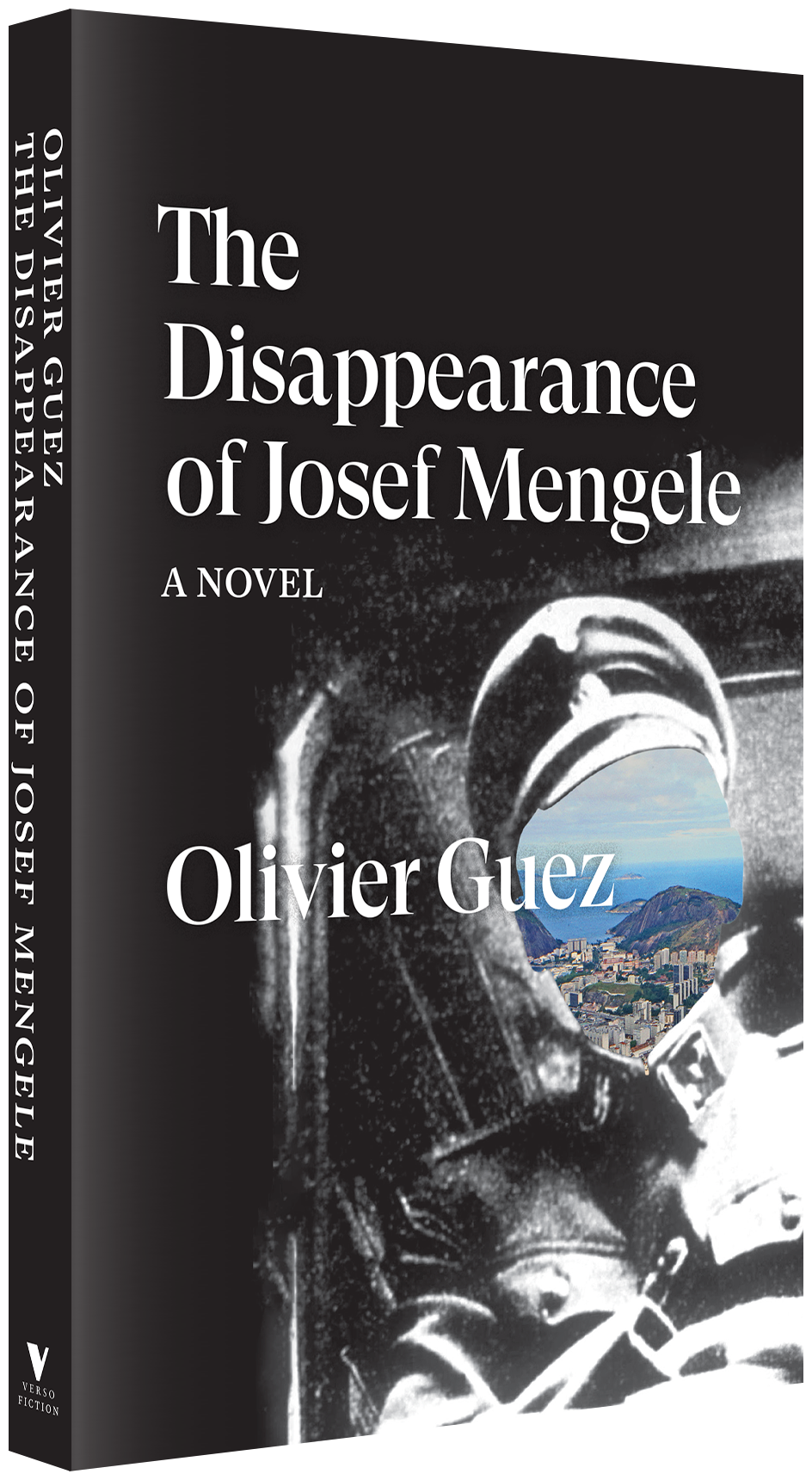
A friend loaned me this thinking I would find it intriguing; he was right. It’s a meticulously researched historic novel about the years when Mengele eluded the law. The post-WWII years in Argentina have fascinated me since I watched an Argentinian film on an international flight, presenting the story of Jewish children and Nazi children mixing and mingling in Buenos Aires. (Argentina and Shanghi were two places Jewish people could possibly get to before and during the war, and fleeing war criminals reach after.)
The novel is not about the things Mengele did, but about his plodding, prosaic approach to life then and after, the ways in which Nazis from different economic classes continued to have a hierarchy with each other as they built businesses and reformed communities. They discuss their contempt for the country that took them in. They deal with the mundane aspects of divorces or reuniting with spouses post-war. Basically, they pick up where they left off. Some are waiting for the Eagle to rise again. Some are hoping everyone will just forget about the whole thing.
And some are living in fear of the Nazi hunters–which are nothing like their TV portrayals, it will not surprise you to know.
Being translated, the novel’s prose can have that one-passion-removed feel that often comes with accessing words not in their original language. It’s not much of a setback to devouring the book, though. Guez used historic documents and filled in between with information about Mengele’s personality and family history. One of my favorite sections was about how Mengele marries his brother’s wife, mostly because even after everything that’s happened, he still hates his brother and wants to one-up him. Talk about the unexamined life not being worth living….
On that line, one of the reasons I found the book so compelling was that at the same time I watched a recently released film called Final Account. Luke Holland talked to people who were SS guards, civilian bookkeepers, and farmers who got laborers from concentration camps. Holland wanted to know how those literally about to die of old age had reckoned with their pasts, what lessons had been learned and passed on to their grandchildren. You might want to catch it on a streaming service. I found the pairing with this novel opened new ways of seeing both.