All right, it was a wee break but I’m back now. Hello, how have you been?
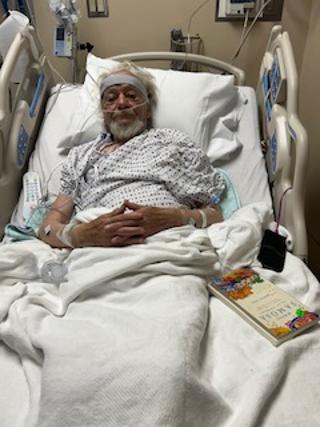
So here is what happened, in a nutshell. Jack got sick end of May. It was touch and go for a day or so, and then three stable days before they let him come home. Short version of what caused it: smoking.
So Jack has not had a cigarette since, and I’ll tell you a funny story about that in a minute.
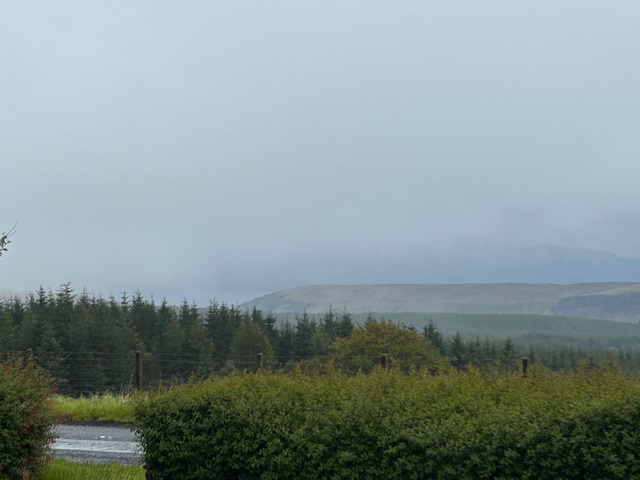
Right now, I’m sitting in Glenariff, at my friend Liz Weir’s camping barn, enjoying a cuppa tea and some lovely Irish breakfast bread with Damson jelly. Jack has been ensconced at his sister’s house in Stonehaven (very near Aberdeen) and will be staying the winter. I’ll be going back and forth while attending to some contractual obligations here: to whit, writing a book about Hurricane Helene with co-author Roxy Toddy, and running a few conferences.

People naturally have a lot of questions: how soon will you move to Scotland, is Jack coming back, will you sell your house? To all we give the same answer: we don’t know; ask us again in the Spring. Right now, we are glad Jack is alive, grateful for the National Health Service in Scotland offering free and quality care, and taking things as they come.
I am setting up my “retirement” jobs of editing, copy writing, indexing, and the rest. Probably get that onto this blog’s host site over the winter. Running around with Liz telling stories has reminded me how much fun it is, and how demanding physically. Sitting at Liz’s giant table enjoying my third cuppa tea, I’m reminded how many demands there are on my time in the US that keep me from writing, and how easy it would be to slip back into that on my return stateside. The Helene book is contracted, and is a project of the heart. What comes after, more bits and bibs or a return to the world of words, spoken and written?
We shall see. Meanwhile, I promised you a funny story about Jack’s hospital release:
Anthony was the respiratory therapist assigned to turn the assortment of machines, tubes and wires Jack was sent home with into something we knew how to use. He went through everything twice, patiently, until I felt I had it. Life was going to be different: no candles, no open flames, no cooking for Jack until he got the hang of trailing wires and all that.
Anthony turned to where Jack lay in the hospital bed. Fixing Jack with his steely blue eyes, Anthony said, “People set themselves on fire, lighting up while on oxygen. We had one yesterday we couldn’t save. Woman crisped herself.”
Jack nodded, looking something between calm and exasperated. Near death experiences have a way of taking the drama out of drama.
From behind Anthony, I piped up. “If Jack ever smokes again, I’ll set him on fire myself.”
Anthony choked back a laugh, then reached for a form. “Right, this is the release. We’ve covered everything, except–” he glanced over his shoulder at me, then back at Jack. “Well, the last question before we can release you.” He looked at me again, then spoke to Jack. “Do you feel safe in your own home?”
Jack signed. We went home. He hasn’t smoked since, and the equipment went back to its makers about a month before we left for the UK. We will keep you posted on journeys from here, both physical and emotional.
Oh, and if you smoke, quit now.
Here’s a link to Liz’s ceilidh barn: https://www.ballyeamonbarn.com/
 Wendy Welch: Books, Yarn, Cats, Opioids