The Emigrant Statue

So many of us in Appalachia are descendants of people who came from Scotland (and Ireland). The chain of events that led to this is the usual amalgamation of hard times, mean politicians, and wealth hoarding at the expense of others. Start with the Reformation, work your way through Glencoe, and let the Highland Clearances put your ancestor on a coffin ship (or get run out of Ireland by an angry mob of people from the other religion).

It’s kind of romantic, the idea that we came from people seeking freedom, land, all the things. Every time we stop in Helmsdale to show the Americans on our tour the Emigrant Statue it makes me feel gloomy.

The statue was created by Gerald Laing after being commissioned by Dennis Macleod, a native of Helmsdale who made his fortune as an emigrant in South Africa. (Diamond mines, since you ask).

There is something meta about that.

The statue shows the father looking forward into the future, the son looking at his father with a worried yet trusting face. The mother cradles an infant in her arms. And the mother is the one looking back.
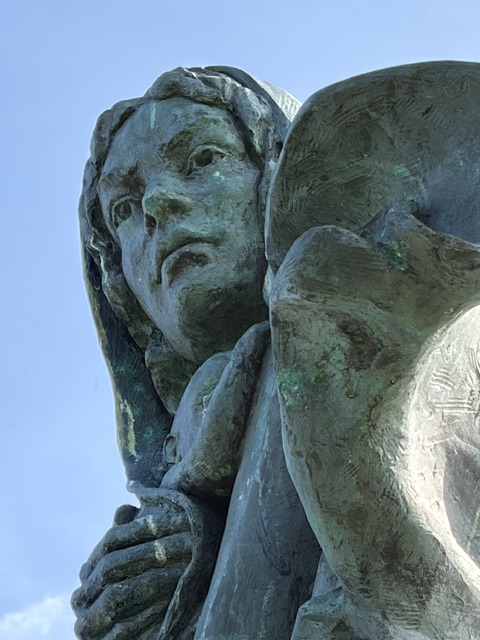
Is she resigned? Is she furious? Is she making an internal vow that her children will be safe no matter what? That she will keep the family together? That she personally will come back one day?

Who knows? And who knows how often this story will repeat: someone with a lot wants what little you have, so they kick you off your land and take it from you, supported by legal principles created by them in the first place.

Sigh.

She’s going to sacrifice everything so her children will make it. She’s going to be resilient. She has no other choice, and down through history her story repeats. Celebrating resiliency to me in current times almost feels like complicity. Why did she have to be resilient? Why couldn’t she stay on her land instead of clearing off so the local laird could raise sheep there? How much money does a rich man need, and how often do the rest of us have be resilient to give it to them?

Just asking.

Operation Trixie Flight

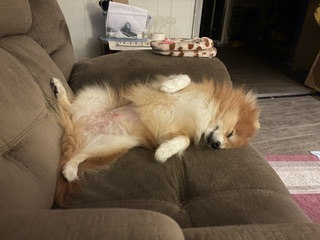
It’s been on-again, off-again figuring out how to get the dog to Scotland. Her name is Trixie, and she is the princess that sounds like. She’s a pom who weighs 12.5 pounds, and she stands 14 inches high.

The United Kingdom doesn’t let people fly their pets in the cabin of a commercial airliner, aside from service dogs and active military. A lot of people go to Ireland, which is in the European Union, and then take the ferry across to the UK.

Only one airline flies dogs internationally to Dublin: KLM. Which is a Dutch airline, so globalization does actually appear to be saving the world after all. Go figger.

There are the requisite paperwork pieces that have to be filled out not only in triplicate but in a timely manner and in order. Microchip, rabies, tapeworm, health certificate, clearance to travel, within 10 days of travel. No pressure, kids.

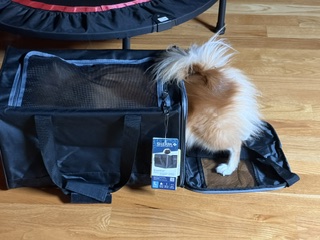
Then there’s the fact that the average underseat clearance on a KLM aircraft is 11 inches. My friend Amelia and I went to Petco and held a lengthy consultation with our phones and Google search dogs-flying-to-Ireland before selecting a carrier that is exactly 6 centimeters too long for a perfect regulation match, but conforms in all other ways.

I’m throwing dog treats into the back of the carrier and we can just get Trixie in. It’s cramped, but it’s better than flying cargo. Nobody puts Trixie in steerage.

I hear that the “strict” regulation about dogs not being allowed out of their carriers at all, ever, not no way, nohow is entirely dependent on the flight attendants on your flight and the person sitting next to you, once you’re airborne.

So we shall see. I have visions of Trixie in a smart little coat and tam (Royal Stewart tartan, of course) prancing on the end of her lead along the boardwalk that runs past the North Sea. She will greet the neighbors graciously. Once we get here there.

I’m flying back from Scotland in October to fetch her; she’s staying September with her first mum. Fingers and paws crossed, everybody.