
The Monday Book – How to Say Babylon by Safiya Sinclair

Guest review by Janelle Bailey, avid reader and always learning; sometimes substitute teaching, sometimes grandbabysitting, sometimes selling books

How to Say Babylon by Safiya Sinclair
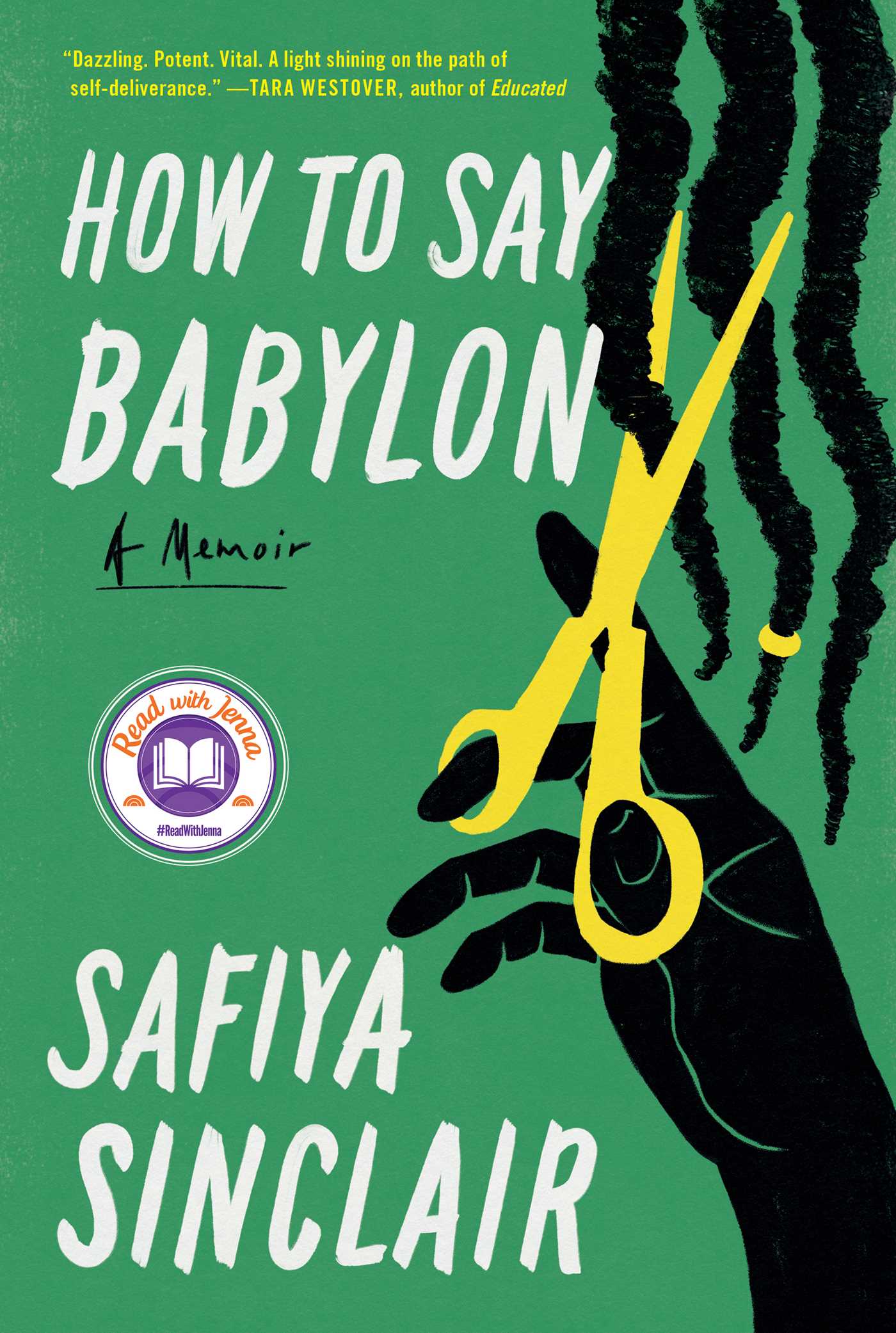
How to Say Babylon by Safiya Sinclair

Who or what prompted me to add this book to my hold list at the library…I have no clear recollection, but once again the book I needed to read right then came to me in some sparkly wonderful “other”-driven way and beyond the fact that it was “due” back next.

In this case the thing you need to know is that all I have wanted for Valentine’s Day and for a long time was to see the movie One Love, the story of Bob Marley, coming out that day. This book, How to Say Babylon, which I started reading the weekend before and having no idea, prior, what it was about, is Safiya Sinclair’s memoir and all about her childhood and upbringing in Jamaica, her little family very strictly ruled by her Rastafari father. And without having any idea that I needed or wanted it to, it so conveniently provided a wealth of relevant background to the Rastafari culture her father a Bob Marley fan and follower in crazy similar ways.

But again, I did not have any idea that was even what this book was about until I started reading it. Sinclair’s father not only also lived the Rastafarian–a devout and rigid mix of religion and culture, following and built from the idea that Haile Selassie, Ethiopian emperor, coronated in 1930, was divine. Like Bob Marley, as well, Sinclair’s father fully lived the Rastafarian way and also made his living as a musician throughout Jamaica and its resorts, gone from home for long periods of time, and his brilliant wife, Sinclair’s mother, doing her best by the children–and many children–in excellently educational ways.

Safiya Sinclair is an amazing woman, quite clearly. She is a “survivor” of the very same situation likely intended to nurture and raise her by the standards in which her father wholeheartedly believed. Her memoir addresses her discovery, throughout her childhood and into adulthood, of all of the ways in which her father may have believed he was doing “right,” though often wronging her and her siblings in a number of ways. He disrespected them all, regularly, at the very least. And she is amazing because she did not merely survive that; she worked through and detangled more than dreadlocks in finding an adult relationship with her father. I won’t spoil a thing about what all happens in between. It’s a complex, very well-written story.

Sinclair somehow, despite all of this “from home” working against her, was strengthened from the inside to believe in herself and find her way through all of it. She found her voice as a poet, a very young poet, and then was finally able to remove herself from that situation and all of the ways in which it silenced her. And she thrived…right into writing this complex memoir.

And it’s not just that she tells an important story–her own–but that this is also an extremely well written book, engaging in its storytelling and motifs and themes, as well as a success story building through the difficulties of being raised by someone whose truths are not so valuable for all involved.

Sinclair is, here, a voice for many as she conveys so clearly the challenge and complexities that can be present in many a father-daughter relationship., as well as specific to her own. The pedestal upon which daughters place dads…and then the challenge that it can be to communicate authentically…is an age-old one. The stories she tells are specific to her experiences with her father, but the feelings she so clearly conveys may fit many additional readers in a more general sense.

I highly recommend the reading of this book.

Come back next Monday for another book review!
The Monday Book – Option B: Facing Adversity, Building Resilience, and Finding Joy by Sheryl Sandberg and Adam Grant

Guest review by Janelle Bailey, avid reader and always learning; sometimes substitute teaching, sometimes grandbabysitting, sometimes selling books

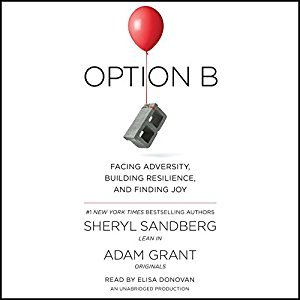
Option B: Facing Adversity, Building Resilience, and Finding Joy by Sheryl Sandberg and Adam Grant

Option B: Facing Adversity, Building Resilience, and Finding Joy by Sheryl Sandberg and Adam Grant

I know of not one single person who could possibly gain nothing from reading or listening to this book to help themselves and/or to help them help someone else but really just to learn from two people who are sharing the wisdom of their joined experience and understanding of how to survive…the very toughest of things.

Adam Grant you may recognize from his other wisdom-filled books, Think Again, Originals, Give and Take, and more.

The most amusing reality is that I really did not know how much I needed to be reading–listening to–this book right now and exactly when I did. I grabbed the audiobook from Libby days ago and primarily because it was available right then. I like to listen to a book when I am walking alone, and I found myself with a couple of days of walking opportunity. And my filters (audiobook, non-fiction, available now) in Libby typically yield very few results, and then when I scan those few available to prefer one read by the author him/her/themself, often nothing remains. In this case I took the “other than author” reader for knowing a little bit about the authors previously and wanting to see what this one is all about.

Sheryl Sandberg’s husband, David Goldberg, died while they were on a vacation in Mexico with friends in 2015. He was formerly of Yahoo’s employ and then a lead at SurveyMonkey. Sandberg was previously with Google and then employed at Meta. Whether you know of them does not really matter. This book is about the most isolating and humanizing reality of suffering: grief. No matter the money or power or privilege one has, losing your husband and the father of your children and then having to face the future and with young children in a way that gives all of you, ever again, any kind of wholeness and hope does not take money. It takes time and thought and smarts and the development of strength.

This book is also not solely about “that” kind of grief: losing a spouse instantly. It is about facing any and all kinds of grief (and I’ve experienced quite enough lately and long-time and of a few varieties, myself) in a fresh way and with more objectivity and logic of, as well as wise counsel through, the process of recovery from it to then also be able to move toward building resilience and accepting joy when the future brings it.

It’s also about helping others…doing better by others and becoming better at knowing what to say and how to say it to be helpful in others’ journeys rather than isolating them even more, and instead by seeing them and meeting them where they are and “leaning in” (Sandberg’s earlier title and work is Lean In) rather than staying away to let them figure it out themselves…and appear to be entirely not helpful, even though you may think you’re doing the right thing in giving them space and time.

The most lasting and relevant-to-right-now idea conveyed, and one that only confirms that I had, in this most recent situation, done the right thing, is truly listening and hearing when young people ask for help, making it clear that you are trustworthy if/when they come to you. I smiled a teary smile while listening to that section–and then listened again–and then held that highlight button to return later–as without having read the book first for “how to” instruction, that is EXACTLY what I had just done. I had answered a students summons to ask for help. And I have no regrets about giving my all–and this substitute job, I guess–by absolutely and instantly agreeing to help someone who asked and who was being harassed and bullied.

I seriously gained so much valuable and extremely practical information from reading this well-written and accessible book. And in reading it I grew in my skills of seeing and assisting others going through tough things as well as helping myself through a few soul-frying varieties of grief. Everyone gains something–even if they are resistant to learning, to change, or don’t, themselves, have an innate growth mindset–from reading this one. It is very, very good!

Come back next Monday for another book review!