
Bob’s Your Uncle–

Jack gets over the line again in time – –

Yes – Seasonal Affective Disorder (SAD) is a real thing! A friend mentioned it in an email a few days ago, and it got me to thinking – –

I spent most of my life living in central Scotland, and in mid-winter, there, the days are short. I mean that even on sunny days the light starts around 10 am and stops around 3 pm. (Harlan isn’t the only place this happens.) If I had lived in the far north, maybe Orkney or Shetland, there wouldn’t have been any light at all! I’ve heard tales of folk up there holding golf tournaments by head lamps at noon – –

But folk were used to it and mostly just adapted – unless they were incomers from further south. Wendy arrived in Scotland from Newfoundland, which is the tiniest bit higher up toward the North pole, so her winters actually got longer!

In days of yore, by which I mean pre-Christian times, the early inhabitants were sun worshipers and held ceremonies around the winter solstice to encourage the sun to return and for the days to lengthen again. Many of these fire festivals survive to the present day and usually involve a procession with a ‘clavie’ – a large iron cage filled with burning wood with all the people either taking a burning ember to their house or adding more wood to the cage.
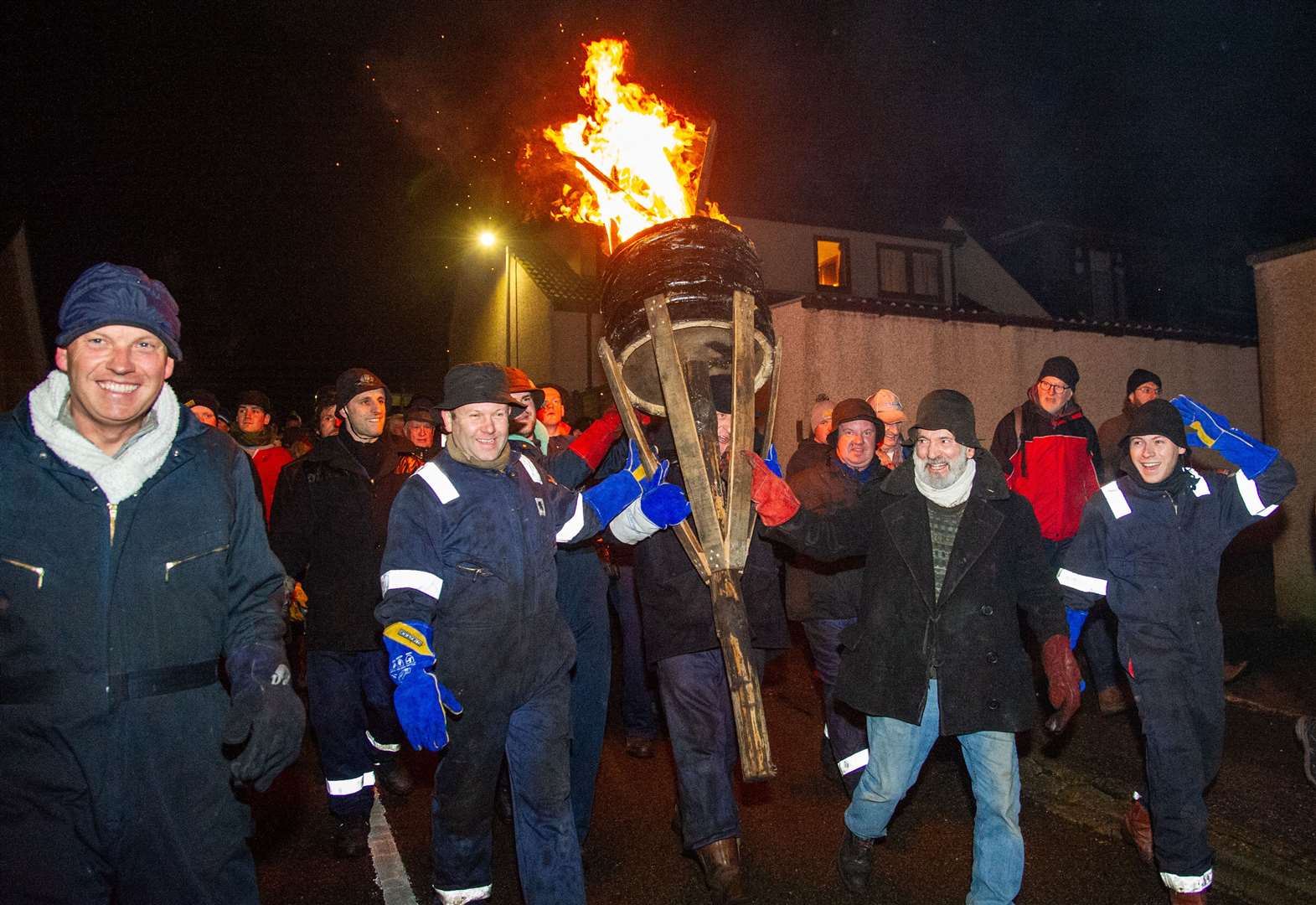
In Shetland they have ‘Up Helly A,’ when a replica Viking longship is hauled through the town to the harbor and then set on fire. I think this may also be why New Year celebrations are more significant than Christmas in Scotland? No one really knows when Christ was born, so the existing sun/Son worship time seemed appropriate.

I don’t remember ever having suffered from SAD when I was living in Scotland, and I still don’t really here in Southern Virginia, but I do notice the change of light more. I wonder if that is because, being much further south, the summers are longer and warmer, so the contrast is more stark.

There’s a whole other argument about the need for changing the clocks – springing forward and falling back — but that’s the subject for another post – –

Come back next Wednesday for more from Jack

The Monday Book – Orbital by Samantha Harvey

Guest review by Janelle Bailey, avid reader and always learning; sometimes substitute teaching, sometimes grandbabysitting, sometimes selling books

Orbital by Samantha Harvey

I believe I caught just a tad of an NPR interview with Samantha Harvey, prompting me to add it to my library holds.

It looked, when I was struggling to get into a much thicker first book of the year (500+ pages of YA fantasy), like a sweet, easily digested thing to then pick up for a needed little break-in to the other.

Well…don’t let this book’s size–either in shape or number of pages (just over 200)–lead you to an erred conclusion anything similar to mine, that it would be, then, an easy read.

This is a beautiful novel of space exploration and a perspective of this earth we all occupy from space, the country borders, conflicts, challenges that exist on land nearly invisible from space, as well as a perspective of the people “in” space. And in all of that “space,” this is a dense and thoughtful, thought-filled and slow read.

A collection of six astronauts and cosmonauts from a variety of home countries (America, Russia, Italy, Britain, Japan) and ages and experiences are gathered together on a mission of this old space station, orbiting the earth. The entire book covers their 17,000-mile-per-hour, single day of 16 orbits of the Earth far below.

Tangentially, and as the stories are interspersed, we also learn about their earthly lives and some experiences. And oh, so beautiful are they.

My gut feeling is that this is all a little akin to Thoreau’s experiment at Walden Pond. Totally different, as it involves six people not one…and involves a spacecraft orbiting the earth rather than a 15×15 hut in the forest near Concord, Massachusetts, in the US.

But it is somewhat similar in, umm, “space” per person, possibly, and adding a totally different dimension and requiring these six people who barely know each other to co-exist. But similar to how Thoreau’s supposedly isolated existence at Walden Pond was the root of his experiment with keen observation of all surrounding him, so, too, is this. A component key to this story is what they all see from that far up, how they interact, adjust, accommodate, and also learn and discover and ponder about themselves. There’s a fine familiarity to this co-existence required for their success. But so, too, would it be nice–I think they’re saying–if those on the ground worked a little harder at getting along with each other, too.

There are numerous philosophical ponderings shared, some of which are just as sage as Thoreau’s and Ralph Waldo Emerson’s from that time. Emerson writes about the stars, for instance, and Harvey’s space travelers ponder sunrises, but oh how beautifully: “With each sunrise nothing is diminished or lost and every single one staggers them. Every single time that blade of light cracks open and the sun explodes from it, a momentary immaculate star, then spills the light like a pail upended, and floods the earth, every time night becomes day in a matter of a minute, every time the earth dips through space like a creature diving and finds another day, day after day after day from the depth of space, a day every ninety minutes, every day brand new and of infinite supply, it staggers them” (194).

And if you know me, you also know how much I treasure a sunrise, every sunrise.

This is simply a beautiful book–that thoughtful, that thought-filled, that wonderful.

I hope you enjoy it as much as I did!

Come back next Monday for another book review!