
Guest review by Janelle Bailey, avid reader and always learning; sometimes substitute teaching, sometimes grandbabysitting, sometimes selling books
March: Books One, Two, and Three by John Lewis et al

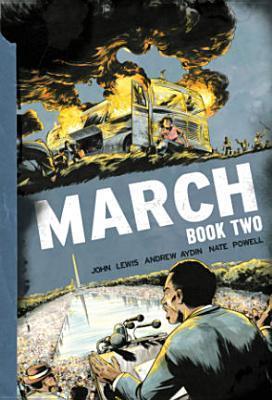

March (Books One, Two, and Three) by John Lewis et al
In honor of Martin Luther King’s birthday today and this national holiday, returning to this trilogy of graphic novels for today’s book review(s), seems wisely appropriate.
What an important trilogy for everyone to read. I picked up all three of these books after visiting very shortly after John Lewis passed away in July of 2020.
Graphic works are not my jam as a rule, but this format certainly made Lewis’s critically important story, history, and message accessible and digestible by many (and maybe more than otherwise) who need to read it. Steadily, when I do read well-written graphic novels, I am compelled by the form and its avenues into our heads that differs from the single dimension of a non-graphic text. These three books are very well done.
Overall, this is the story of John Lewis preparing for Barack Obama’s Inauguration on January 20, 2009, while also going back in time to educate two young boys visiting his Washington, D.C., office that morning.
In March: Book One, he reflects on and shares with these young boys memories of his own childhood and growing into the activist that he was by this first book’s end in the spring of 1960. It moves between the pending 2020 event and his own life’s chronology from raising chickens on his parents’ farm to going to college and then participating in non-violent protests for African American rights and into 1960.
The second book in Lewis’s trilogy, March: Book Two again moves between Barack Obama’s Inauguration on January 20, 2009, and picking up where the first book left off, with Lewis continuing the story of his own past and participation in non-violent activism. These parts go back to November of 1960 and move right through the major and historic event of August 28, 1963, when the famous March on Washington took place. This is when Martin Luther King, Jr., gave his famous “I Have a Dream” speech…and when John Lewis also gave a speech. Lewis gave that speech in his role as one of the “Big Six,” six leaders of the Civil Rights Movement…and John Lewis the only one still alive when this second graphic work was published in 2015.
The third book, March: Book Three, is actually the thickest of the three volumes while also covering the shortest duration of time. This book picks up where March: Book Two left off and finishes with Lewis’s Civil Rights work through the signing into law and by President Lyndon Johnson, of the 1965 Voting Rights Act, and then ends, also, with Inauguration Day 2009, when Barack Obama was first inaugurated as President of the United States. March: Book Three was published in 2016. John Lewis died in 2020, weeks before I first read all three of these books.
Everyone gains understanding and the experience of walking through these historical events through the eyes of one very important leader, John Lewis. May he, Martin Luther King, Jr., and all who have worked toward these critically important causes but lost their earthly lives rest in peace and know that others will carry on the work. Reading these books is certainly inspiration to take up a little more of the work, even in sharing the books with others, as we are right now.
May it also please you to know–as it did me to see in person in December of 2021–that Ben & Jerry’s dedicates a wall of their Vermont experience to John Lewis and his March as well as enlists all of us who wish to, to join the general march toward justice and racial equality that this country’s willing still pursue. The John Lewis Voting Rights Advancement Act, in fact, continues the work only begun by the 1965 Voting Rights Act, and is, itself, still a work in progress. You can read more, if you like, here: https://www.hrc.org/resources/voting-rights-advancement-act
Come back next Monday for another book review!
 Wendy Welch: Books, Yarn, Cats, Opioids