Box of Delights

Once again Jack gets his guest post in on time – –

When we rearrange things in the house (in fact all the houses we’ve lived in over the last twenty-five years), one thing has always turned up at some point.

I’m often looking through our stashed boxes of old tapes, cassettes, and records for my radio show. I end up searching under beds or in cupboards. When I do there’s always a particular box that emerges, although it doesn’t contain tapes, and it’s not a box I remember ever packing or moving.

It contains all the letters and emails that Wendy and I exchanged when we were ‘stepping out’ – except we were dating by correspondence back then, on opposite sides of the Atlantic: me in Scotland and her in Newfoundland!

The first letters are hand-written and lengthy (we called them ten-pagers because they usually were). Those first ones are charmingly diplomatic and careful. Soft-pitching woo, one might say. Then they turn into letters typed on a computer and become much less careful. One might even venture to say some fairly specific offers are being made. Finally, there are printed out emails, and they’re much shorter and to the point on events of the day, a little less kissing, a little more bitching. Wendy had to type these in a public space, and I was often at my college office, so….

While these are, of course, delightful memories of the heady days of early love, they’re also something of a time capsule. There were big changes in technology over that brief time of a few years in the mid-1990s. I bought my first home computer, so I could get back to writing the more explicit letters!

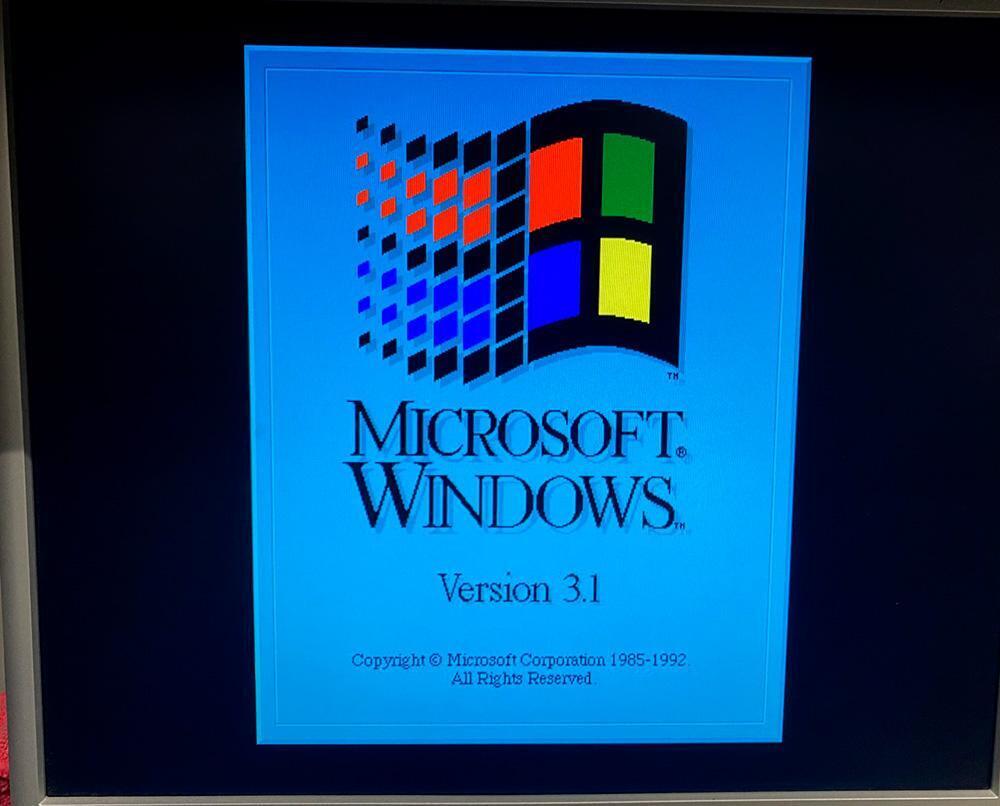
Even after we married, there was no internet as we know it now – no Google, no Facebook, no YouTube. To read or write an email you had to ‘dial-up,’ sometimes going round 4 or 5 phone numbers before connecting and then a strange noise to tell you that you had.

Now we have a car that talks to us, takes us places almost by itself and tells us how well we’ve done when we get there. Wendy and I have been married 26 years, and the other day she texted me from upstairs, and I answered her. Obla dee obla dah life goes on…..

The post title references the book by John Masefield first published in 1935.

Come back next Wednesday for more from Jack

Puiu

When I started adjuncting at UVa Wise, the office next door belonged to a Sociology professor named Puiu. He came over to say hello and showed me around the building. Over the next months, I got to know Puiu not only as a nice guy, but as a brilliant statistician.

He came to my rescue while I was getting my MPH, spending three hours one afternoon explaining regression and means uses, patiently, over and over again, until I could recite the basics if not quite understand them. He’s one of the reasons I passed biostatistics. His kind, grandfatherly voice, his careful repetition of things and his teaching method of “here’s what you need to know” or “here’s how this works” based on whether my eyes were glazed or confused, his laughter when I tried very hard to get it right and his encouragement of what little pieces I had grasped as building blocks to the rest: they were incentives to do something I literally hated. I didn’t care about biostatistics but wanted Puiu to think I was smart because he was so smart.

Puiu came to our bookstore a couple of times, and as he told me during a biostats session, “I have fallen in love with your husband.” He and Jack started a bromance. They could talk European politics for hours—and did. Many a night they closed the bookstore sitting on the front porch, drinking and talking into the dark.

We often held international nights at the bookstore, and Puiu agreed to do one on his home country of Romania. He and his girlfriend brought desserts and drinks from his homeland (she was from New York), and he set up a slide show for the assembly.

It was then that we learned that he had been part of the occupying force in the Romanian capital building in 1989, fighting for the revolution. He pointed to the window where he had been stationed, showed us the angle from which he had been firing, explained why he had been there and what the whole thing was about. Then he said something that has haunted me ever since.

“Here we are, twenty years later, and everything in Romania has a different name and operates the same. In the same way as we fought against that summer. Nothing is different. It was for nothing. Oh, we believed it, at the time. We were young, we were idealistic, we would change the world. We would fight for our cause, we would die for it, to bring democracy to Romania.”

A teenager asked, “Did you kill anyone when you were shooting?” The assembly froze. Puiu shrugged. His girlfriend stepped forward and offered desserts at the back table. The group dispersed quickly to eat and chat.

I didn’t know whether to apologize for the poor taste of the child’s question, but after the event Puiu sat on the porch with Jack and me and his lady. And he said, as if continuing a conversation, “I saw a man fall. He didn’t get up. I think it was me. It was not worth it. Everything has a new name and it all operates in the same way as before. Do not—” and here he looked straight at me; I don’t know why— “do not ever let someone tell you, if only we overthrow this, if only we can change this one thing, then utopia is there. Violence for idealism is not strategy. It is a trick for the new dictator.”

I nodded, we drank. Puiu doesn’t have any fingernails on his right hand. I never asked, and he never offered to talk about that.

When people talk about divided America, I think about quiet, gentle Puiu, who killed a man and lost his fingernails for a cause he believed in but that didn’t believe in him. And I pray for wisdom.