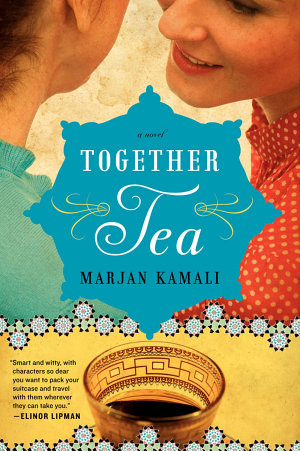
 When this book came into the shop, I knew it would hit my reading list. I like books about Eastern culture, particularly latte lit. (Novels that have female protagonists dealing with general life, are smart, and don’t devolve into cooking lessons, is the best definition of latte lit I’ve heard.)
Kamali’s book has a couple of clunky bits where she just wants you to believe certain things about her characters without developing them. However. her sharp, sassy writing style makes up for it. She’s like a sweet cynic when she gets hold of words. The novel’s premise is that the mother and daughter in an Iranian family that fled after the Revolution decide to go back for a visit. They go because of love interests – Mom has picked up one she doesn’t one, and the daughter has rejected one Mom picked out for her.
At one point Mina (the daughter) describes herself as balanced on the hyphen between Iranian-American. It’s a lovely passage. In the course of the visit, the depiction of one mom dealing with her family’s everyday pressures compounded by a country flipping itself upside down in a near-civil-war is fascinating. This isn’t an intense political book; it’s one family’s experiences. And its power lies in the way Kamali writes more than the plot or characters.
Here are some examples of the little gems Kamali drops in her writing:
Explaining to her ten-year-old daughter why she now has to wear a hijab to school when a month ago the Shah’s guard were snatching scarves off women’s heads if they wore them:
It’s always through the women that the men express their agenda. Cover up so they can feel like they’re in power.
Iranian hospitality (which is Southern hospitality to the power of 10) requires you to beg the guest to eat and the guest swears it will kill them to do inconvenience you. On round three of one such exchange, Mina, returned to Iran after 15 years in the states, loses it in this gloriously subtle way:
Mina: Would you like some nuts.
Guests: Oh thank you, no, may your hands not ache.
Mina: Please take a nut.
Guests: No, No.
Mina: In God’s name, take a nut.
Her humor is understated like that.
When the family arrives in America, the mom, a quiet, sweet, simple woman by American standards, buys a box of red hair dye and colors herself. When she comes out of the bathroom, her husband claps and then goes in and cleans up what looks like the scene of an ax murder. The mother turns to her daughter and says they’re going for a walk. Which they do, the daughter much cowed by Mom’s new hair. And Kamali writes this:
Was freedom just tiny movements like this? Simply knowing that no one cared if the sun shone on your hair? …. But dominating all the new colors was the jarring red of Darya’s hair, an unfamiliar defiance that screamed silently at the start of their American life.
And as the book comes to its predictable wedding conclusion, Darya (Mom) looks at the chaos of Iranian-American wedding traditions and messiness around her and reflects:
Real life was messy. It would never add up. It wasn’t perfect. It didn’t need to be.

 Wendy Welch: Books, Yarn, Cats, Opioids