Jack and I have about an acre of back garden, stretching out behind our house. People are always surprised by the amount of space we have. Last year, we decided to go all in on a vegetable garden.
Probably we should have remembered a few things:
- I have killed spider plants.
- Jack considers gardening a form of punishment for all the crimes he ever thought of committing, even if he didn’t. He dislikes dirt, green leafy vegetables, and time spent in the sun.
- I am frightened of most bugs. I once screamed when a ladybug flew toward me.
- We were going to be in Scotland for a month in the height of summer.
Other than that, we were golden: plenty of land, easy access to seeds, and an inherited plethora of gardening tools—none of which we knew how to use. Jack held up a hoe and said, “How am I supposed to shovel dirt with this?”
I actually gave it a try before realizing, you know, it wasn’t the shovel…..
Growing up, we had gardens, but my dad did all the stuff like prepping the rows with stakes, string taut between them to help you keep your rows straight. He did the plowing. My sister and I just came along and did the finger-sticking and seed-planting. It was fun to drill down into the dirt and then plop a corn kernel in. Or follow along behind his row of hilled dirt and sprinkle carrot seed.
Doing it as an adult, you realize how hard the work is. First thing we had to figure out which plants were okay with walnut trees. A former student visited and told us about this weird thing called the wood wide web, where trees talk to each other under the earth. Mostly walnut trees plan the death of other plants through excretion of a chemical called juglone. Literally, walnut trees are like bad politicians: they want it all, they want it for themselves, and they want to take it from you. Trying to grow anything in the nightshade family would be a no go unless we got raised beds, my student told us.
And I thought, “why would we grow a deadly plant? Who puts anything to sleep in a garden?”
Yep, it was that bad. We threw some boxes in, put gardening cloth in the bottom, and called them raised beds. When we planted tomatoes in them (proud of our new knowledge that these were in fact a nightshade family member, I might add) they held water and drowned the little guys. Tomatoes hate having their feet wet, we learned that first year.
Then we planted peas. They came up, interspersed with the carrots and broccoli we also planted. Those nice straight with stakes? Ha. Basically, the whole place looked like someone tripped while carrying a seed tray. (Which is not far off. I sneezed and they fell.)
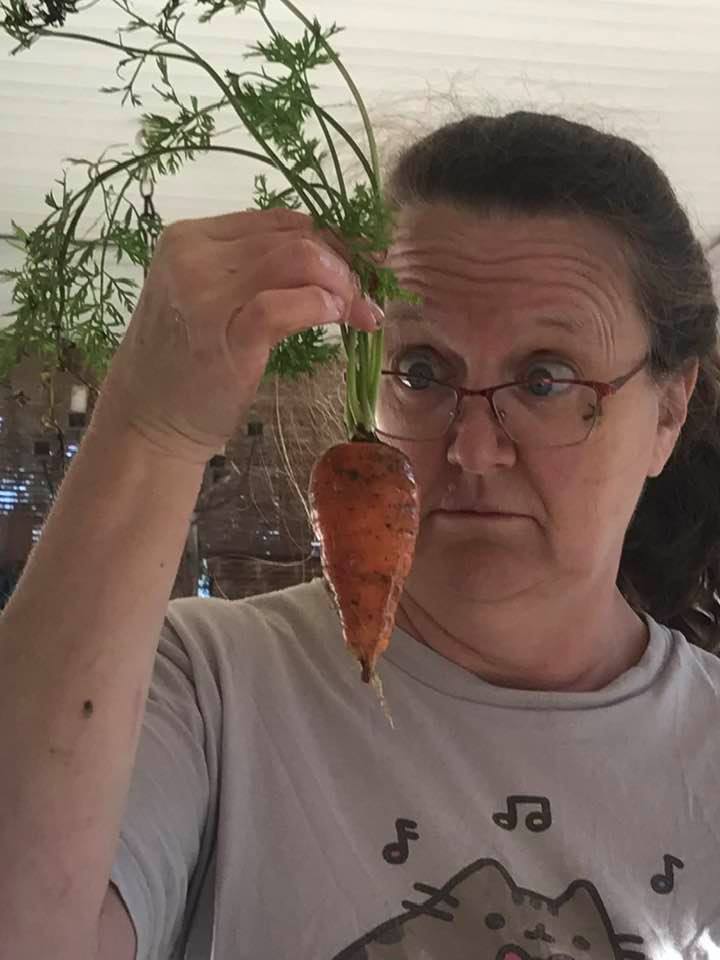

The broccoli grew – and grew, and grew, and grew, like Jack’s infamous beanstalk. It never put out a single head, but once we learned that broccoli leaves were edible, well, game-changer.
The cauliflower did put out a single head. Literally.
We gave up on hoeing these ungrateful wretches and left for Scotland. When we returned, the asparagus had little weird red balls on its fronds (we found later that these were seeds) the broccoli reaching for the sky, and the black raspberries in the back part of our yard had come for the tomatoes. We never did get them separated.
This year, things will be different. This year….. we will buy our produce from the farmer’s market.
 Wendy Welch: Books, Yarn, Cats, Opioids