
Sorry, y’all, our food processor broke and since we’re in the middle of garden mayhem, that was a crisis. Just getting to the Scottish adventures now after a hard day’s chopping.
Now, when last we left our heroes, everyone was on the van and everyone but Maria had their luggage. We headed off to Rosslyn Chapel, a working church, as well as a Knights Templar site and the setting for one of Dan Brown’s novels (referred to by the historical society as The Second Miracle—the first one being that Cromwell left the place standing although his troops did stable their horses in the chapel during the “it doesn’t pay to be a heretic” times.)
The chapel was sometimes called “the green chapel” in the 1700-1900s because it was so overgrown with fungus. Queen Victoria wanted it preserved, but who had any money? Until Dan Brown upped its visitors from 1000 per year to about 150K per year. A lot of restoration went on after that.
The chapel’s most beloved story is probably the Apprentice’s Pillar (read about it here after you finish reading about our adventures: https://www.rosslynchapel.com/wp-content/uploads/2020/05/apprentice-pillar-fact-sheet.pdf)
But my two favorites are the heart that appears quite randomly amidst all the amazing and mysterious carvings of apostles, corn (which is weird because corn didn’t exist in Scotland during the time the chapel was being built in 1466), and some strange green men who age as you move clockwise through the chapel. It’s a big mashup of symbols and ideas, and smack in the middle of the left well as you face the altar is a heart. A very traditional heart.
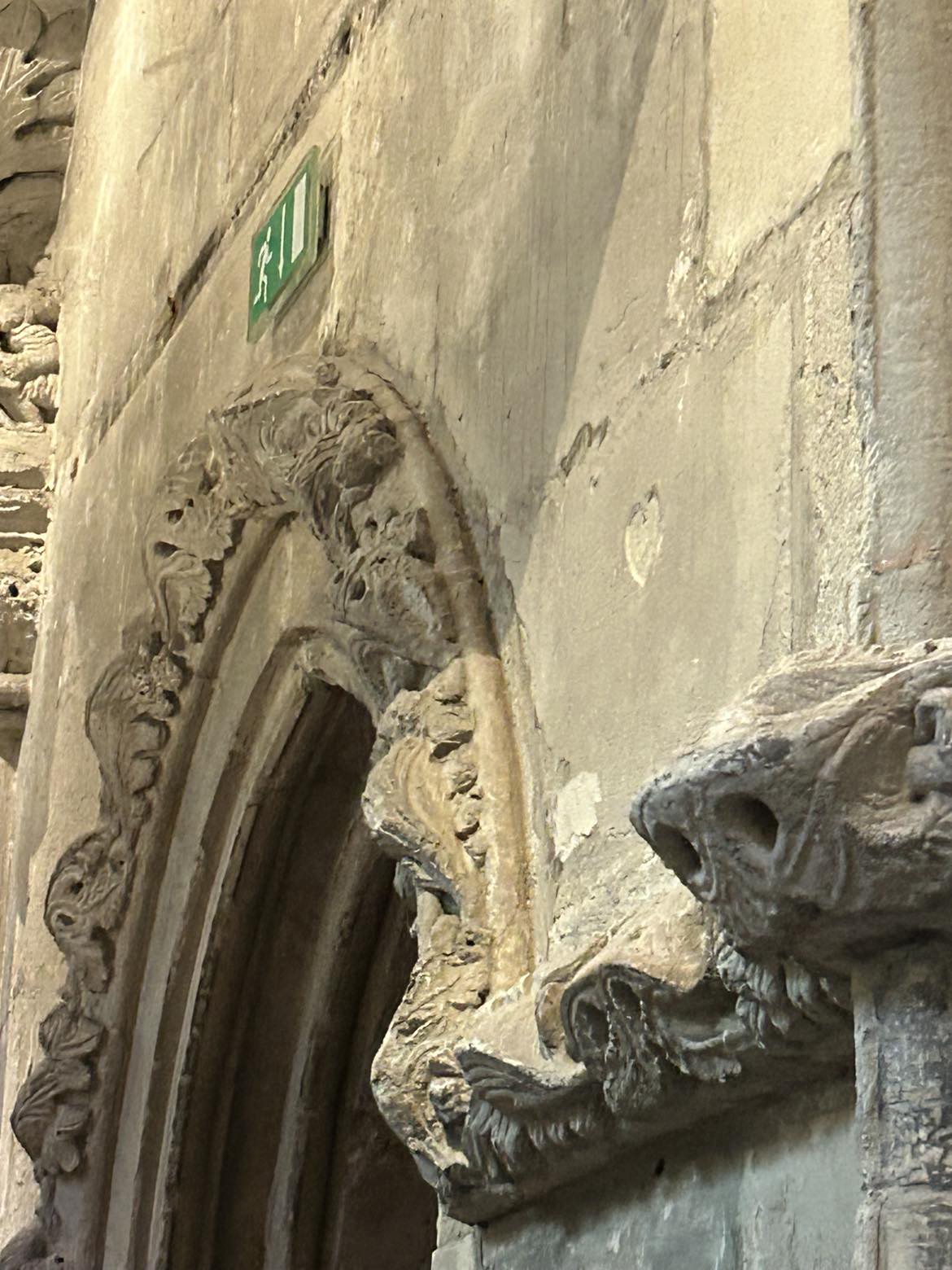
I asked the guide about it. “Victorian graffiti,” he said with a smile. “Kids used to party here before it was fixed up, back in her day. And somebody carved that sometime in the 1800s.”
Kids… whatcha gonna do?
My other favorite story from the chapel comes from the Apocrypha, and is about Zerubbabel, the guy who asked King Darius to rebuild the temple in Jerusalem. One night Z and two other king’s advisors put on a bet. Each would say what was strongest, and the king would adjudicate who was correct. One said the king, because, you know, he was judging the contest. Another said wine because it could make people do silly things even if they didn’t want to. Zerubbabel said women, because they gave birth to people who made wine and became kings, plus men had been known to become absolute idiots just to get their attention. And then he said, “but the truth conquers everything else because we all have to bow to it.”
Hence the Latin saying carved to the right of the chapel altar: The king is strong, wine is stronger, women are stronger still, but truth conquers all. It’s the only quotation in the whole of the chapel, and frankly it’s a coded message that the chapel owner was a Templar.
There was one more interesting message at Rosslyn. As I mentioned, it’s a working church so we had to wait to enter. As we walked around outside, a man from another group cut in front of a woman taking a photo, and then said something rude to her about not getting her knickers in a twist. Based on their accents, the man was in his home country, and she wasn’t.
As he kept up a barrage of abuse toward her, I asked her how she was enjoying her holiday. She spoke pleasantly of getting to see the chapel for the first time, something that had been on her bucket list for years. And of her home country, Switzerland. We chatted amiably until the man’s stream of invective dried up and he drifted away. Tourism sometimes brings out the worst in people seeking good times. Weird.
A pleasant drive from Rosslyn to our hotel in Peebles, beautifully appointed and generous with its magnificent dinner portions. This is when we discovered Gareth’s superpower was finishing other people’s unwanted portions. A good team member to have.
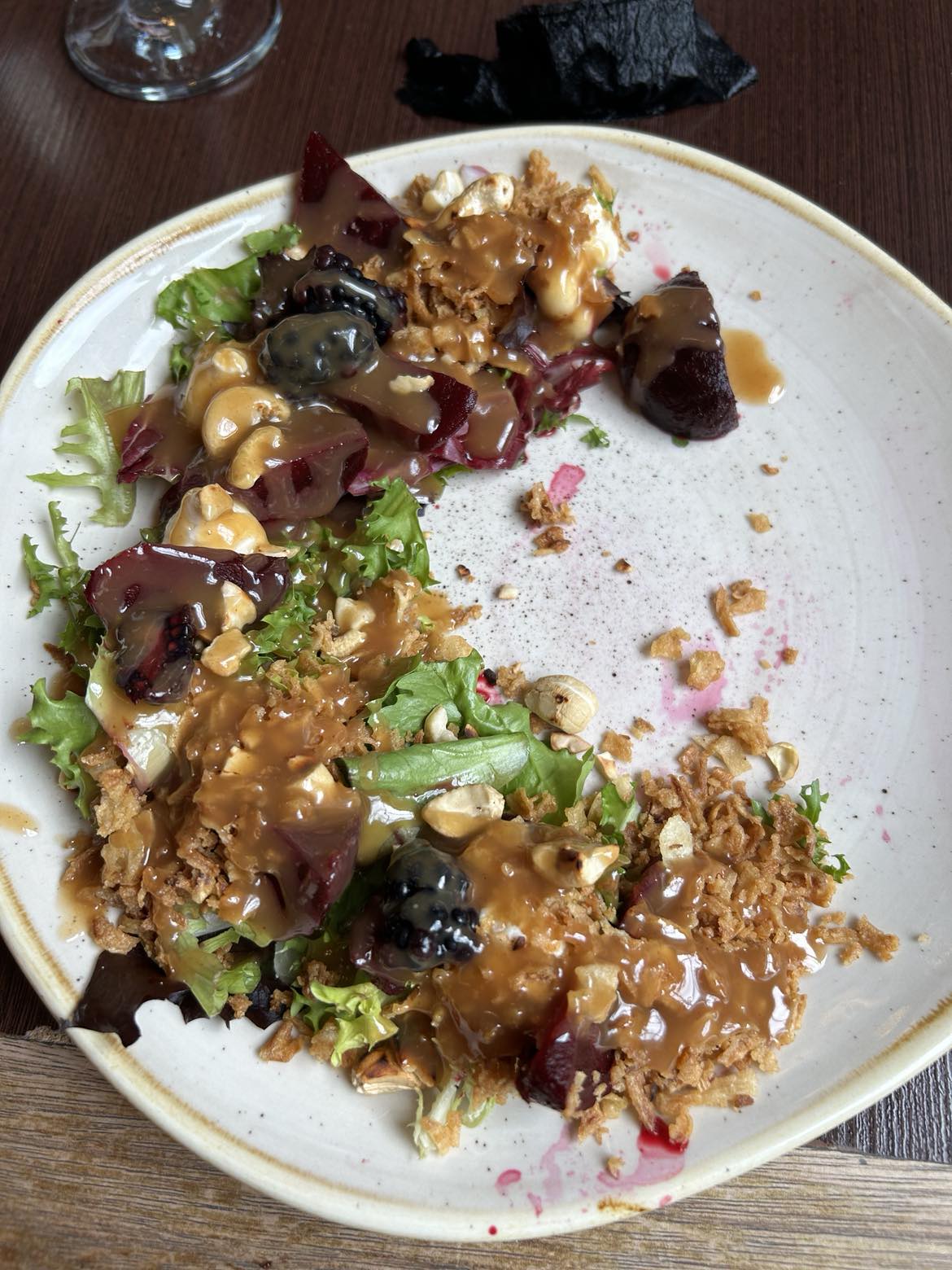
Then it was off to bed because everyone was still the wee bit jetlagged. Presumably the haggis bon-bons from the starter course danced in their heads as they slept.

 Wendy Welch: Books, Yarn, Cats, Opioids