
 One of the nicest things about vacationing in Scotland is that the books landing in charity shops there are completely different from here. I must have counted six copies of Gone Girl and two of Divergent.
Jack and I scored several titles, including one I’d intended to get to since enjoying the series on Netflix. Call the Midwife is actually part of a trilogy of books Jennifer Worth wrote; the others are Shadows of the Workhouse and Farewell to the East End. (She also did one on hospice nursing later.)
I enjoyed the books, but this is one of the few times I have to say watching the series first helped. I’m not up on 1950s and ’60s medical parlance or practice, and there are details in Worth’s writing that I wouldn’t have understood without seeing them played out in pictures first.
Worth tells her story in simple, straightforward ways. It isn’t her writing that’s attractive so much as the details she gives, her way of understanding how humans are feeling. One might be tempted to use the word “clunky” once or twice on certain passages. She died in 2011, just as the series based on her books was coming to TV. Not having had the chance to meet her, I suspect she’d have proven a great humanitarian rather than wordsmith.
Still, who cares, because the stories in Midwife are fascinating, compelling, and lovely to read after seeing them portrayed. Some were taken straight from the book, others embellished from mere hints and whispers she included in passing. A lot of her descriptions were taken care of with just a couple of camera shots.
Let me say it again: it is the stories and not the storytelling that makes this book a great read. It is a methodical and prosaic capture of a way of life now over: one feels the pavements, smells the odors, and shares the fears and happinesses. Worth writes like a camera takes pictures, presenting snapshots, no corners left dark.
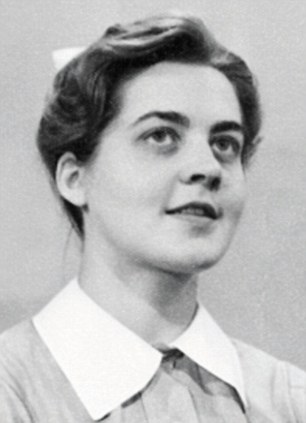
Worth’s life is in itself fascinating. She married in 1963 about ten years after she became a nurse, had two daughters, and left nursing in 1973 to teach piano and voice at a college. And she didn’t start writing until late in life. Midwife came out in 2002, and took five years to reach bestseller status.
Worth reminds me of another favorite book from a British author, The Gurnsey Literary and Potato Peel Pie Society. The older of its authors didn’t start writing in earnest until late in life; her book was also post-humous, and a bestseller, and took a snapshot of a terrifying yet exuberant time to be human.
Let that be a lesson to those of us who write; get going. Stories need to be told more than perfected. Think what else these woman could have given us if they’d started earlier.

 Wendy Welch: Books, Yarn, Cats, Opioids